


600 km Brevet: Around the Olympic Mtns
When I saw the course of the Seattle International Randonneurs 600 km brevet, I immediately made plans to ride it. The route circles the Olympic Mountains, a remote and wild area that separates Seattle from the Pacific Ocean.
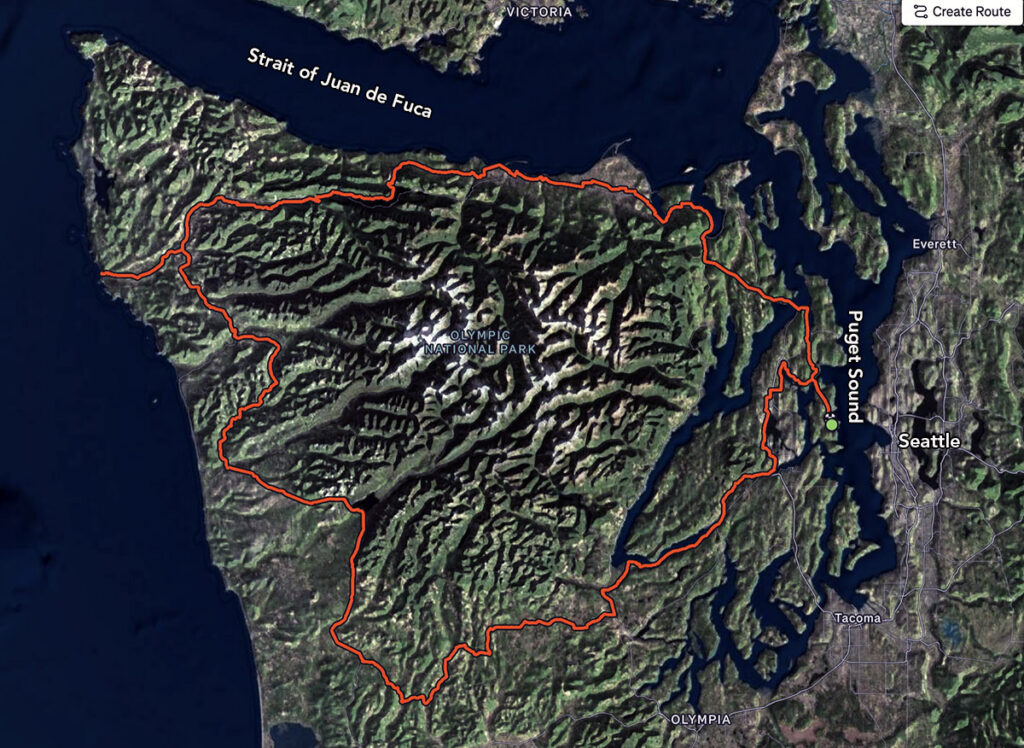
Seattle prides itself as the ‘Portal to the Pacific.’ And it’s true, Seattle is a city on the water—but that is the Puget Sound, a deep-water estuary that connects to the Pacific via the Strait of Juan de Fuca. The actual ocean is about 100 miles (160 km) to the west.
In between are the Olympic Mountains. Even though we see the ‘Olympics’ from Seattle, the mountains are shrouded in mystery. Often, they are also shrouded in clouds: It rains four times as much in the Hoh Rainforest on the coast as it does in Seattle. It’s a rugged area, home to huge trees, impenetrable forests, and only very few people. There are no roads traversing the mountains. The few roads west of the Puget Sound skirt the mountains on the edges. A ride around the Olympic Mountains is a romantic idea, and it promises some great roads and scenery. Count me in!
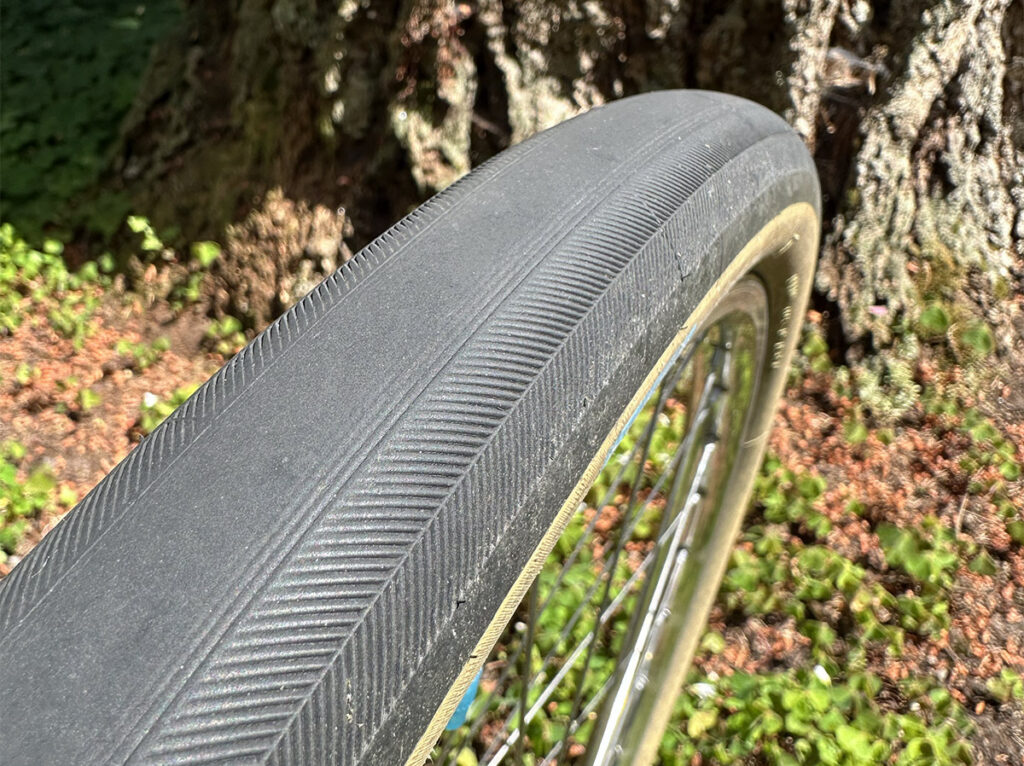
Before a long ride, I like to give my bike a quick check-over. I’ve been riding test bikes for Bicycle Quarterly lately, but my 650B Rene Herse randonneur bike still sees a lot of hard use: I use it for hillclimb training. And those high-power intervals sure bring some wear-and-tear. The front tire looked almost new, but the rear tire (above) was about half-worn. The longitudinal lines on our Rene Herse ‘slicks’ are wear indicators, while the diagonal lines improve cornering grip by interlocking with the road surface. When the longitudinal lines disappear, the tire is about half-worn. That means my rear tire is good for another couple of thousand miles.
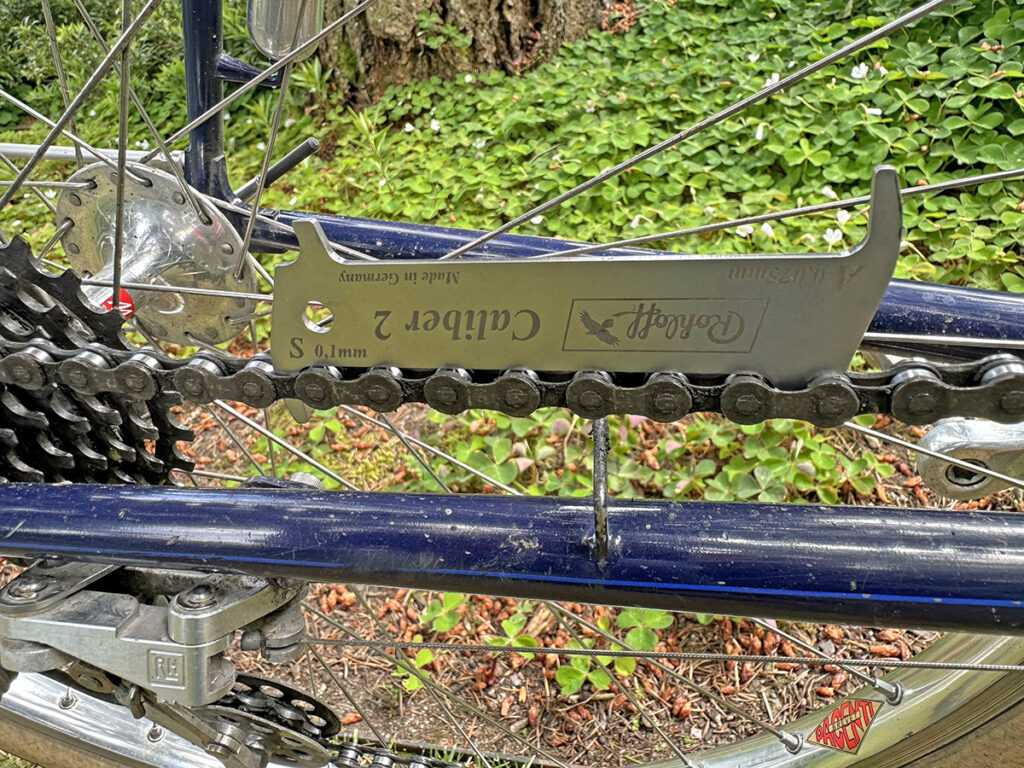
Not so the chain! I was surprised that it had already reached its wear limit! (The precision Rohloff chain wear indicator goes all the way down when the chain reaches the wear limit.) On went a new chain, plus some Dumonde Tech lube. There was no time to degrease the chain first, but this lube works fine just dribbled onto whatever SRAM uses to lube their chains at the factory. A quick squirt of WD-40 onto the parallelogram pivots made the Nivex derailleur shift as smoothly as when it was new. That was 7 years ago, when I built this bike just before the 2019 Paris-Brest-Paris.
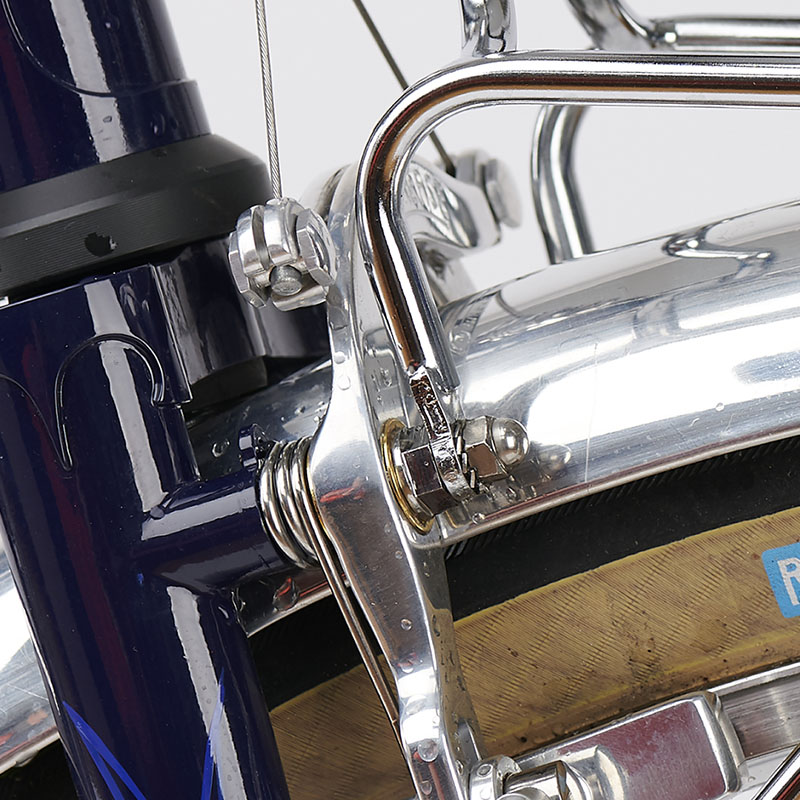
I also had noticed that my front brake was sticking a bit. My favorite hillcimb course has a hairpin in the middle, where I brake from more than 40 mph (65 km/h) to less than 20. So it’s not just the chain and rear tire that get a workout, but also the brakes (and, of course, my legs!)
In those seven years since I’ve built it, my bike has never been overhauled (apart from replacing tires, chains and brake pads). I took off the rack, removed the brakes, cleaned everything, and put a dab of grease on the pivots. After reassembly, the brake worked as smoothly as it did when the photo above was taken, when the bike was brand-new. That’s one thing I love about bikes like these: Everything lasts a long time, and everything is easy to work on. The whole brake overhaul took less than half an hour.
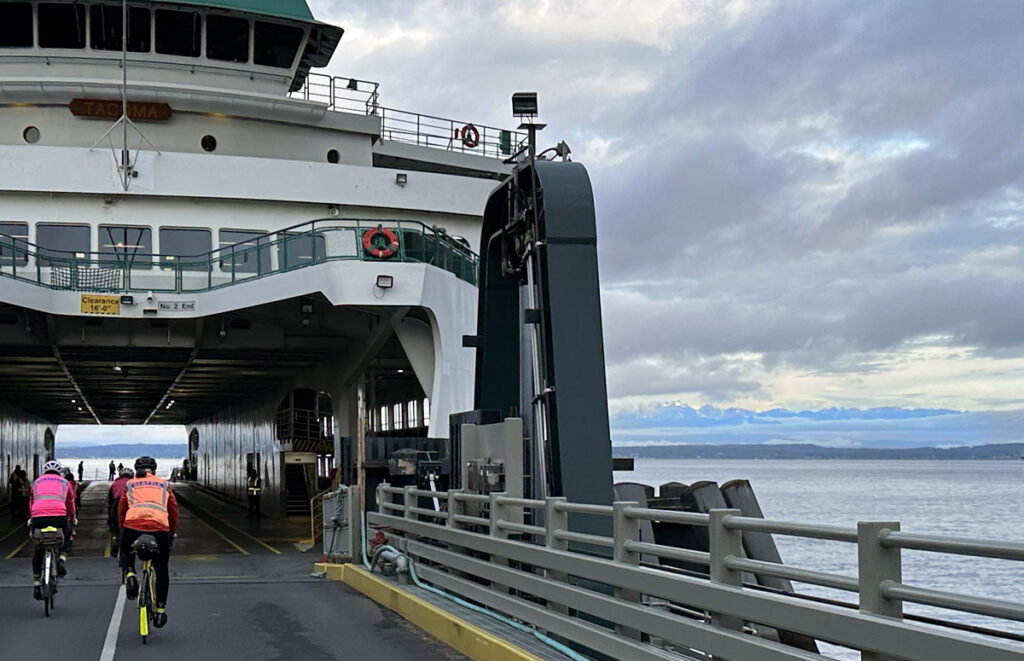
The next morning, about 20 intrepid randonneurs boarded the 6:10 a.m. ferry across the Puget Sound. In the distance, the morning sun illuminated snow-covered peaks of the Olympic Mountains. Not visible in the photo, big clouds were massing to the south. The forecast was for rain. And if it rains in Seattle, it pours on the other side of the mountains. This would be an adventure!
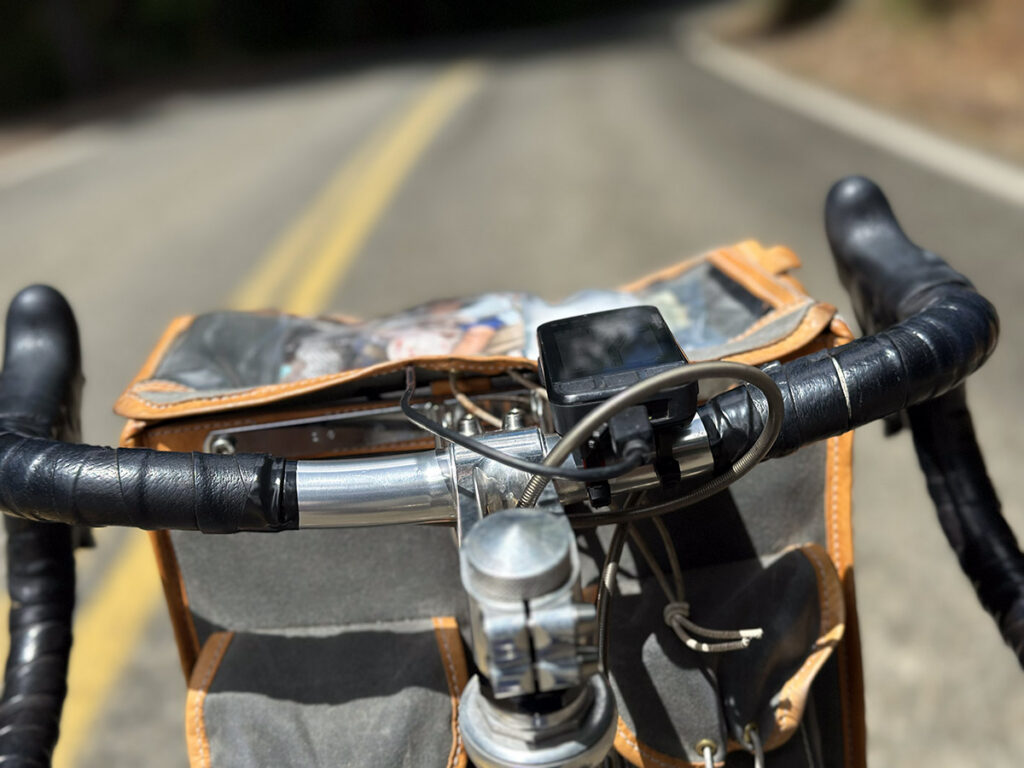
The first miles flew by in a blur. Having decided at the last moment to enter the brevet after a busy week, I was not as rested as I’d like to be. I joined a fast paceline with two speedy riders from Oregon, but realized that I had to let them go. I settled into a long-distance pace that was slightly slower than I’d have liked, but that would carry me the distance.
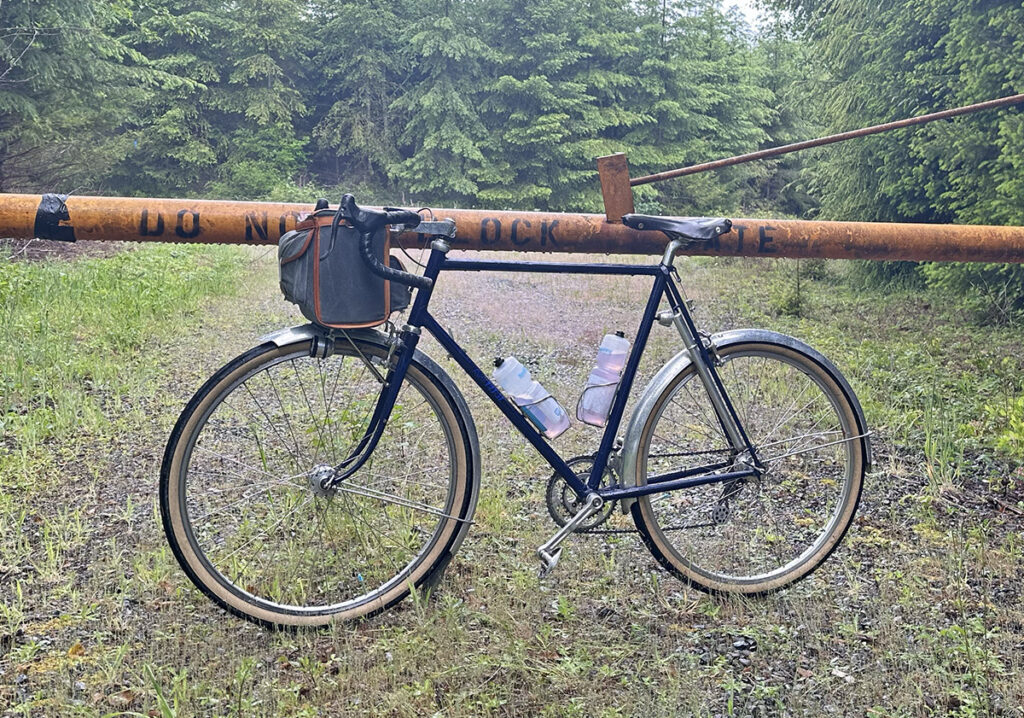
The route was all-paved except for one 4-mile stretch. Just as I reached the gravel, it started raining. Not just a drizzle, either… A quick stop to put on wool tights and my rain jacket, and then I continued. I was glad about the fenders with generous coverage and my mudflap: My feet (and drivetrain) were not subjected to road spray that can make riding in the rain so miserable (and chains so squeaky). I’ll be honest: I prefer riding in the dry, but on the right bike, riding in the rain isn’t half-bad. More bothersome were the headwinds that seemed to accompany us all day.
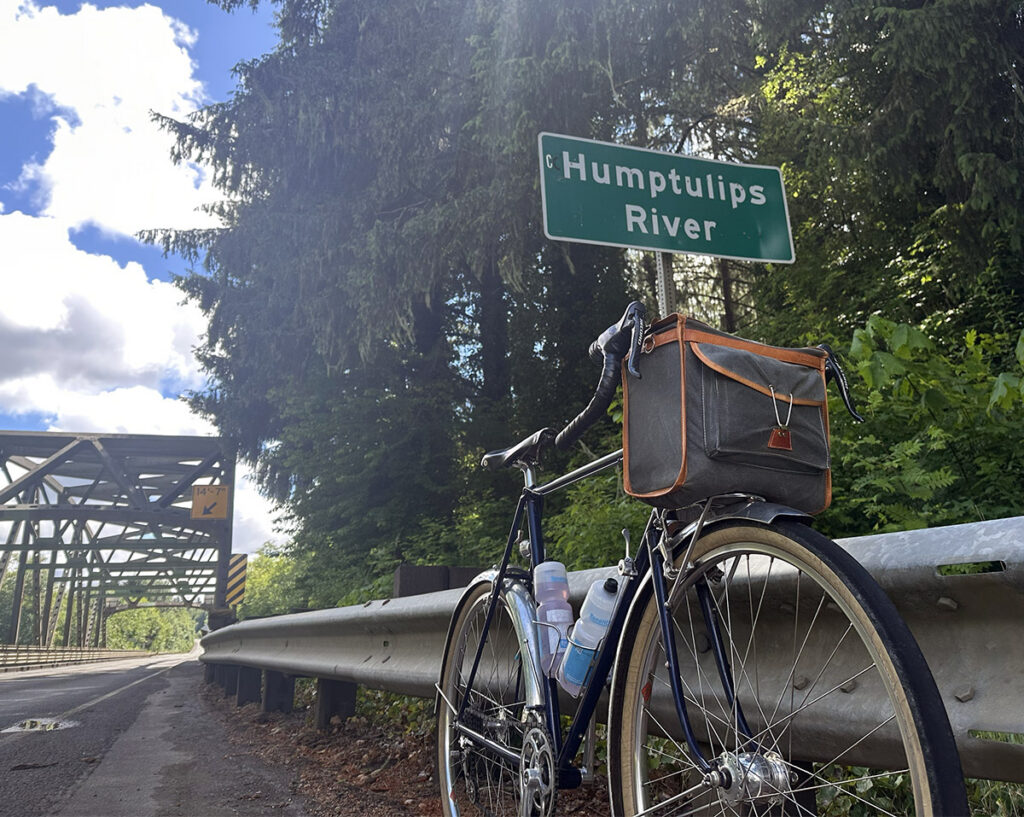
The rain didn’t last more than an hour. By the time I traversed the Humptulips River (which flows down from Humptulips Ridge, the name-sake of one of our tires), there was even a little sunshine. The rainy forecast probably kept most traffic at home—it seemed like there were even fewer cars than I remember from previous rides here.
Everybody I met during the whole weekend was very friendly. The people in the little stores where we resupplied, both shopkeepers and other customers, were all smiles and good-natured banter. Drivers, without exception, passed me with a wide margin. There’s a lot of talk about the U.S. becoming more polarized, but out here, it felt the opposite. I’ve been coming here for many years, and it wasn’t always like this. It’s very encouraging.
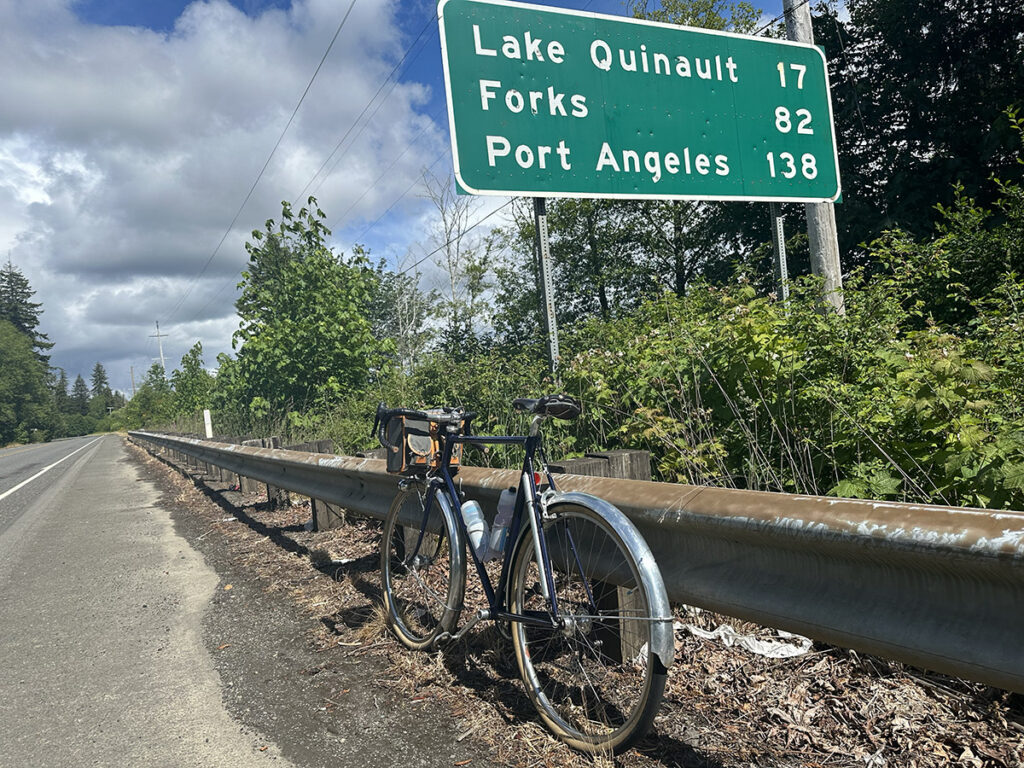
In any case, there are not a lot of people out here. The sign shows the three next towns on the road ahead. For metric readers, Port Angeles is 222 km away. And between here and there live fewer than 5,000 people!
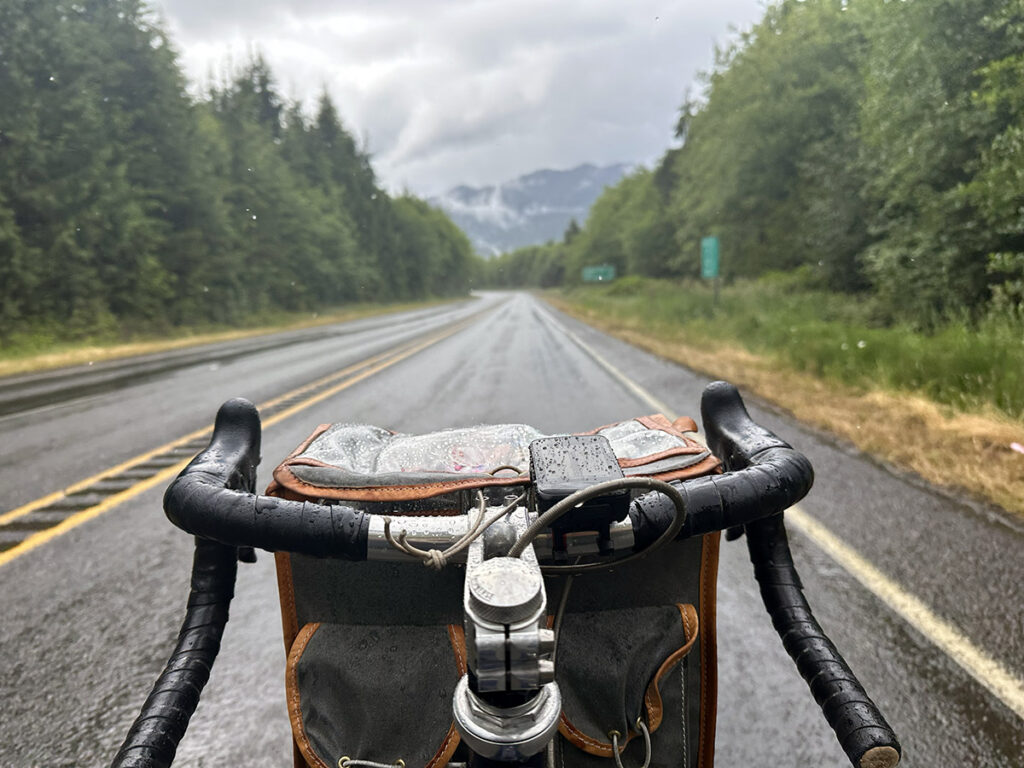
And then it started raining again… I was still wearing my wool layers, so I just pulled my rainjacket out of my handlebar bag and put it on without stopping. The clouds over the mountains were quite beautiful, but impossible to photograph with a cell phone while riding in the rain.
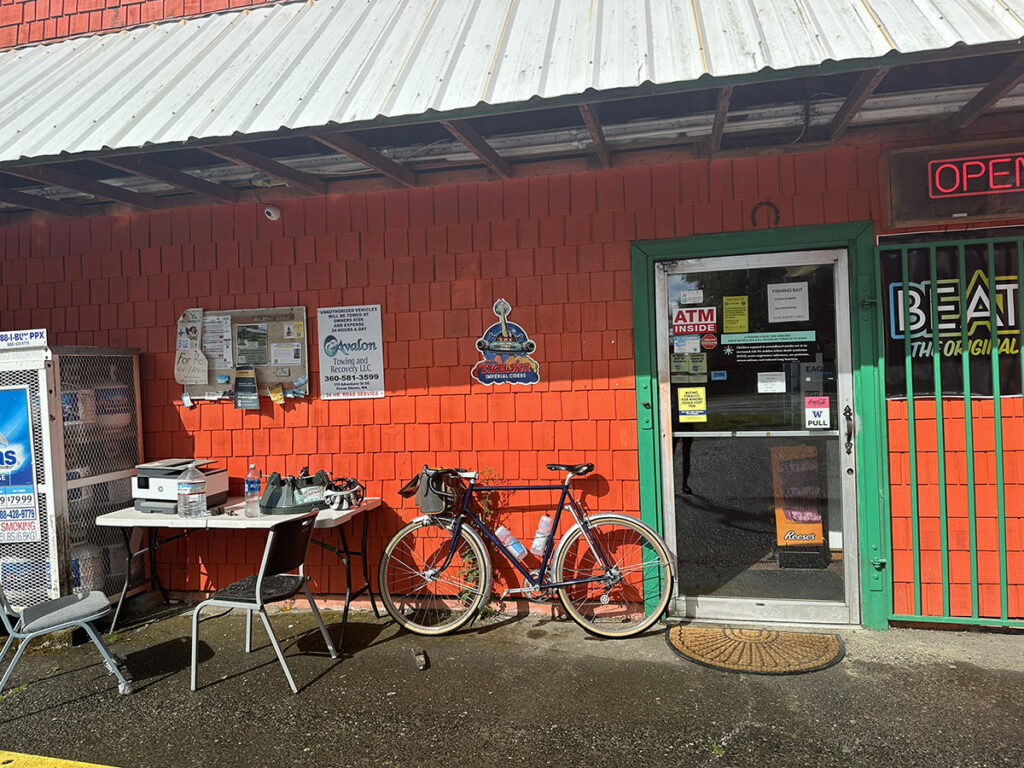
I thought I had missed the store in the tiny hamlet of Quinault (population: 129), but it was past the edge of town. A welcome resupply for the next 70 miles (110 km) without any human habitation.
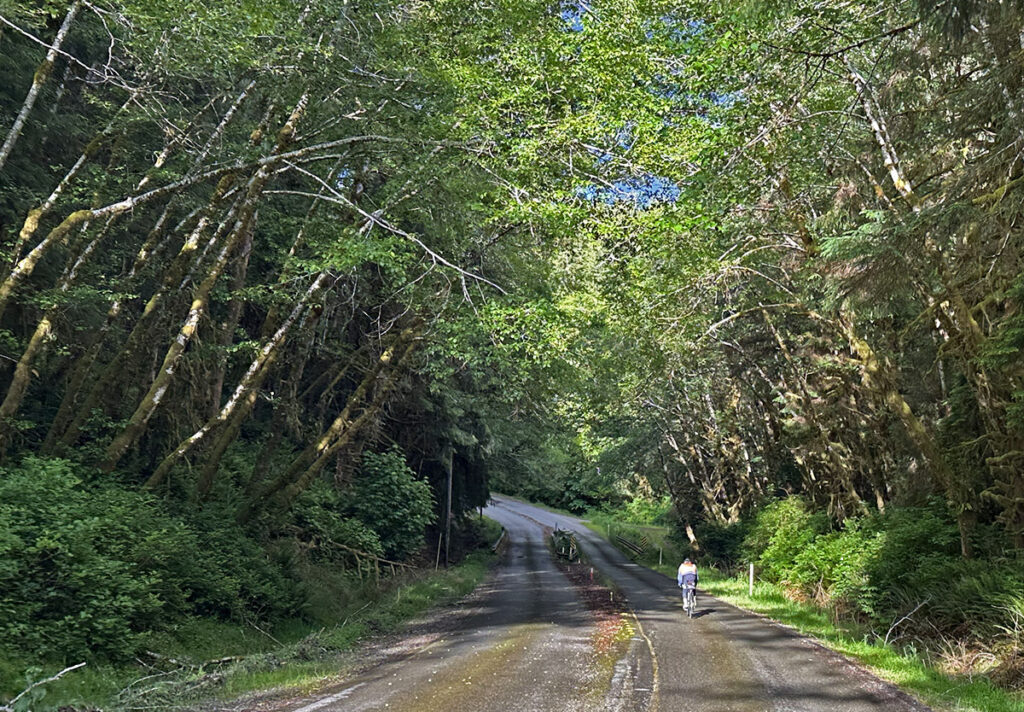
I teamed up with another rider as we headed into the Hoh Rainforest. Even after all these years of riding out here, there are still new roads to discover. The organizers of the brevet had found this gem: a logging mainline that speared into the mountains. For readers unfamiliar with the Pacific Northwest, a ‘mainline’ is a road used for logging trucks to access various parts of the forest. When there’s no logging, there is almost no traffic. The moss on this road showed that it hadn’t been used much lately. In fact, we didn’t see a single car or truck during the 50 km (30 miles) we rode on this rollercoaster road. It was fun.
We reached Forks, the biggest town on this side of the mountains, just after sunset. We were the first riders at the ‘overnight’ control: The two speedy Oregonians ahead of us had chosen to ride an out-and-back leg to the beach before checking into the control. We all had to stay in Forks to sleep for a few hours: A trail further down the course was closed at night. For me, it was a welcome break, considering I had started the ride without much sleep. The tally for the day was 330 km (205 miles), with 270 km (170 miles) left for tomorrow.
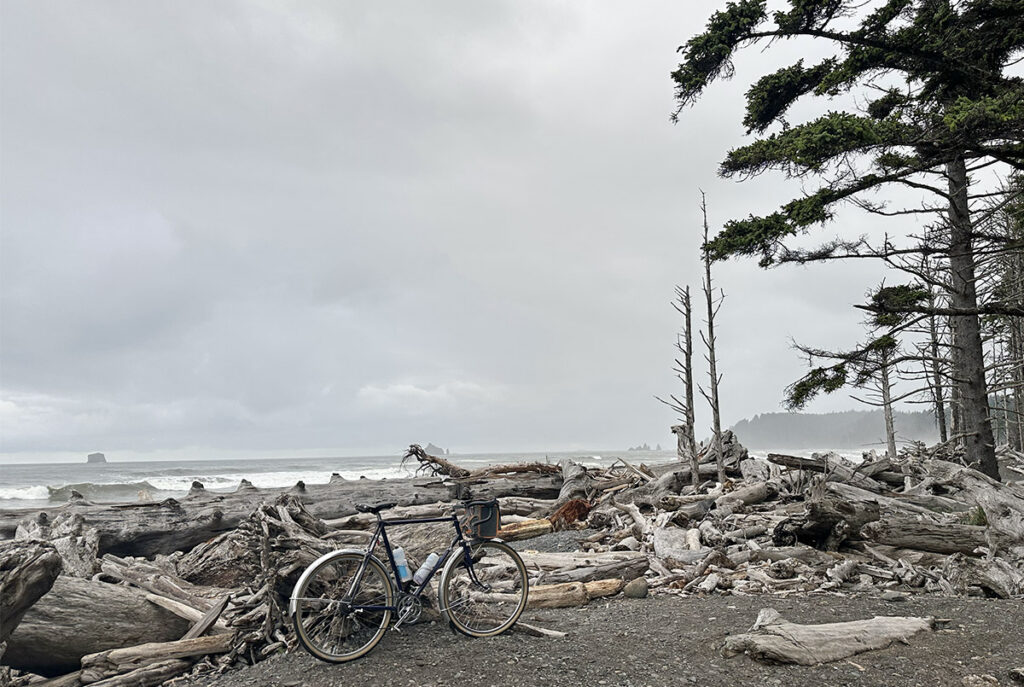
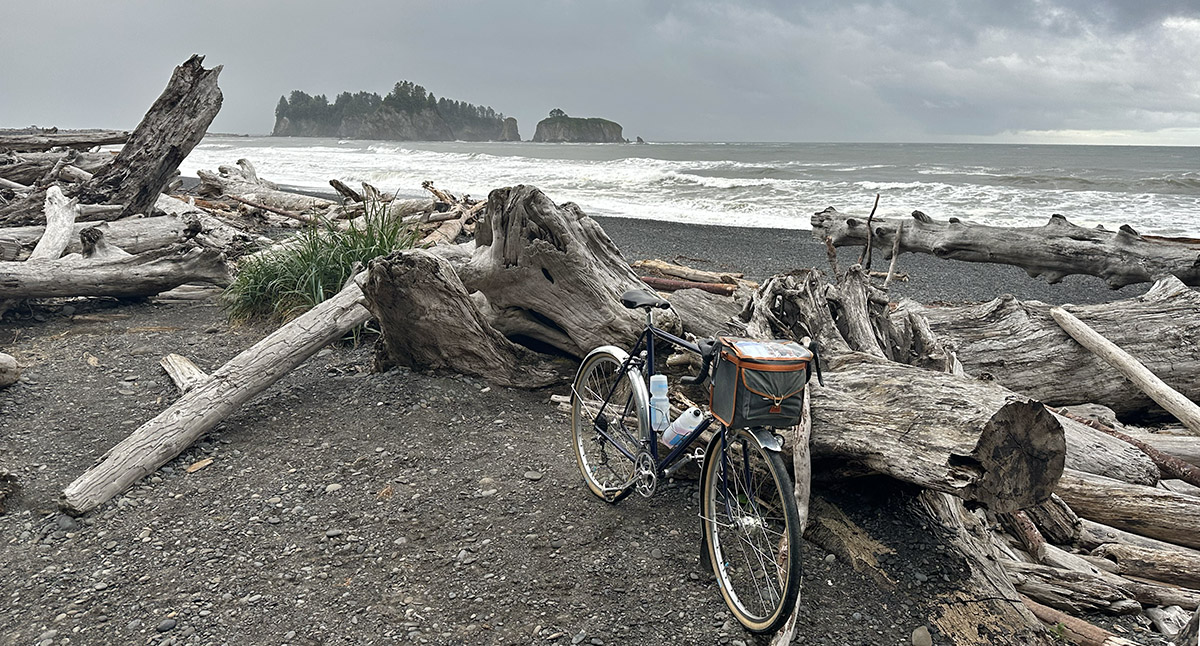
I woke up at 5 a.m. and rode the out-and-back to the coast. Seeing the endless ocean stretching into the distance, with just a few seastacks (islands left by erosion) to break up the horizon, was really special. Huge waves were crashing onto the beach. It felt remote and wild, and far from Seattle. To have ridden all the way here, to the end of the American continent, felt like a real accomplishment.
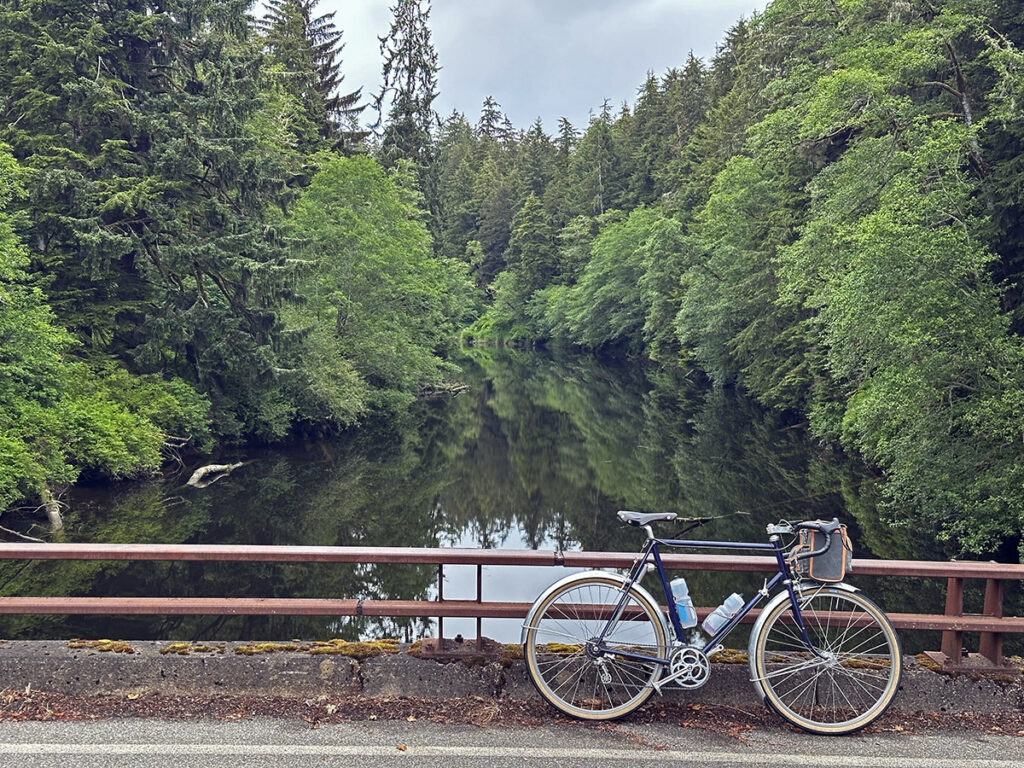
I cycled back on the beautiful road, traversing estuaries and lowland rivers. The impenetrable rainforest was many shades of green. It felt special to cycle here.
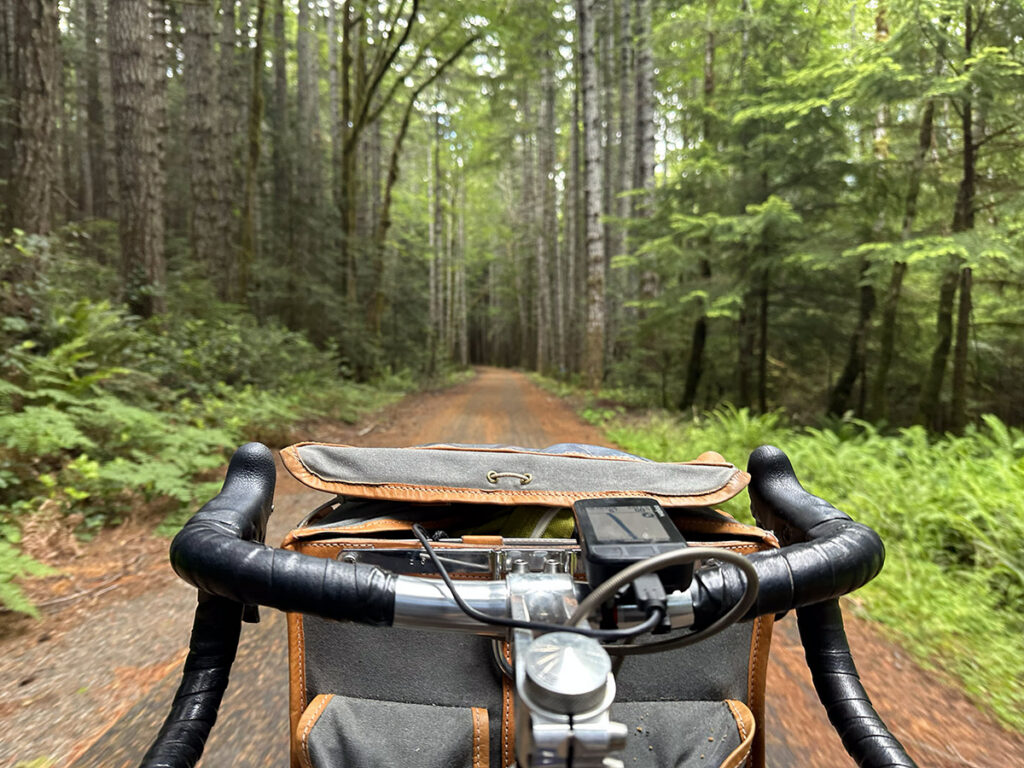
Another new-to-me ‘road’ was the Olympic Discovery Trail: a narrow band of asphalt between tall trees. This is where the two speedy Oregon riders passed me with a quick “Hello!” before vanishing into the forest. They had slept a little longer…
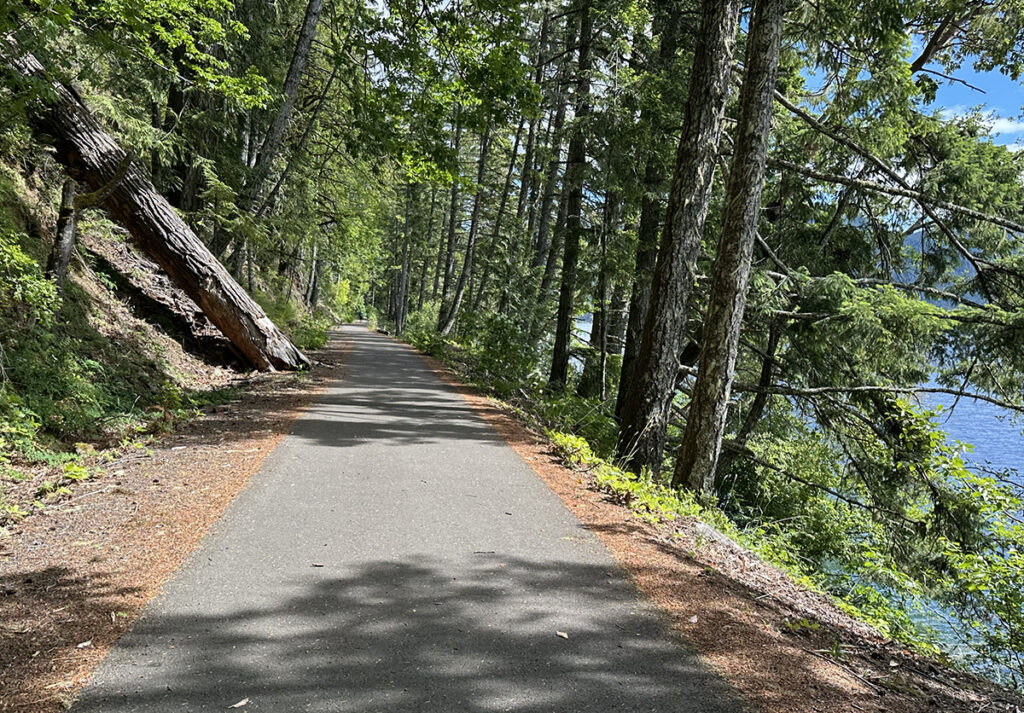
After climbing a miniature mountain pass, the trail went along Lake Crescent. The sun had come out, and the lake was blue and beautiful. This trail is on the roadbed of a former logging railroad, complete with two tunnels that added excitement. Even though I turned on my headlight, the sudden transition between bright sunshine and darkness meant my eyes took some time to adjust before I could really see well.
Scenic backroads took the brevet course to Port Angeles, where I did my first and only stop of the day at a gas station. I filled my bottles, stocked up on questionable food, and sat down briefly to eat an ice cream cone and a bag of chips.
From the harbor, a wonderful trail was going to take us along the shore of the Strait of Juan de Fuca. But not today: A marathon was just finishing as I arrived. There were runners everywhere, and barricades kept out anybody not part of the race. I improvised a detour via the main highway out of town, where more cars passed me within an hour than during the previous 450 km. All kept a respectful distance, thankfully.
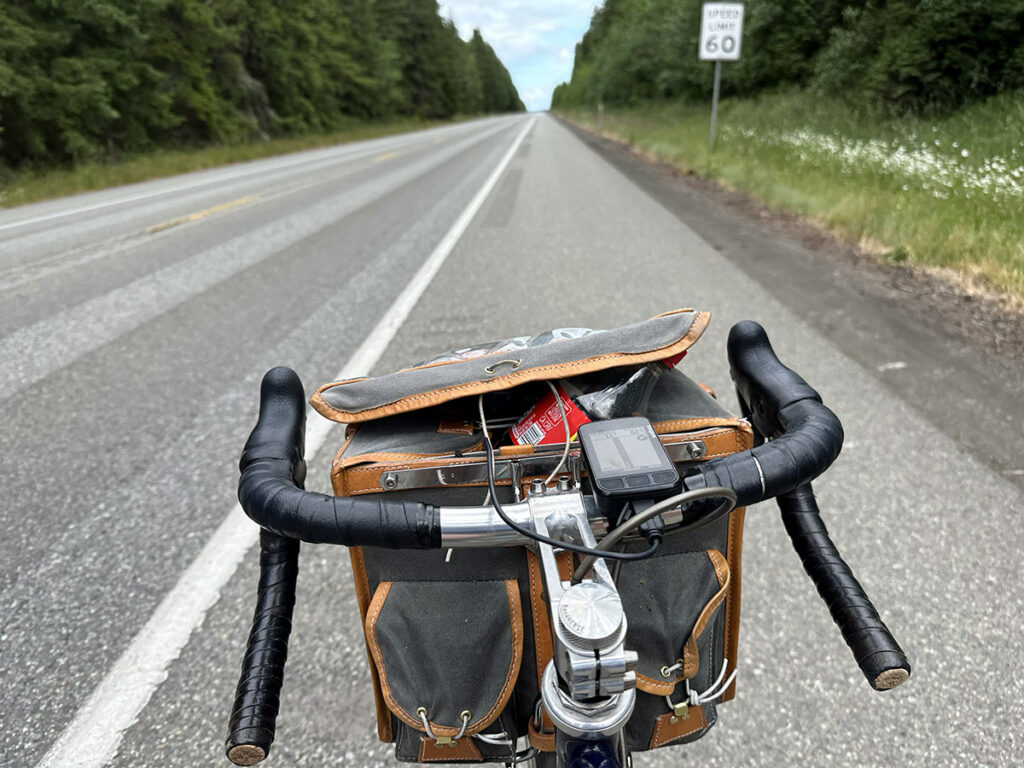
More backroads followed, but then the inspiration seems to have left the brevet organizers. Or, more likely, adding more backroads would have increased the distance too much beyond the 600 km for this brevet. That’s often a problem in places where there are few roads: creating a route that is just the right distance for a 200, 300, 400 or 600 km brevet.
As I traversed the Quimper Peninsula on the main highway, I wistfully thought of favorite roads that snake through the hills just a few miles north of there. Roads with names like ‘Eaglemount’ and ‘Sandy Shore’ that describe what you’ll experience when you ride them. Not today…
At least the shoulders were clear of debris, a welcome change from the days when exploded truck tires littered every highway shoulder with tire-piercing steel wires. (The technological revolution behind this is a topic for a future post.)
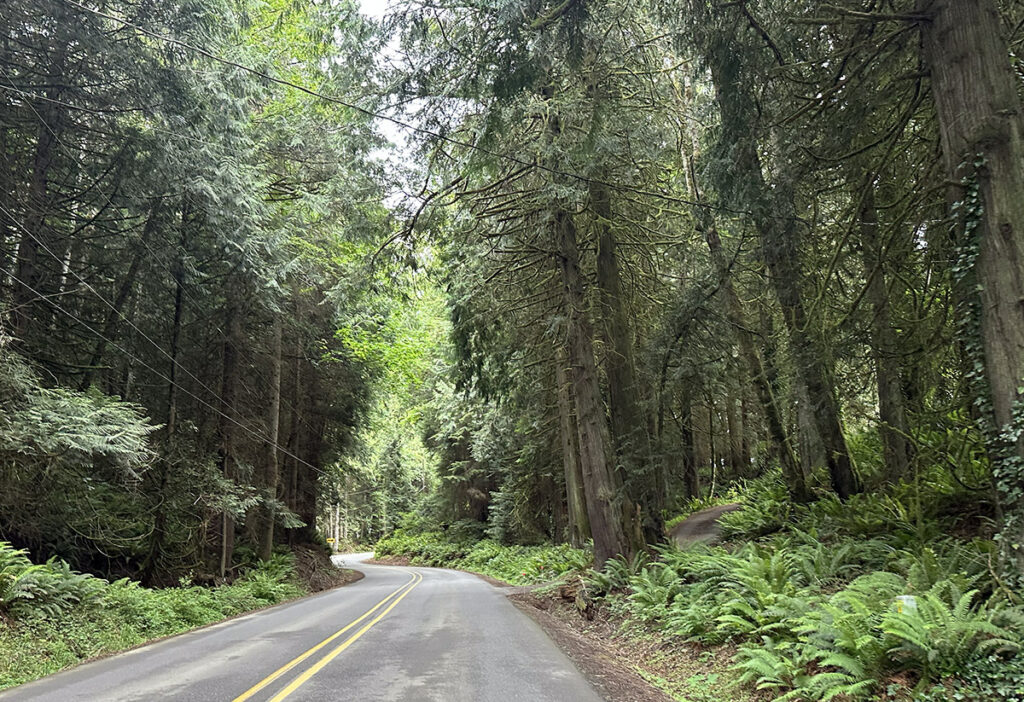
The floating bridge across the Hood Canal spelled an end to the seemingly endless highway miles. I passed through the quaint town of Port Gamble. The backroads here are beautiful—and steep. Every time I ride this route, the number of steep climbs seems to change—somewhere between two and four. It probably depends on how tired I am. I suspect that if I’m not tired, some of the hills don’t register as big climbs. And if I’m really tired, I may lose count of how many hills I’ve climbed.
Apparently I was moderately tired on this ride, as I experienced the full complement of four. They were short and (almost) fun, even with 580 kilometers in my legs.
There was a little more highway across Bainbridge Island to the finish, where the clock stopped after 34:04 hours. The fast Oregonians had finished just 37 minutes earlier. “A case of monumental bonk,” one of them explained. They had recovered with a copious and leisurely lunch in Port Gamble, almost within sight of the finish line.
Checking the ferry schedule, I realized I had enough time to eat two delicious (and still-hot!) slices of pizza, thank the organizers for all the work they put in, and chat a little, before coasting down to the shore and the ferry dock.
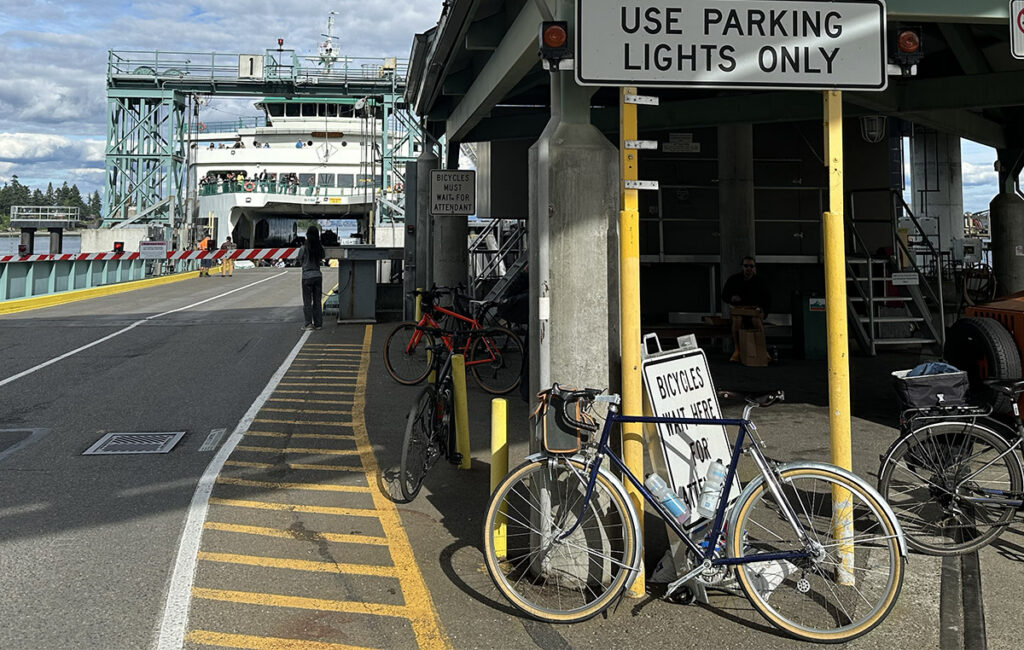
During the crossing, I felt tired and happy. It had been a good ride. When a BQ reader, who had noticed me rolling onto the ferry, introduced himself, I was half-asleep. Sorry about that!
Just a little bit, I had dreaded hour-long ride home from the ferry. I had given it all during the brevet… But the sun was out, the evening light was beautiful, and my bike was still humming along—not even the chain was making noise despite all the rain. It turned out to be a pleasant end to a beautiful ride. And I was home in time for dinner.
More Information: