


10 Years Ago: Paso de Cortés
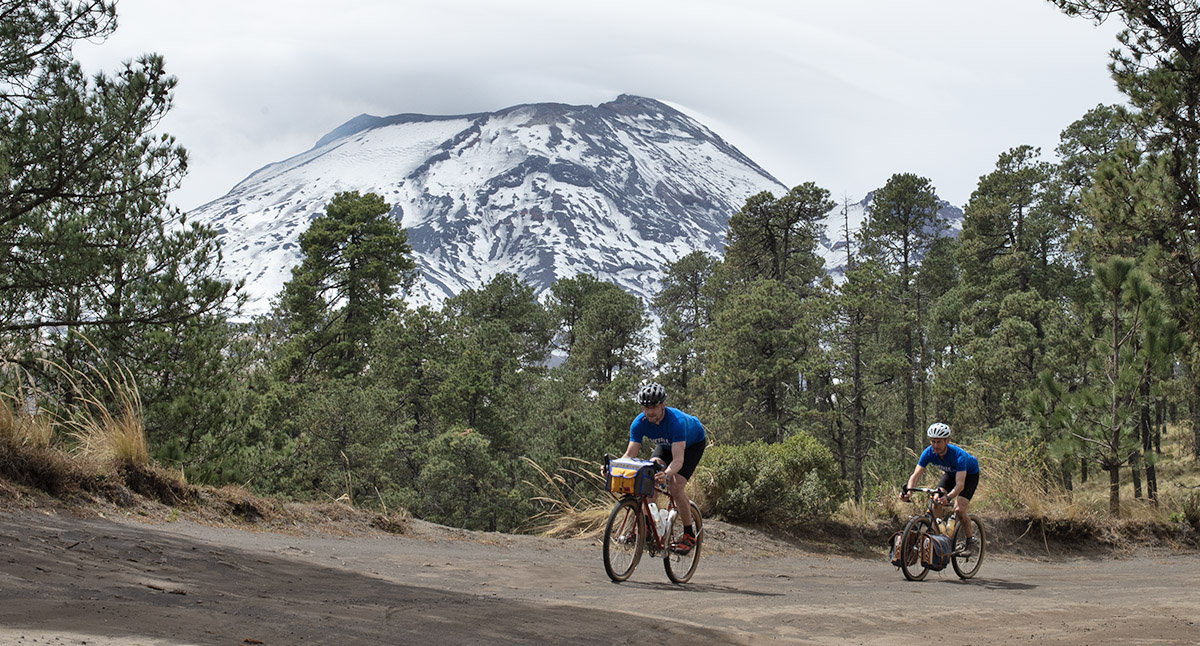
Ten years ago this week we crossed the 3,700-m (12.200 ft) Paso de Cortés in Mexico in one of our biggest adventures. That expedition is significant beyond the epic ride: It was a proof-of-concept for ultra-wide and ultra-supple tires on all-road bikes. It marks the point when the wide-tire revolution really took off.
Until then, we’d mostly recreated long-lost technology from mid-century rando bikes. Supple 42 mm-wide tires transformed our bikes and riding, but they didn’t exactly break new ground.
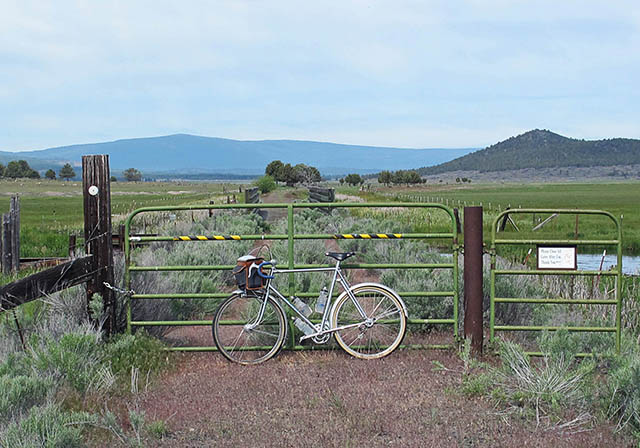
Then I raced my rando bike in the inaugural Oregon Outback, the OG of long-distance gravel races. My 42s were the widest non-mtb tires at the start. Back then, most gravel racers were still on 35s, including Ira Ryan, who won the race. I was happy with my second place in a field of very strong riders. And yet I realized that 42s were still too narrow for the rough and soft gravel of the Outback. I came back from Oregon knowing I wanted wider tires.
Nobody in living memory had ridden supple tires wider than those 42s. How wide could we go? Our goal was to create road bikes for gravel roads, not drop-bar mountain bikes. We wanted to keep our low-Q road road cranks that facilitate our spin and increase our power. Drawing up hypothetical frames, we realized that 55 mm tires should fit between carefully sculpted chainstays and road cranks.
We created prototype tires and tested them. They showed a lot of promise. So we took a deep breath, committed all the money we had and more—and ordered tire molds for ultra-wide tires in 700C, 650B and 26″ sizes. Back then, the wheel size debate wasn’t settled yet… Even today, there are good technical reasons to favor smaller wheels: shorter chainstays for better power transfer, lighter wheels and frames, more nimble handling. (That’s a topic for another post.)
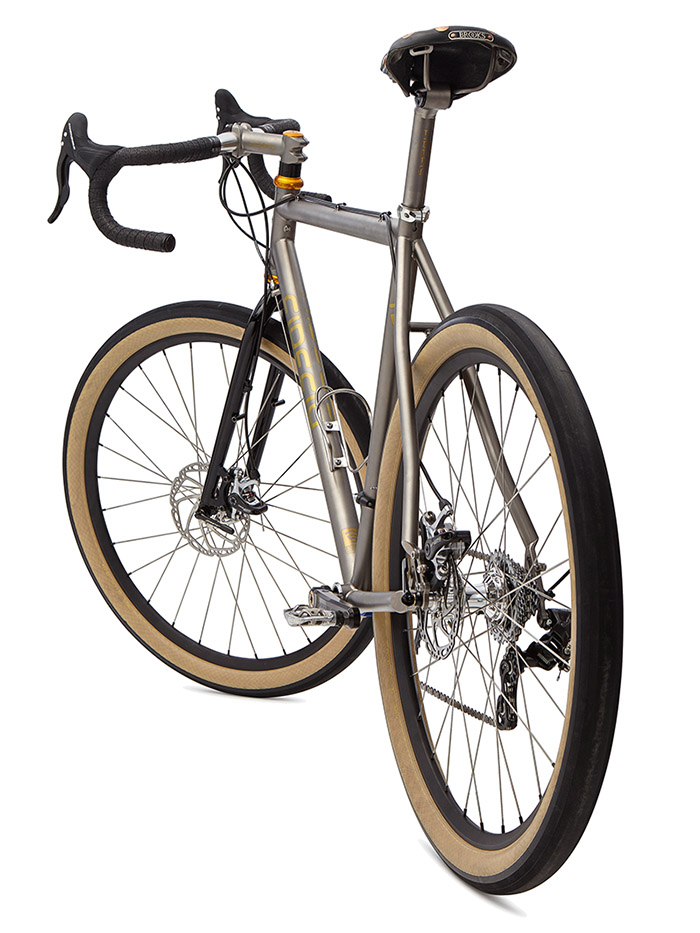
Now we had tires, but no bikes! We had talked to Firefly, the wizards of titanium in Boston, about a test bike. What if they made the first all-road bike for ultra-wide tires for us? They agreed, with the proviso that I would buy the bike if I really, really liked it.
Where to take this proof-of-concept all-road bike with 54 mm-wide tires? We wanted something that really pushed the limits, a ride that was a challenge for bikes and riders alike. Ten years ago, Unbound XL and the Arkansas High Country Race didn’t exist yet, so we had to come up with our own adventure.
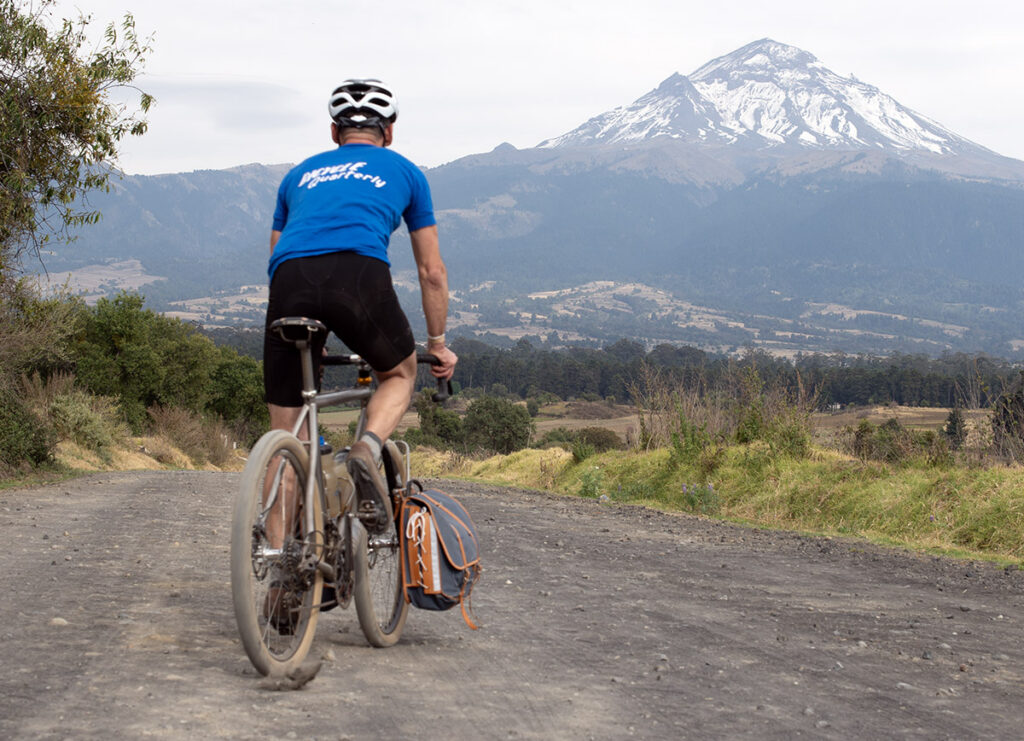
Living the Mexican highlands as a teenager, I was fascinated by the Paso de Cortés, the almost-mythical pass between the two huge volcanoes overlooking Mexico City. Popocatepetl (above) and Iztacchihuatl (barely out of the photo to the left) both stretch more than 5,200 m (17,000 ft) into the sky. The pass is named after the Spanish conquerer Hernán Cortés, who crossed the mountains there to reach Tenochtitlan—the Aztec city that became Mexico City. Then the world’s largest metropolis, built in the middle of huge lakes, it was described as a city of stunning beauty. Cortés subjugation of the Aztecs is both a dark part of history, but it also shaped the Mexico we know today.
These days, the highway takes a much-lower route across the mountains, and the Paso de Cortés is almost forgotten. There was almost no information about the pass. Even the exact elevation wasn’t recorded anywhere. Wikipedia listed the altitude of the pass as “between 3,600 m (11,800 ft) and 3,800 m (12,500 ft)” and helpfully added: “from Cholula, the Paso can be reached on dirt trails, at least sometimes drivable by 4-wheel-drive vehicles.” Traversing the Paso de Cortés looked like it was going to be a real adventure—and the soft volcanic ash on the flanks of the volcano promised a perfect test for the new ultra-wide tires.
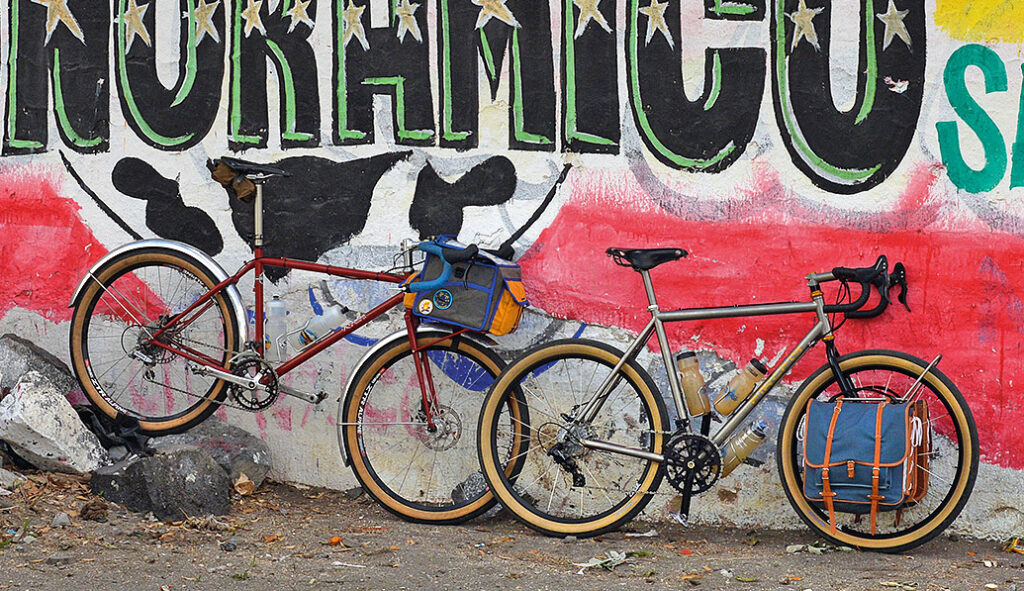
I asked my friend Hahn to join me on this adventure. He created his own ultra-wide-tire bike by modifying an old Bontrager mountain bike and building a new fork for it (left). Both his bike and ‘my’ Firefly ran the new 26″ x 2.3″ Rat Trap Pass Extralight tires.
We set ourselves an ambitious goal: Ride in a day from Cholula at the southern base of the volcanoes across the Paso de Cortés to the center of Mexico City. We figured we’d have to cover a distance of 160 km (100 miles), with more than 2800 m (9200 ft) of climbing. We knew where we’d start and finish, but nothing about the roads in between. However, Wikipedia and some local knowledge from my teenage years in Mexico suggested that it should be possible to reach our goal.
Together with Natsuko and Jana, we flew to Mexico City and took the slow bus across the mountains to Cholula. We spent a day recovering from the long trip and visited the world’s largest pyramid and the old town.
The next morning, we left Cholula just before sunrise, our big tires pattering over the cobblestones and echoing off the brightly-painted walls of colonial buildings. As we left town, we saw the two big volcanoes towering above the landscape. The first rays of the rising sun painted the snow-capped peaks bright orange for a second. Smoke was rising from Popocatepetl—the volcano had been particularly active of late. In between the two peaks, the area of the Pso de Cortés looked almost as high as the peaks themselves. We’d have to climb 1,600 m (5,200 ft) to reach the pass—on bikes and tires we hadn’t ridden before, and on roads that might or might not be passable.
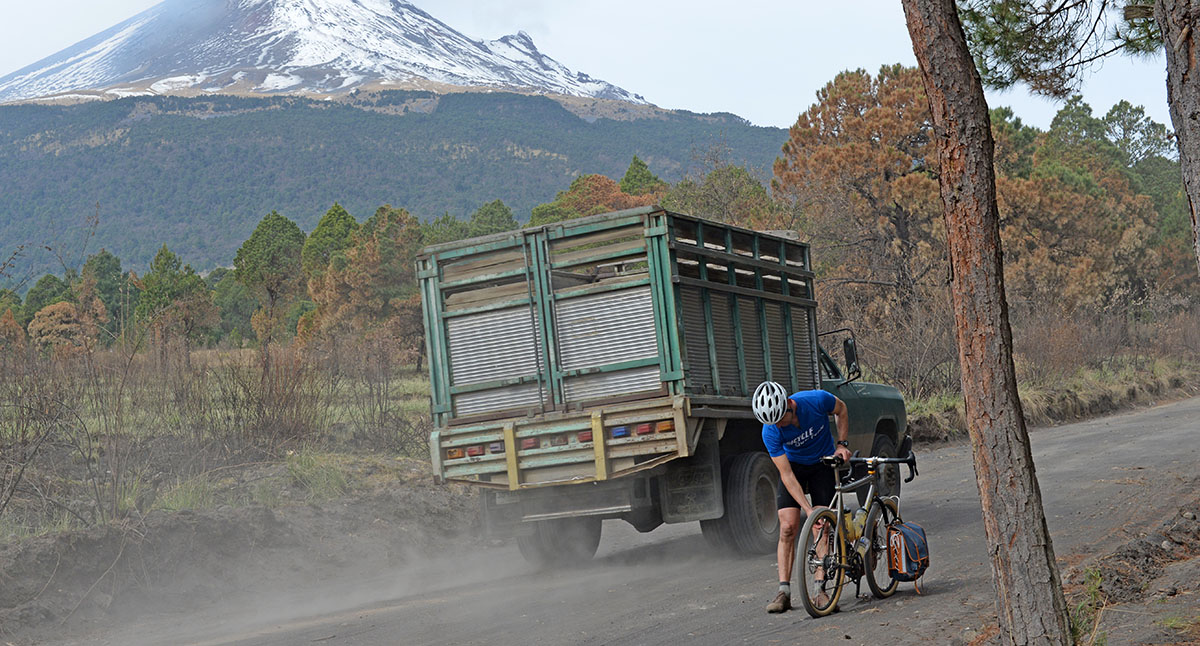
After traversing a few villages on the lower flanks of the mountains, civilization and pavement ended, and the adventure begun in earnest. The road surface was made of soft ash deposited by the frequent volcanic eruptions. Even our 54 mm-wide tires fishtailed wildly until we dropped the pressure to just 22 psi (1.5 bar). What followed was one of the most memorable rides we’ve done anywhere. There was a road—much to our relief—but it was in turns soft and rough, and always steeply uphill. We came across illegal loggers—who fortunately didn’t notice our silent passing. We enjoyed spectacular views. And we climbed and climbed and climbed for many hours.
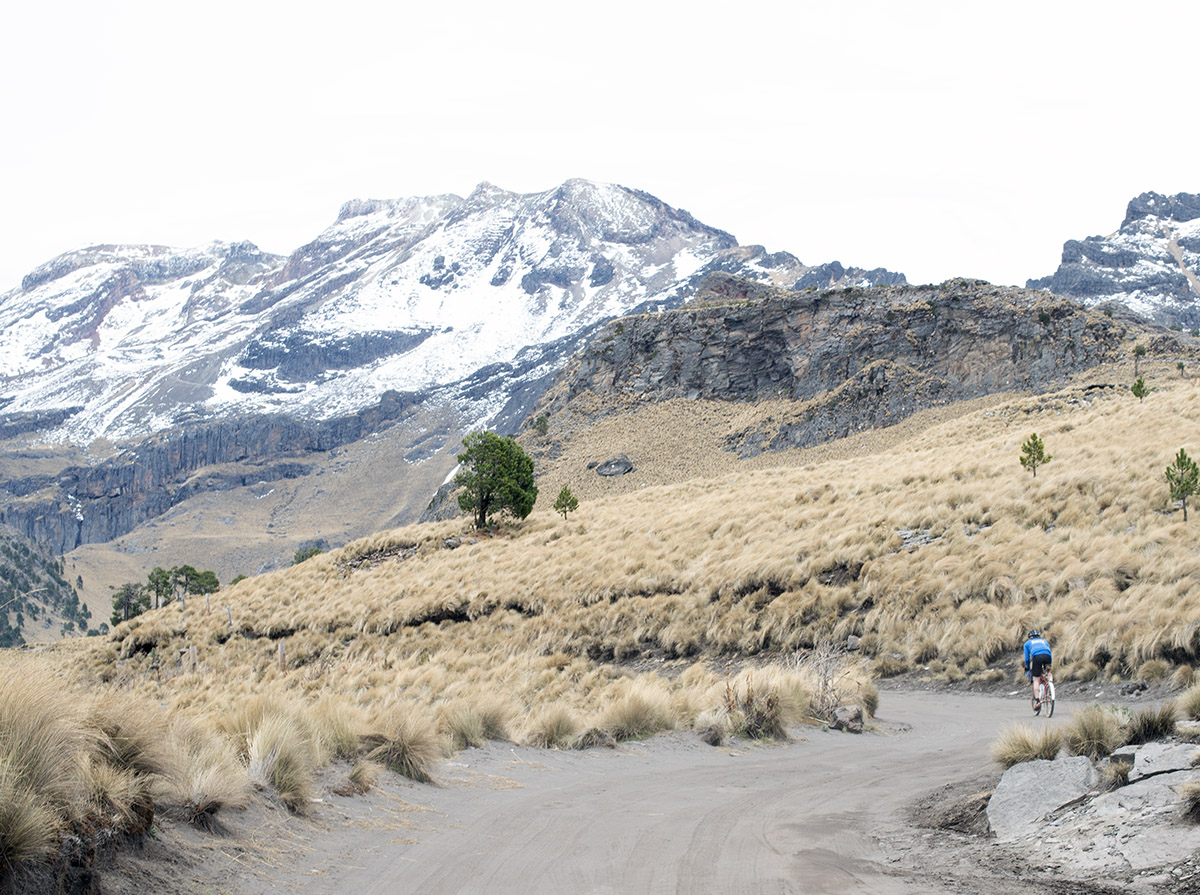
It was already past noon when we reached the pass. Despite the long way we still had ahead, we could not resist a side trip up Iztacchihuatl volcano on a dirt road that was even looser and sandier than the climb to the pass. The air was getting thin up here at more than 4,000 m (13,000 ft) elevation. We discovered our bikes rolled faster on the loose surface than the few 4x4s we encountered. So far, the ultra-wide tires exceeded our (high) expectations.
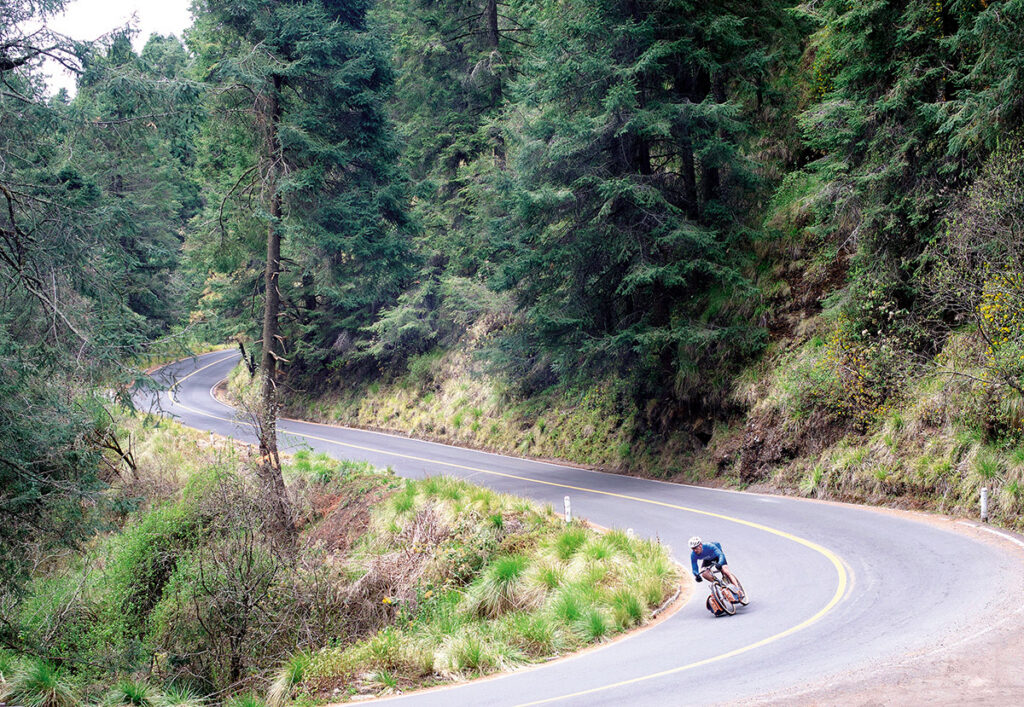
Then we turned around and head back down to the pass. From there, the descent toward Mexico City was paved. And what a descent it was, twisting and turning down the side of the volcano with nicely banked turns. Here we discovered another benefit of ultra-wide tires: superior grip on asphalt. My panniers scraped the road surface in almost every corner. I still vividly remember the incredible rush of this 10-mile (15 km) descent. There’s only one reason this road isn’t world-famous: It’s so remote that few people come here.
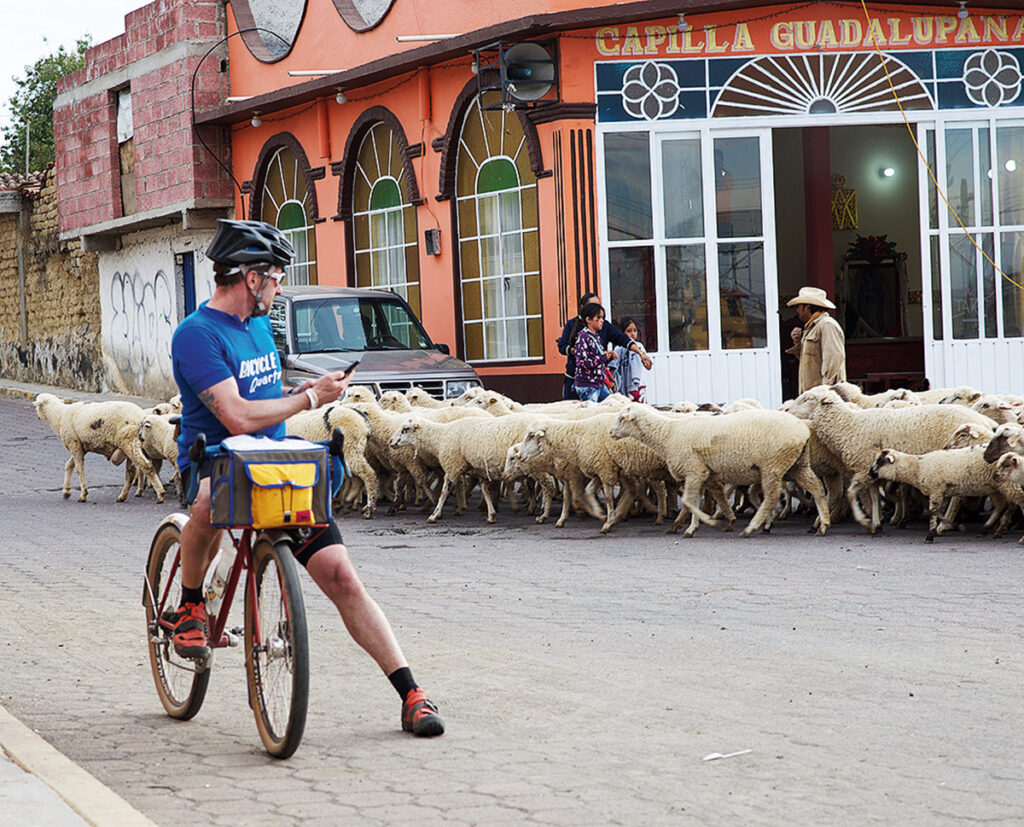
We thought it was going to be downhill all the way into Mexico City, but instead we found ourselves climbing a series of small volcanos as we skirted the densely populated valley floor. And ‘small’ was only in comparison with the giants we had just climbed!
A final descent at sunset spit us into the outskirts of Mexico City proper. Now we faced 15 miles (24 km) of city traffic to our destination—in the dark. We soon found ourselves on a major thoroughfare that headed straight to the city center. This was another adventure, but it turned out to be easy and safe. We shared the road with cars, buses, trucks, motorbikes… and unlit bikes and cargo trikes, many carrying passengers. We had to be constantly alert, but we could also rely on other drivers being aware of where we were and what we were about to do. It was another adrenaline rush, and then we reached the
Zócalo, the giant historic square in the center of Mexico City.
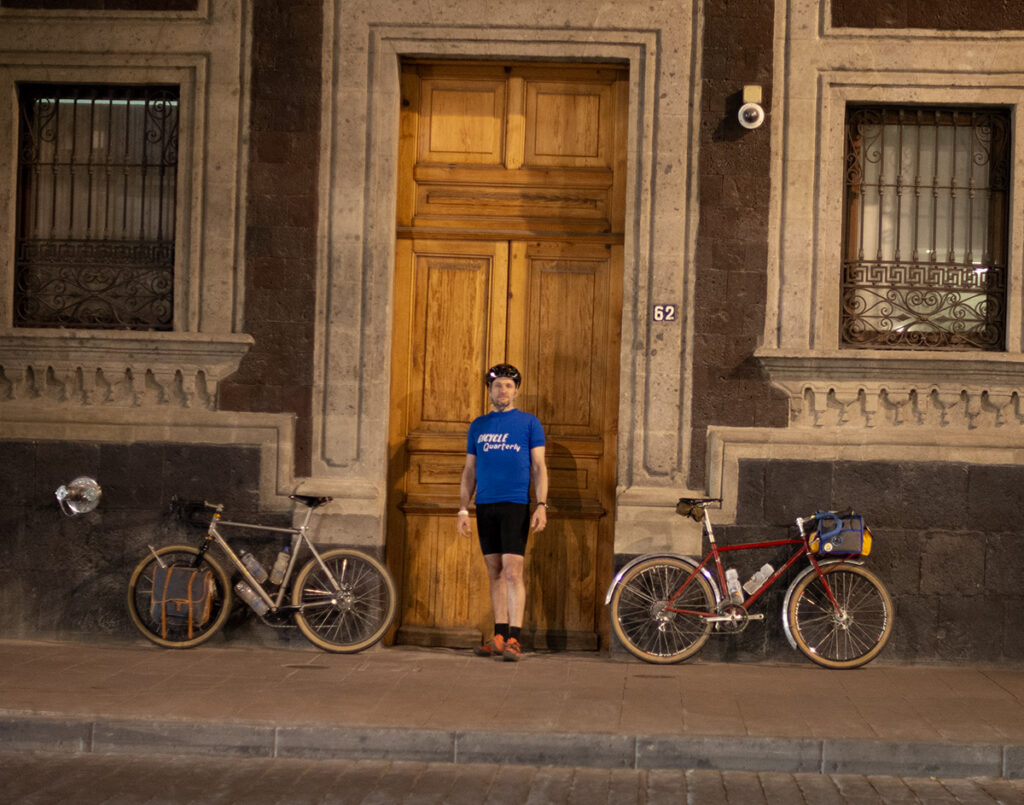
Our bikes and bodies were dusty, but none the worse for wear. As we checked into our hotel, we realized we’d beaten Natsuko and Jana, who had been exploring the artisan potters of Puebla, a historic city near our starting point, before taking the long-distance bus to Mexico City.
What an adventure it had been! As to the tires (and bikes), they exceeded our exectations. Today it’s hard to imagine that, back then, the idea that all-road bikes could run ultra-wide tires and not give up any speed was revolutionary. These days, it’s widely accepted. It’s amazing how far we’ve come in just 10 years!
And the Firefly remains one of my favorite bikes to this day. I was happy to live up to my promise to buy it if I really, really liked it. And I still do…
More Information:
- The full story of the ride across the Paso de Cortés was published in Bicycle Quarterly 56 (Summer 2016).
- Rene Herse tires
- Our book The All-Road Bike Revolution summarizes the science and tech that’s made adventures like these possible.