

Why Pogačar Rides on a Car Tire Brand
It’s Tour de France time. Like many cyclists, we enjoy following the big race. It’s always exciting, even if the winner almost seems like a foregone conclusion this year. The competitions for each stage win are exciting in their own right. And then there is the beautiful atmosphere of the Tour, with its colorful landscapes and elegant riders.
For anyone who makes bikes or components, being associated with the Tour not only provides valuable exposure, it’s also a lot of fun. And so sometimes people ask us why none of the pros ride on Rene Herse tires. It’s true: You see a lot of Rene Herse tires in big gravel and bikepacking races, but you don’t see our road tires in pro races like the Tour de France.
Of course, everybody knows that’s because road racing is big business, and sponsoring a pro team costs big money. Becoming a tire sponsor for a WorldTour team costs between 150,000 and 400,000 dollars (or Euros) a year—plus you have to supply between 1,000 and 1,500 free tires every season. And if you want to be sure to win, you’ll have to sponsor more than one team. In fact, a famous German tire maker sponsors no fewer than six (!) Tour de France teams—more than a quarter of the entire peloton. This includes the UAE Team Emirates of the current yellow jersey, Tadej Pogačar.
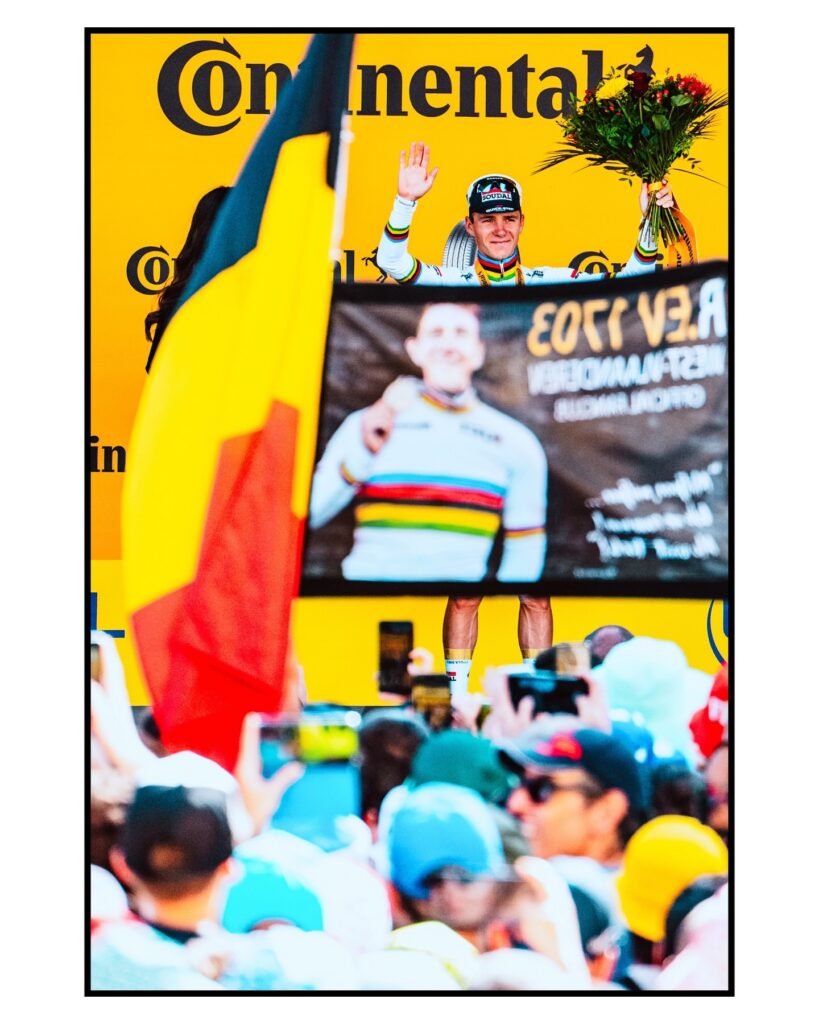
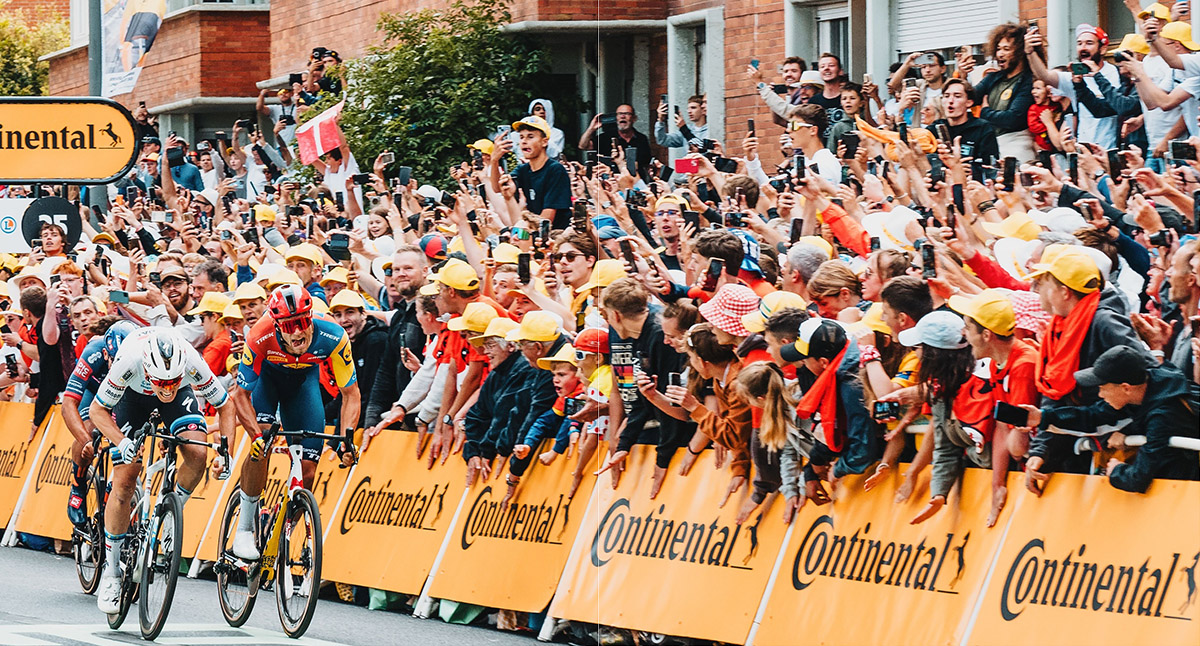
Putting your tires on the racers’ bikes is nice, but having your brand name and logo on every finishing photo is even better. And even more expensive, too: Becoming a Tour de France title sponsor costs somewhere between 3 and 5 million dollars/Euros. You may wonder how even a big maker of bicycle tires amortizes those costs.
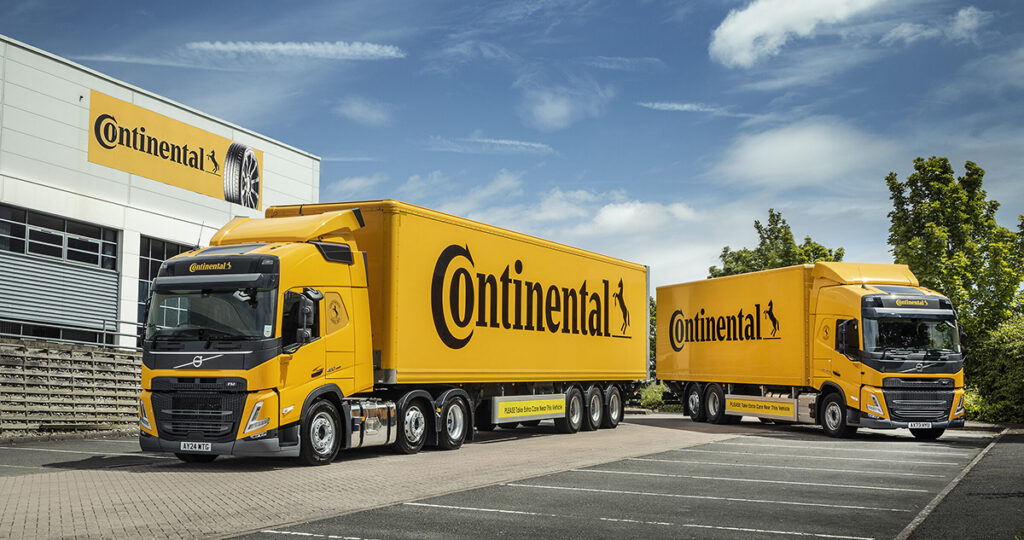
The answer is: They don’t. Or more precisely: The logos you see on riders’ jerseys and on road-side banners aren’t advertising bike tires. They intend to sell car tires.
And cars are big business. The aforementioned German tire brand doesn’t disclose production numbers, but another big brand that also makes car, motorcycle and bike tires produces 200 million tires a year. Suddenly dropping a few million on getting your logo in front of the 150 million people who watch the Tour on TV seems like a good deal. In fact, the German company’s ‘Tour de France’ web page specifically mentions that “more than 70 official Tour support and escort vehicles roll on specially branded Continental car tires” and lists the tire models used by the support cars. Let’s not forget what’s important!
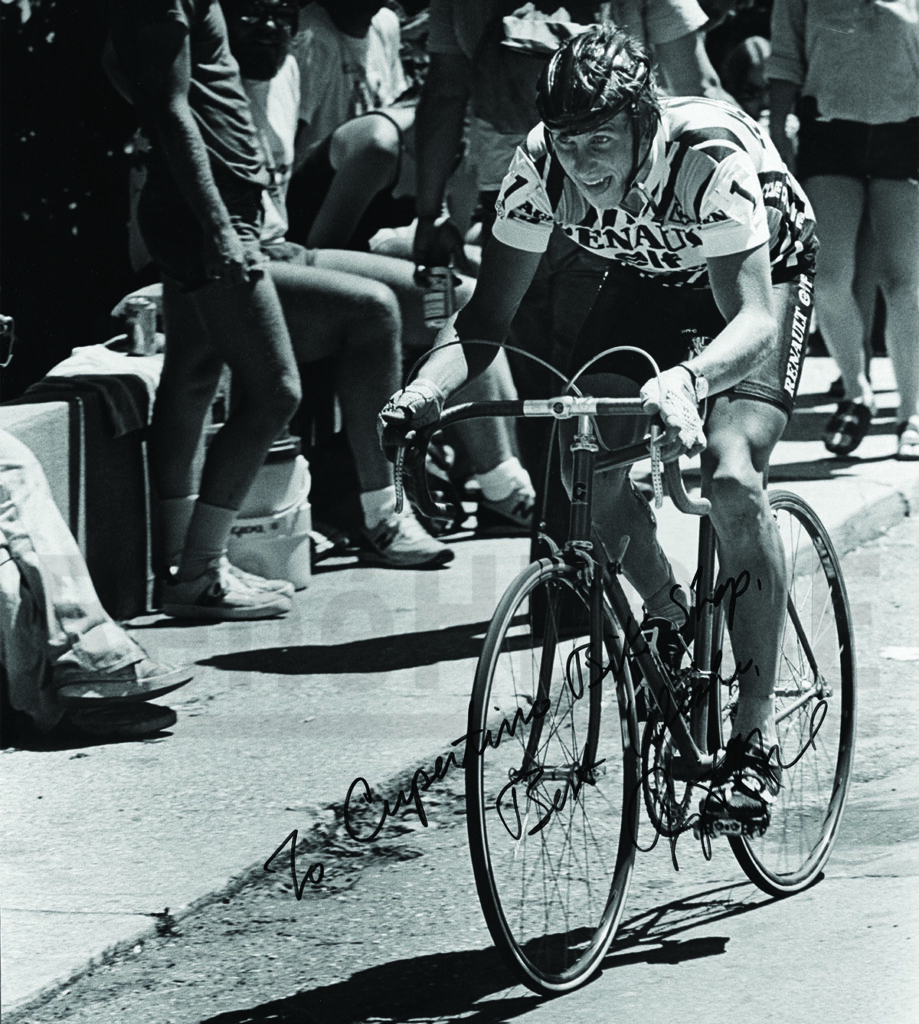
Of course, there’s nothing wrong with outside sponsors in sports. Car companies like BMW and Mercedes have sponsored PGA Tour golf tournaments for decades. In the past, pro cycling teams had car companies as their title sponsors, most famously the Renault team that lasted from 1978 until 1985 and won the Tour no fewer than five (!) times with Bernard Hinault and Laurent Fignon—plus the world championships with a youthful Greg Lemond (above, at a criterium in the U.S.).
Of course, this means that small makers can’t compete. Back in LeMond’s days, small framebuilders often made bikes for the big pros, but their logos never appeared on the down tubes. The frames were painted in the sponsors’ colors and carried the sponsor’s logos.
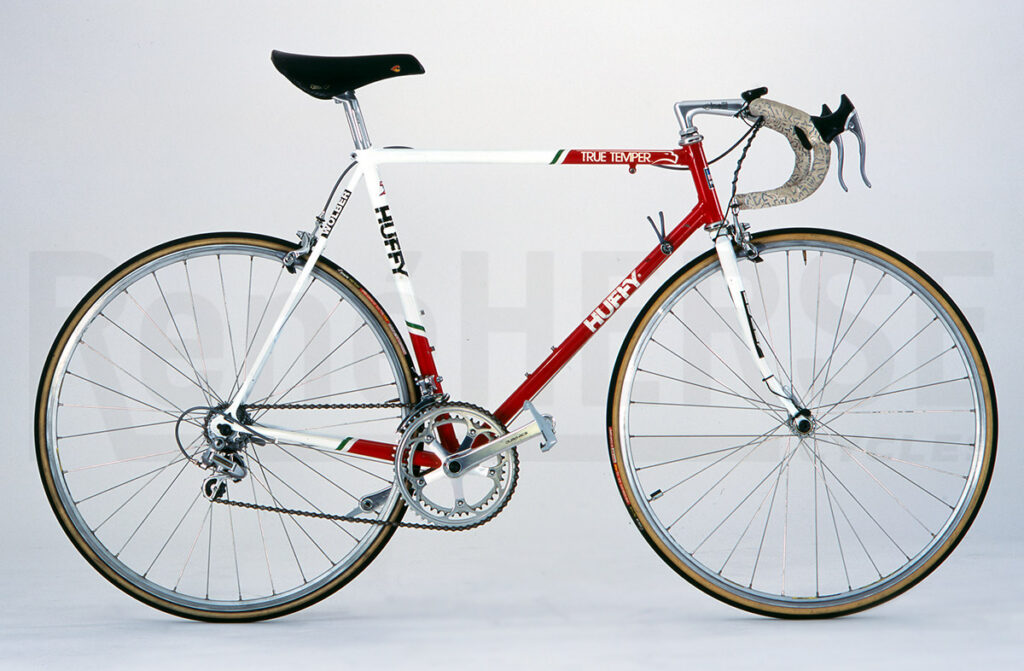
Take the bike that Andy Hampsten rode to victory in the 1988 Giro d’Italia (above, from our book The Competition Bicycle). It had three makers associated with its frame: The title sponsor was Huffy, the budget bike brand. (Again, non-cyclists were the target audience…) Among cyclists, it was common knowledge that the 7-Eleven team frames really were made by Serotta, a small frame shop in upstate New York. What few people knew was that Hampsten had one of the Serotta-made frames develop a crack, and he decided to get a frame from John Slawta, whose Landsharks had an excellent reputation. (And in case you wonder about the tubing sticker, that’s also not what lurks underneath the paint. Slawta preferred to build with superlight Japanese tubing.)
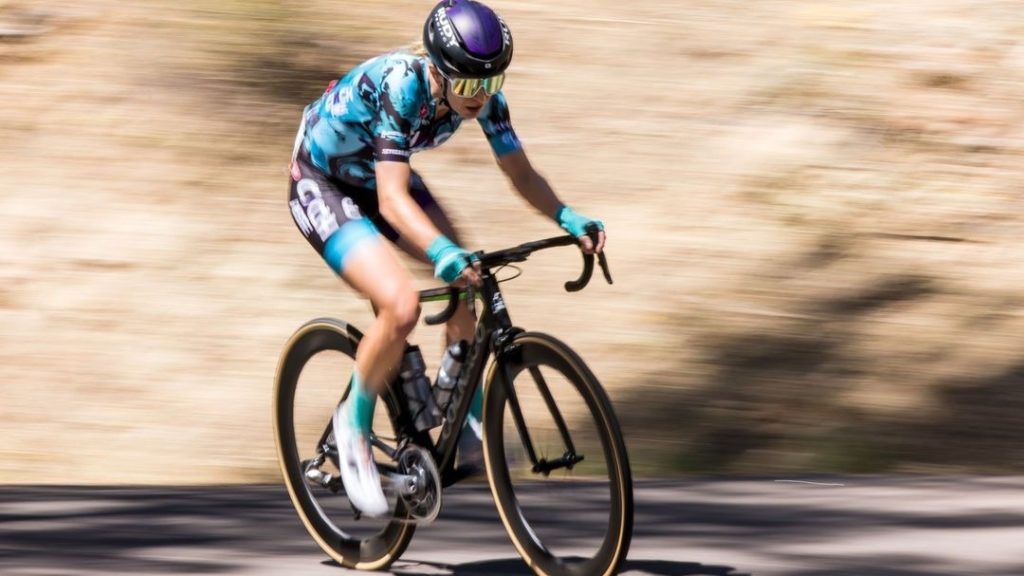
It’s the same with tires. Once in a while, gravel racers podium in big road races, and they tend to run their favorite Rene Herse on their road bikes, too. A few years ago, Lauren de Crescenzo won the Tour of the Gila and came second in the U.S. Pro Road National Championships on 700×28 Chinook Pass Extralights. But for the most part, big-time road racing is not a place where small makers can compete—not because our products aren’t good enough, but simply because we don’t have (and don’t want to spend) the money needed to play in that field.
That doesn’t make the Tour de France any less exciting—and like many cyclists, I eagerly watch all the news about the pros’ equipment, diet and training. It’s all part of the fun!
Further Reading:
Photo credits: Jered Gruber (Photos 1, 2); Volvo Trucks (Photo 3); Jean-Pierre Pradères (Photo 5).