


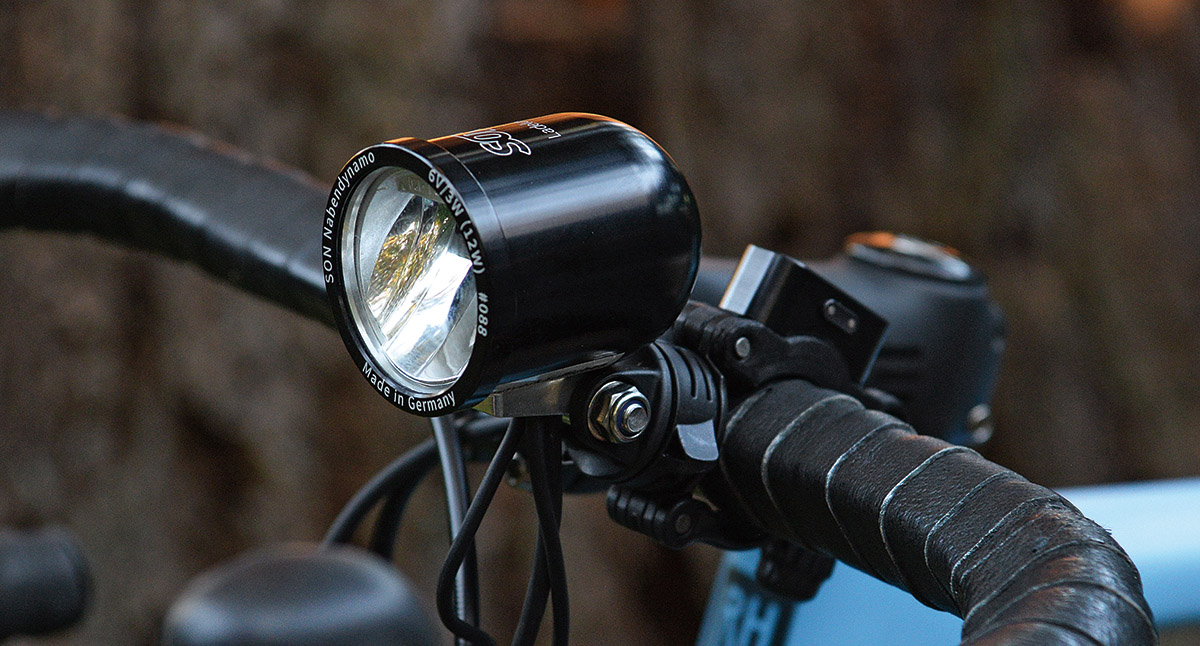
SON Ladelux after 10,000 miles
Shaun Ivory was our first customer who bought a SON Ladelux headlight. As a fellow randonneur, we’ve known each other for years. When he told me that he’s ridden more than 10,000 miles with the new headlights—he’s bought three in total—we asked him to share his experiences.
Hub dynamos and dynamo-powered lighting represent one of cycling’s quieter pleasures: the knowledge that your lights will never go dark, that your devices will stay charged, and that you haven’t added a single battery to your packing list. I’ve ridden with dynamo systems on every bike I’ve owned since 2014—more than 150,000 miles across road bikes, touring bikes, and even a fat bike. So when SON announced the Ladelux, I immediately paid attention.
It promised to fix everything I’d quietly accepted as ‘good enough’ about the lights I’d been using. After nearly 10,000 miles (16,000 km) on three Ladelux-equipped bikes, I can say without qualification: It delivers.
The Lights That Came Before
For context, I’ve used two lighting systems extensively. The first was the Busch & Müller Luxos U, which I rode for several years and genuinely appreciated: It has a proper beam cutoff, a good reflector that makes fork-crown mounting safe on mixed-use trails, and a handlebar-mounted switch so you never have to reach down. But I had three dramatic failures—two from water ingress, one from a spade connector shearing off flush with the housing—and eventually I stopped trusting it.
The Sinewave Beacon replaced it, and I’ve put more than 100,000 miles on various Beacon units across my fleet. The build quality is exceptional: I have never had a single mechanical failure. But the Beacon has real limitations. Its standlight is too dim to be useful. It throws light in all directions, which makes fork-crown or rack mounting a problem on shared trails where beam cutoff is legally or socially required. And both the USB port and the power switch live on the light body itself, which means reaching down whenever you want to adjust something.
I had learned to work around these constraints. I switched to SON28 hubs, which produce more usable power at lower speeds than the slightly more efficient SONdelux hubs. I developed a habit of leaving the light off during daylight to maximize charging. On my loaded touring bike, moving at under 10 mph (16 km/h), I could keep three devices—a phone, a Garmin 1040, and a Garmin inReach Mini—mostly charged, as long as the light was off. With the light on, everything stayed alive, but rarely recovered fully. That was the state of the art, and I had accepted it.
Discovering the Ladelux
SON announced the Ladelux in December 2023 with a projected summer 2024 release. That came and went. I checked availability every month until units finally appeared in European shops in 2025—still largely inaccessible to U.S. buyers, because the few European SON partners who had stock seemed to require in-person installation. When it appeared on Rene Herse Cycles’ website, I ordered one the same day.
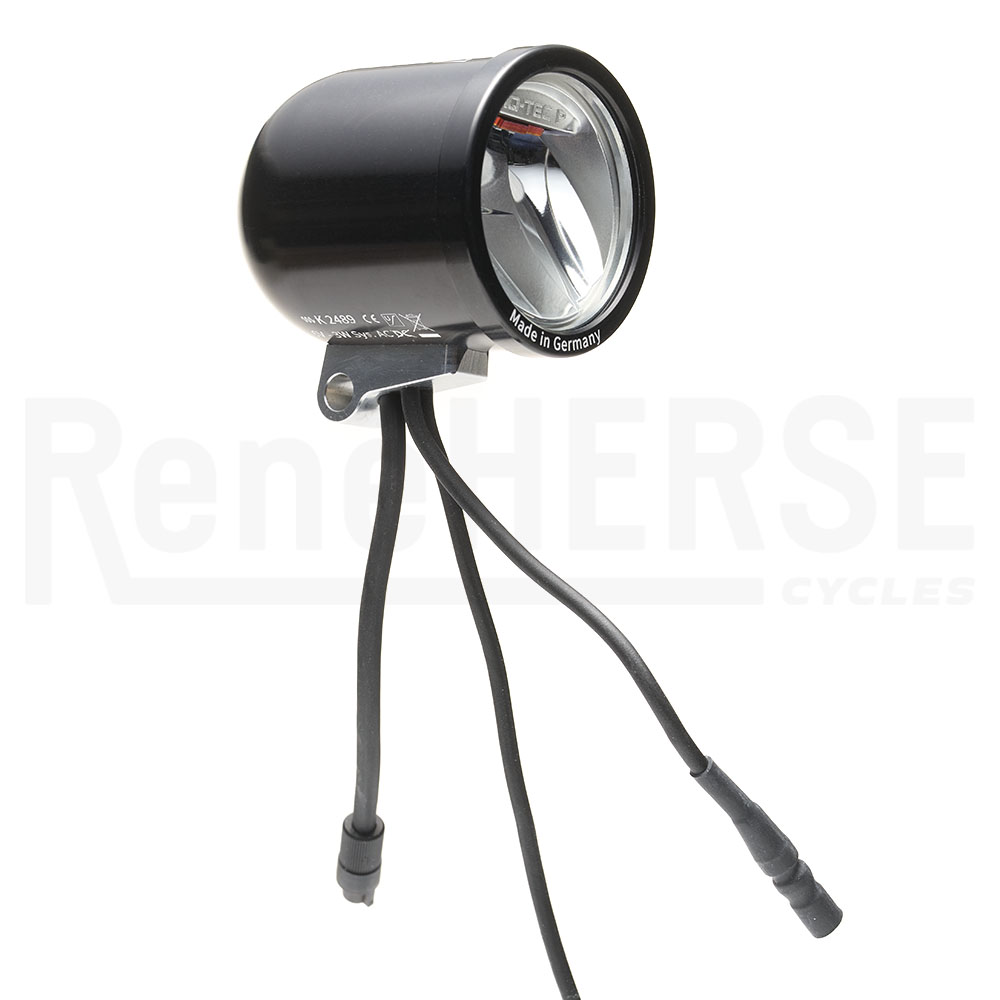
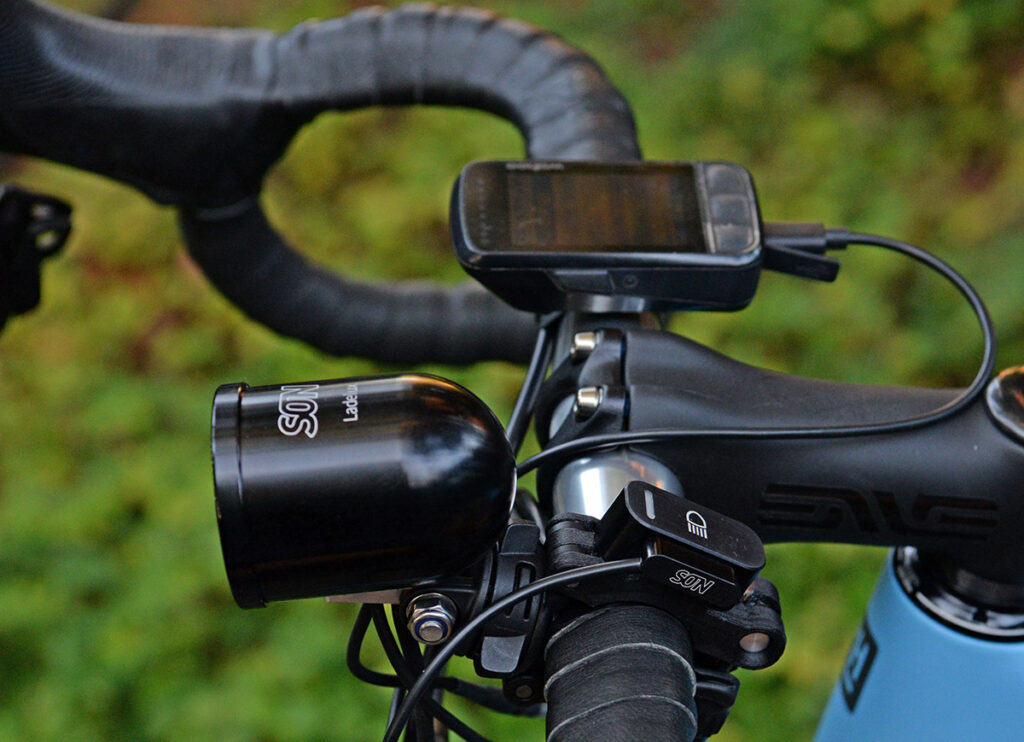
The Ladelux is a system rather than a single component. You need the headlight itself, the handlebar switch cable, and a charging cable with SON’s proprietary magnetic connector (available in USB-C or Apple’s Lightning format). I installed the first unit on my SON28-equipped 1982 Trek 510 within hours of its arrival. I quickly ordered a second one for my touring bike, since I was heading out for a solo Pacific Coast ride from the Canadian border in Blaine, Washington, to the Mexican border in San Diego, California.
Real-World Performance
On that Pacific Coast tour—fully loaded, averaging around 10 mph (16 km/h), and much slower on climbs—I ended nearly every day with all three devices at 100% charge, even though I was running my headlight continuously. After the first couple of days, I simply stopped turning it off. That hadn’t been possible with any previous setup.
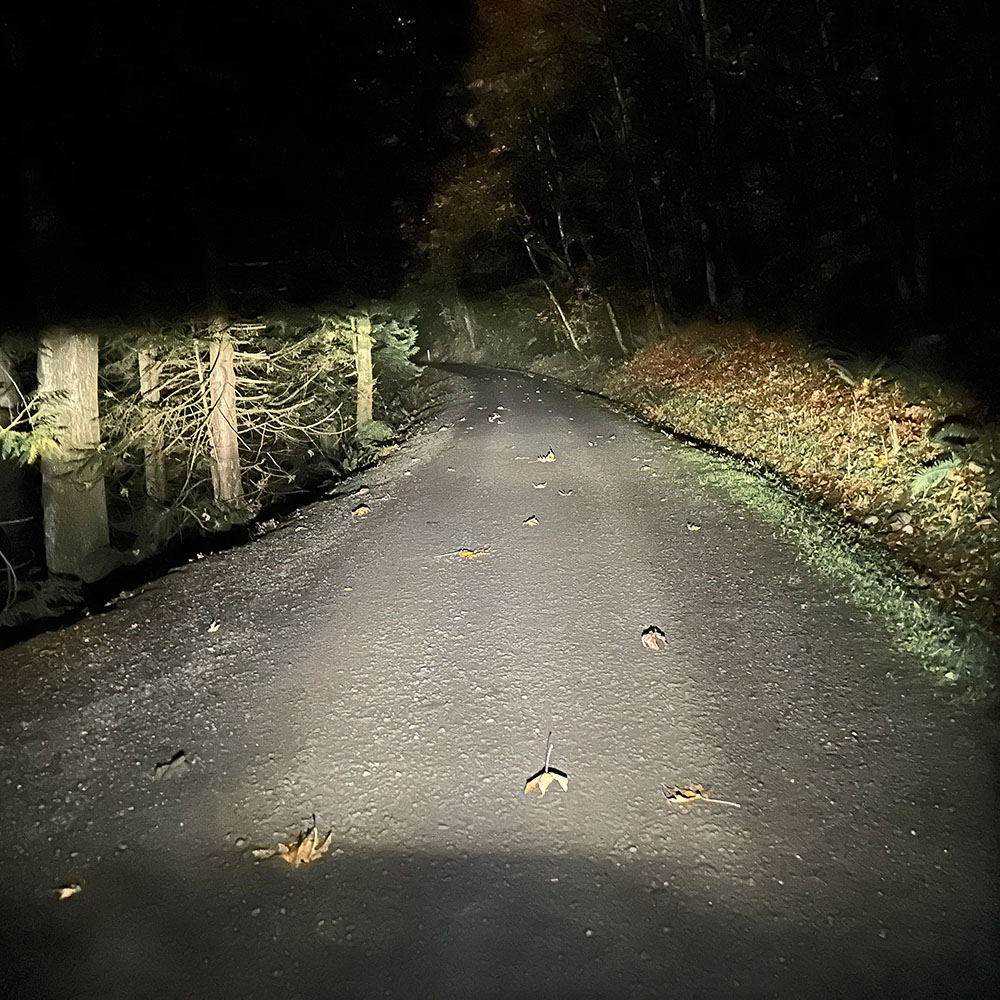
The beam cutoff is flawless in practice. I no longer think about it on mixed-use trails; it simply behaves the way a well-designed light should. The reflector, which draws on the legendary Edelux II design originally developed by Busch & Müller, produces a beam pattern well-suited to both roads and paved trails—wide enough to see the edge of the path, controlled enough not to blind oncoming trail users.
The Ladelux also includes a built-in cache battery, which matters more than it might sound. Without it, charging output fluctuates every time you slow for a climb or stop at a light. With the cache battery, the light doesn’t flicker at low speeds and your devices see steady, consistent power. It’s the difference between a charger that works and one that merely tries.
The high-beam mode is genuinely useful on dark descents or unlit back roads. The handlebar switch lets you cycle through modes without taking your hand off the bars or looking away from the road. This makes the light feel like an integrated part of the bike, and not a bolted-on accessory.
A Few Honest Notes
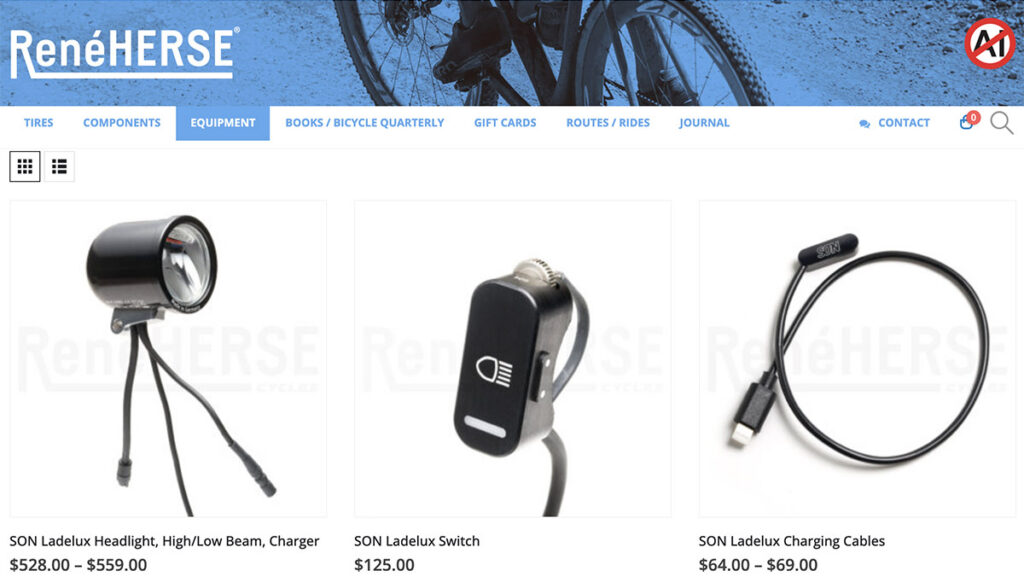
The cost is real and worth acknowledging. Light, switch cable, and a charging cable together come to around $717 before tax and shipping—nearly twice what a Sinewave Beacon costs. For most riders, that is a significant outlay. In my judgment, it’s worth every dollar, but it deserves to be said plainly.
The mode indicator LED on the switch can be difficult to read in direct sunlight. I sometimes cup my hand over it to check which mode I’m in. It’s a small inconvenience, and I mention it only because I notice it.
A theoretical concern involves the magnetic charging connector. The cable attaches via neodymium magnets at the switch, which is convenient and elegantly implemented. Around 2015, I experimented with aftermarket Dyna-Snap magnetic connectors for SON spade terminals; they worked well initially, but failed as the nickel plating corroded. This appears to be a common problem with nickel-plated neodymium magnets. I have no evidence the Ladelux connector will share this fate; the engineering looks more robust, and the contacts are better protected. But I’ll be watching, and it’s worth knowing that the switch and cables are separately available as replacements—though they are not inexpensive. [Editor’s note: Corrosion of the magnets has not been an issue in testing; if it does happen, it is covered by SON’s 5-year warranty.]
The Bottom Line
I have three Ladelux units running now, on three different bikes, and I haven’t reached for a backup battery or a charging cable since. For anyone who rides with a dynamo hub and wants a headlight that handles every condition—charging, beam control, standlight, usability—without compromise, I don’t know what I’d recommend instead.
The SON Ladelux is the best dynamo headlight I’ve ever used. It took eleven years of waiting for it to exist.
More Information:
- Lights in the Rene Herse program
Photo credits: Rene Herse (not of Shaun’s bikes)