


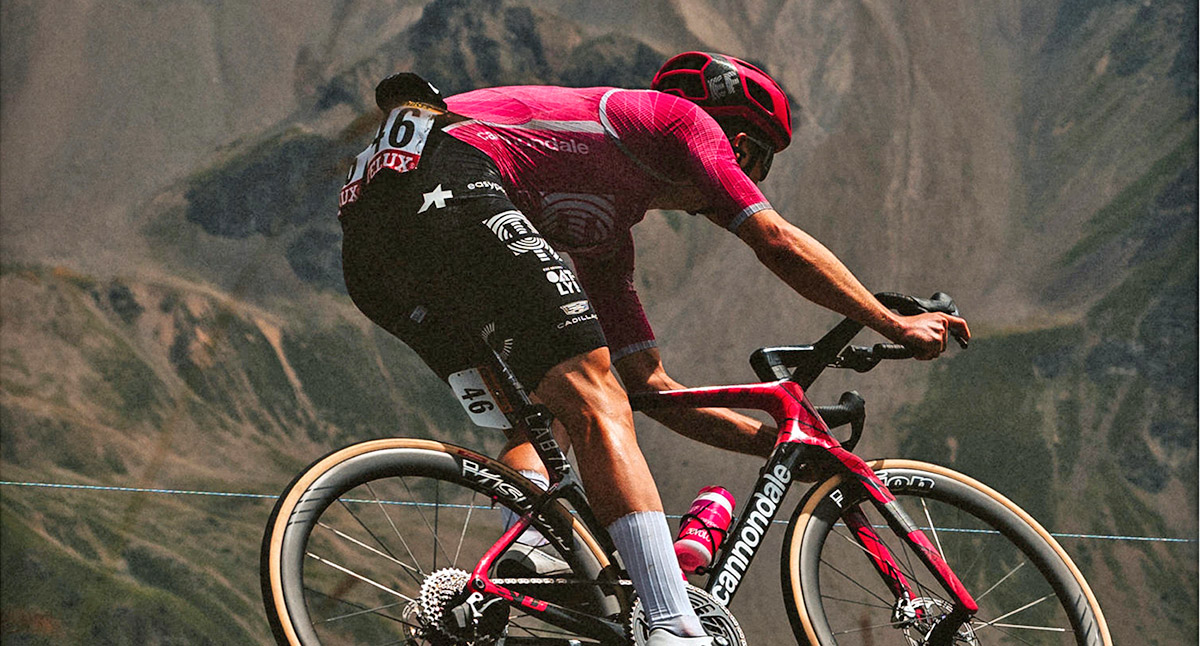
TdF Stats: One Flat per 13,000 km
Last year, in our article ‘The Science of Winning the Tour,’ we wrote that tire makers were behind the curve when it came to modern road tires: “They still make their ‘road’ tires as strong and stiff as in the past, when there’s no need for that any longer, with today’s wide tires.” We suggested that riders and racers could run faster time-trial-specific tires—without puncture protection—not just in time trials, but for general road riding, too.
After this year’s Tour de France, I chatted with a fellow tire designer, who works for one of the big companies that sponsors several pro teams. He’d just got the feedback from one of those teams. (He didn’t tell me which team, and I didn’t ask…)
“Can you imagine?” he exclaimed. “They ran their ultra-fast time trial tires for the entire race—without any puncture protection.” I asked the obvious question: “How many flats did they have?”
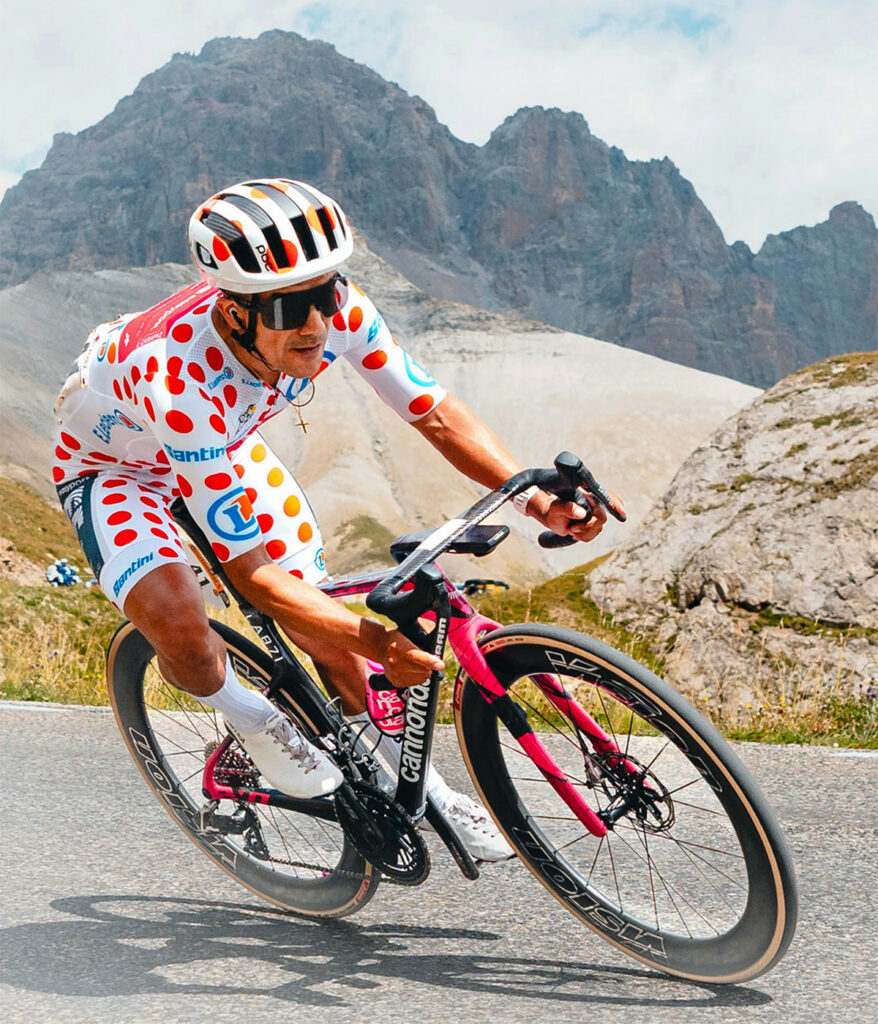
The answer surprised even me: “Two flats for the entire Tour! It’s amazing what happens when you run 30 mm tires at low pressures.”
Amazing indeed. Anybody who has been around bike racing for a while remembers racers raising one arm and wobbling to the side of the road on a flat tire, waiting for their team car or the neutral support motorcycle to arrive with a new wheel. I mentioned this to Ted King, who rode the Tour twice, in 2013 and 2014. He cautioned that, despite the support, pros are very averse to risking flats: “During my 2014 Tour, I had the most time with my nose in the wind compared to anyone else in the race.”
That’s a cool statistic! Ted was riding as a lead-out rider for Peter Sagan, who won the green jersey as best sprinter. Ted continued: “Going from the front of the race, to the side to replace a wheel, and back to the front, is one heck of a task.”
That can still happen, of course, but much less than in the past: Even with ‘fragile’ unprotected tires, the above-mentioned team had just two flats for the entire three-week race. Let’s do the math: With eight riders on the team, and race distance of 3,330 km (2,260 miles), that works out to an average one flat per 13,000 km (8,300 miles). Remarkable indeed!
Once again, the pro riders are only slowly catching on to what many of us have known for a long time: Wide tires get fewer flats because they run at lower pressures. That’s how we can ride supple high-performance tires not just in special races and events, but every day.
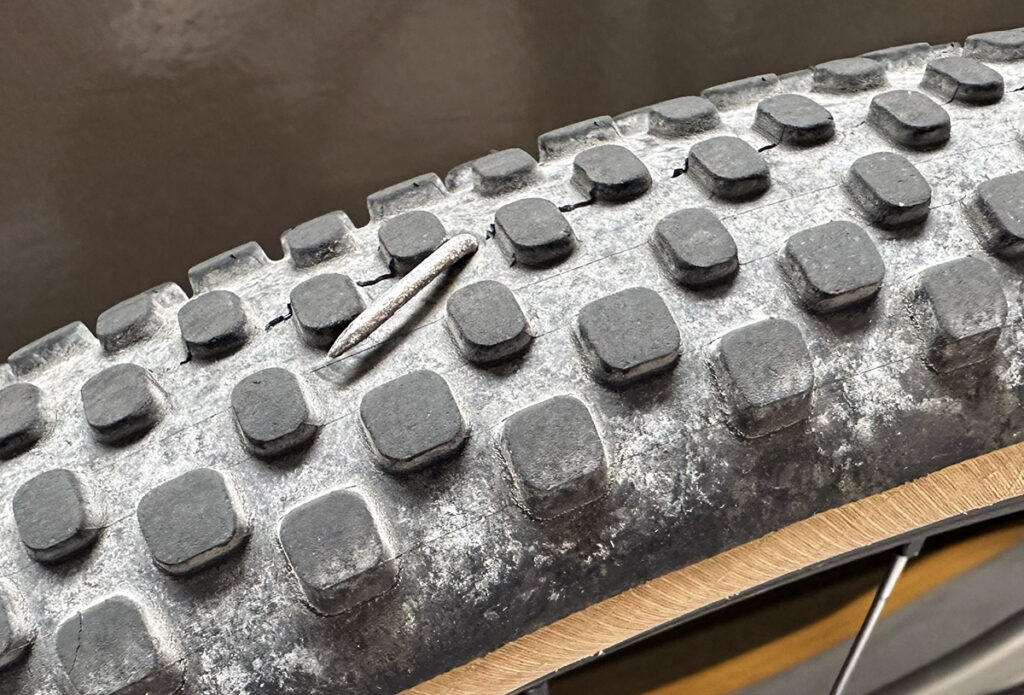
In fact, my flat frequency roughly matches that of the Tour racers: I had just one flat in the last 18 months of riding about 13,000 km. And I’ve also been riding the fastest ‘time trial’ tires—our Extralight casing—exclusively during that time. And that single flat was caused by a huge nail that I picked up at night, on a gravel road in Japan (above). A nail that big would have worked its way through pretty much any tire, no matter how tough. As it was, I made it home without losing too much air—another benefit of low tire pressures. Rather than having to fix the flat in the dark, I patched the tube the next morning.
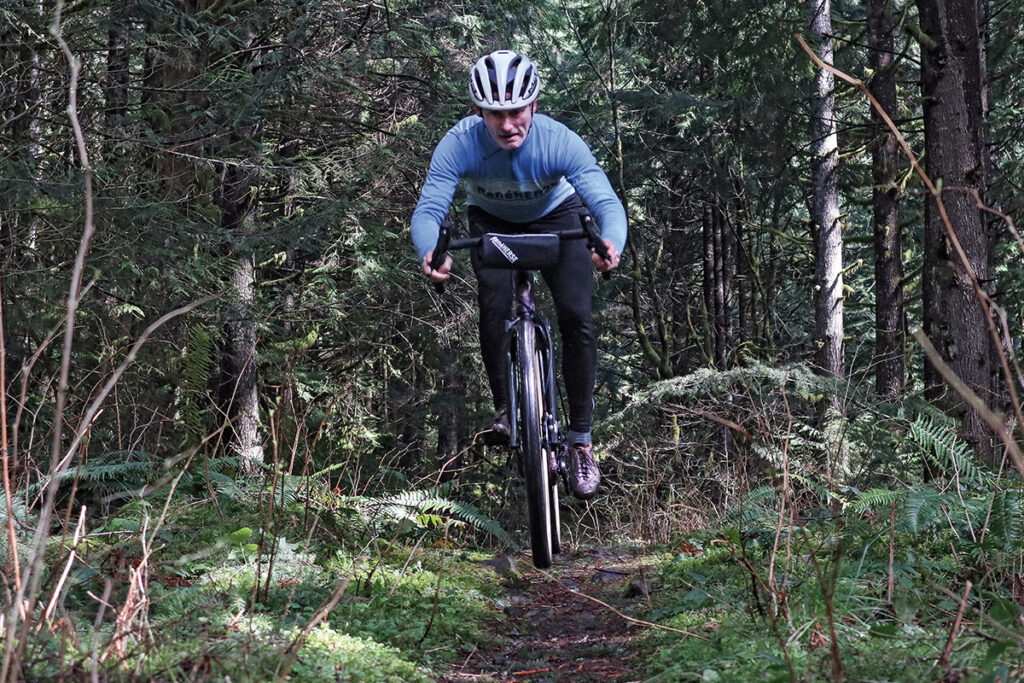
And unlike the Tour de France racers, I’m not just riding on smooth, paved roads. Those kilometers included two FKT rides on the Oregon Cascades Volcanic Arc. Countless rides in the Cascade Mountains pushing Bicycle Quarterly test bikes to the limit (above). A 600 km brevet with plenty of highway miles. And daily commutes on urban roads here in Seattle. But then, the tires I ride are even wider than 30 mm, and the pressures I run are even lower than those of the Tour de France pros.
Fewer flats are a result of the wide-tire revolution that’s often overlooked. But it really makes a difference when it comes to enjoying our rides—just like the extra comfort and added speed of the wide-and-supple tires we ride today.
Further Reading:
- 3 Take-Aways from the 2026 Tour de France
- Tour Secrets: TPU Tubes and Tire Pressure
- Why Pogačar Rides on a Car Tire Brand
- Rene Herse tires are available with and without reinforced casings
Photo credit: Jered Gruber (Photos 1, 2), used with permission.