


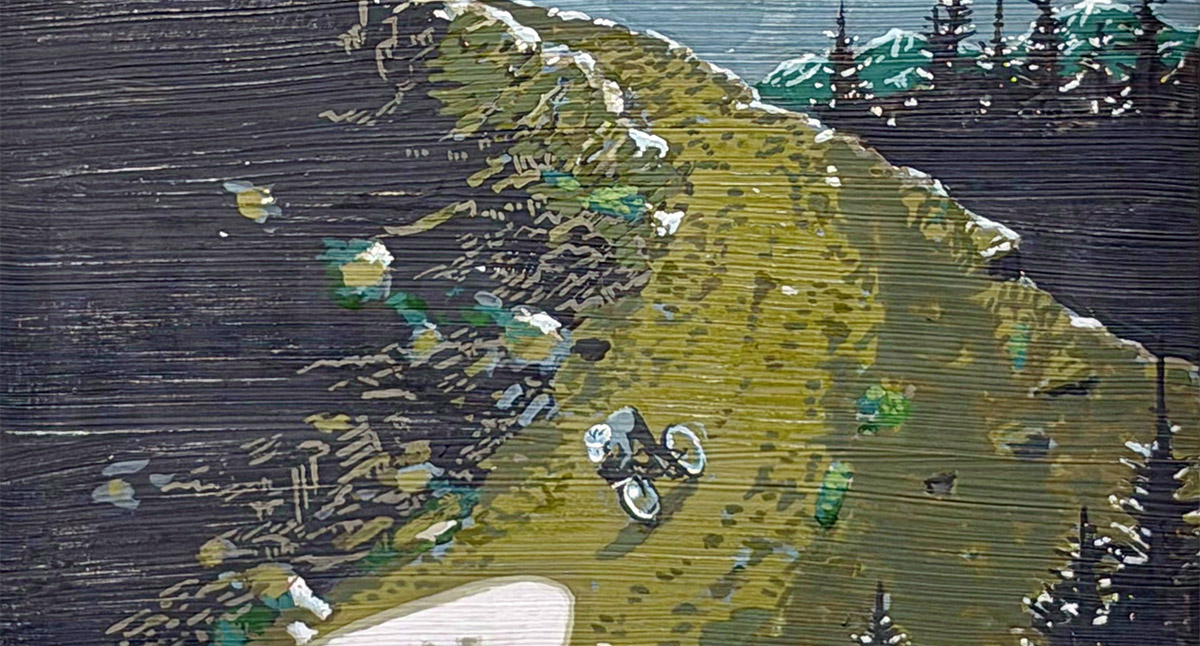
Let’s not take ourselves too seriously!
For most of us, cycling is a hobby. Most of our rides serve no purpose, other than to get on our bikes, feel the wind in our faces, enjoy our surroundings and the company of friends (if we ride with a group). If we’re commuting or traveling by bike, we usually do so because we’re passionate about cycling. Even most pro racers love riding bikes first and make it a profession later, when they realize that they’re really enjoy it and are good at it. We may keep track of miles and watts, but the ultimate purpose is to make our riding more enjoyable.
This simple joy of riding a bike makes cycling so special. It unites all cyclists: fast or leisurely, touring or racing, gravel or road. When we publish magazines and books, that’s at the forefront of our minds.
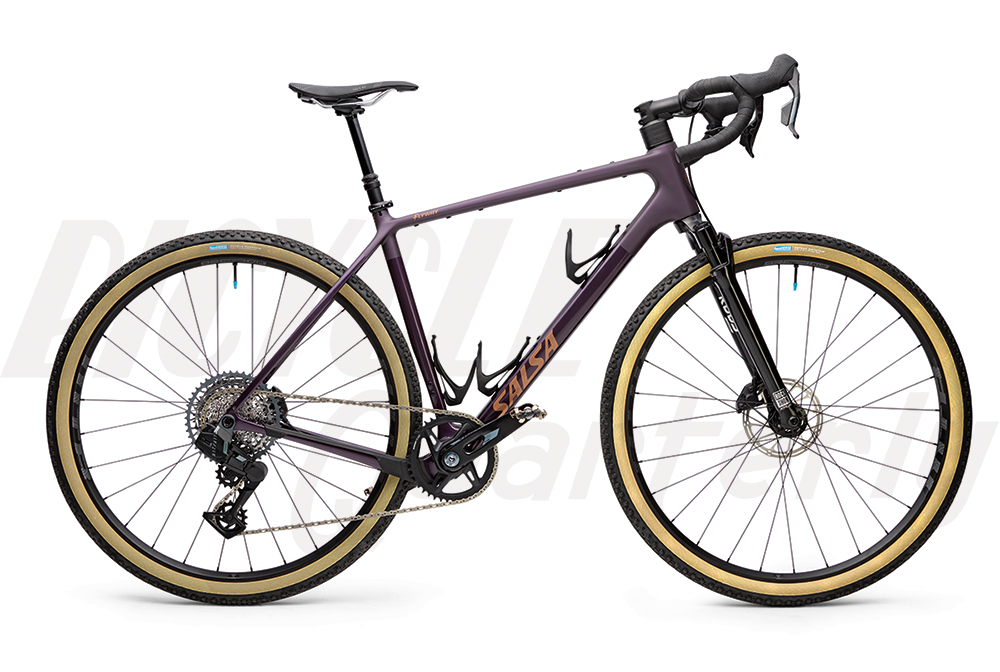
Cycling is an equipment-intensive sport, and buying a bike is a substantial investment. We think about that when we evaluate bikes for Bicycle Quarterly. In the latest edition, we test the Salsa Flyway. If just 20 of our 15,000 readers buy this bike based on our review, they’ll spend $110,000 between them. That’s a lot of money, and with that comes a lot of responsibility.
That’s why we test each bike thoroughly, and we are honest—some might say brutally honest—in our reviews. We pay no attention to the marketing materials—which usually tout “improved stiffness and better aero.” Instead we ask ourselves: Is this bike fun? The fun of cycling comes to a significant degree from the wonderful feeling of human-powered speed, so assessing a bike’s performance is essential to our testing.
When we test a bike’s performance, we’re less concerned about tiny aero gains, and more about how the bike feels as an extension of our bodies. How does it respond to our pedal strokes? How does it handle when we push the limits on twisty descents? Can it keep up with other fast bikes when we ride with friends? (Having a second tester with the same height, weight, power and riding style helps with assessing this, because it takes the ‘human factor’ out of the equation.)
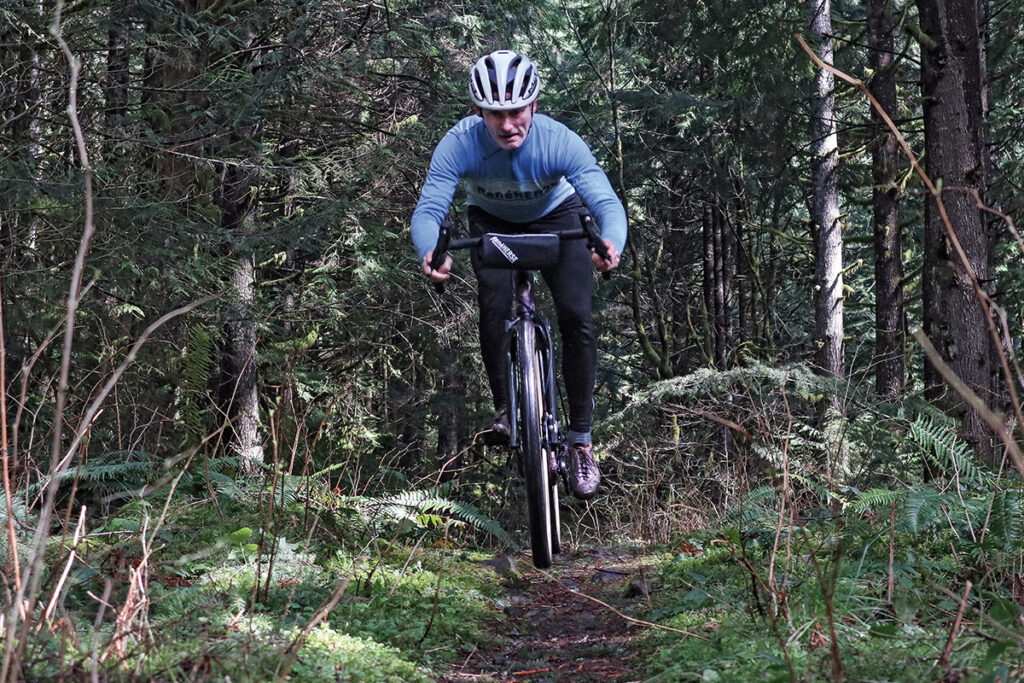
Sometimes, these tests take us in unexpected directions. The Salsa Flyway is intended for rough gravel, especially the version we tested, with a suspension fork and dropper seatpost. It excelled in that terrain—and we had a lot of fun. Yes, the Flyway really can fly—as the photo proves.
We also noticed that the bike climbed really well. That’s when we expanded the test from the rough gravel roads of the Cascade Mountains to fast-paced rides on pavement. What started as a test of a gravel-focused bike turned into the question: “Is this the only bike we need?” And, just as importantly: “Do we give up any fun when we take this bike on rides that are outside its design brief?”
Even though we’re very thorough in our bike tests, when we ride the bikes, we usually don’t think about the bike, but just enjoy the moment. Especially if it’s a really good bike… After each ride, we take notes as we refine our evaluation over several weeks of riding.
The Salsa is a lot of fun, but it isn’t perfect, and we tell you about that, too. That way, you can decide if it’s the right bike for you. And if you do buy one, there won’t be surprises that might cloud your enjoyment. You’ll be able to focus on getting the most fun out of your bike. I won’t give away too much by saying that I was sad to return our Flyway to Salsa at the end of our test.
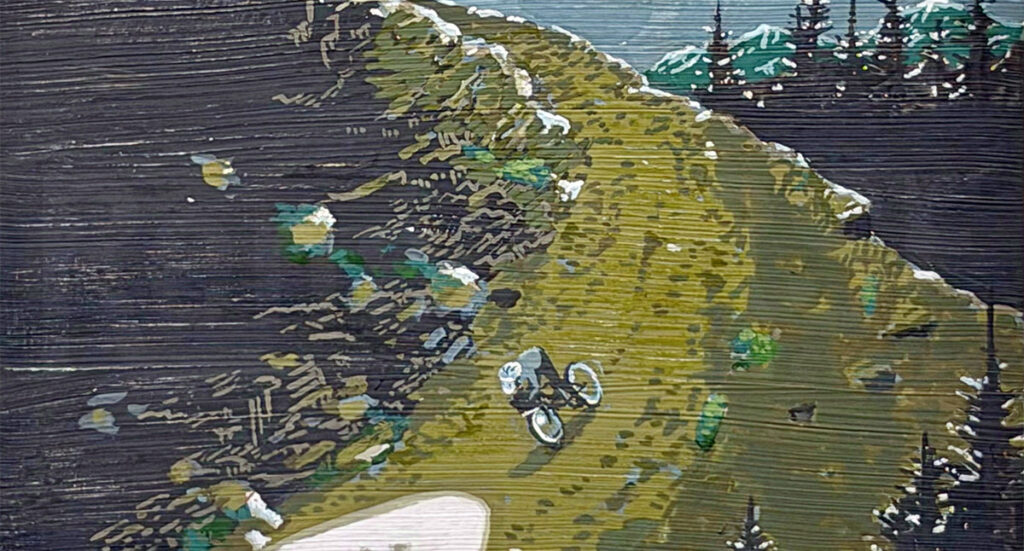
You might think that setting an FKT is a serious endeavor. There’s a lot of planning involved, especially when heading into the mountains while the high passes are still covered in snow. And during the ride, the clock is ticking all the time. In fact, the absolute focus makes these rides so much fun: It strips away everything else and allows us to live in the moment. We think about nothing else. What remains is (almost) pure fun: Riding a bike at a spirited pace through incredible surroundings.
Last year’s FKT ride on the Oregon Cascades Volcanic Arc 400 bikepacking route was a true adventure. There was much more snow than anticipated. My GPS malfunctioned and led me off-track, deep into the forest on the slopes of Crater Lake. Later, a missing bridge required an unexpected detour.
Looking back, those challenges made the ride all the more memorable. By comparison, this year’s FKT, while 8.75 hours faster, was relatively uneventful. When I wrote a story about the earlier ride for Bicycle Quarterly, we talked about how to illustrate it. There are no photos from this unsupported ride, apart from a few cell phone images that don’t capture what made this adventure so special. In any case, there’s no way of photographing the exhilarating feeling of descending mountain passes on winding gravel roads under a full moon.
Art can express things that photographs can’t. We worked with our friend Miyoshi, the Manga-style artist, to convey the adventure through paintings and drawings. Myoshi’s whimsical illustrations are the perfect antidote to the numbers that dominate so many race and ride reports these days. They illustrate the essence of this joyful adventure better than any photos could.
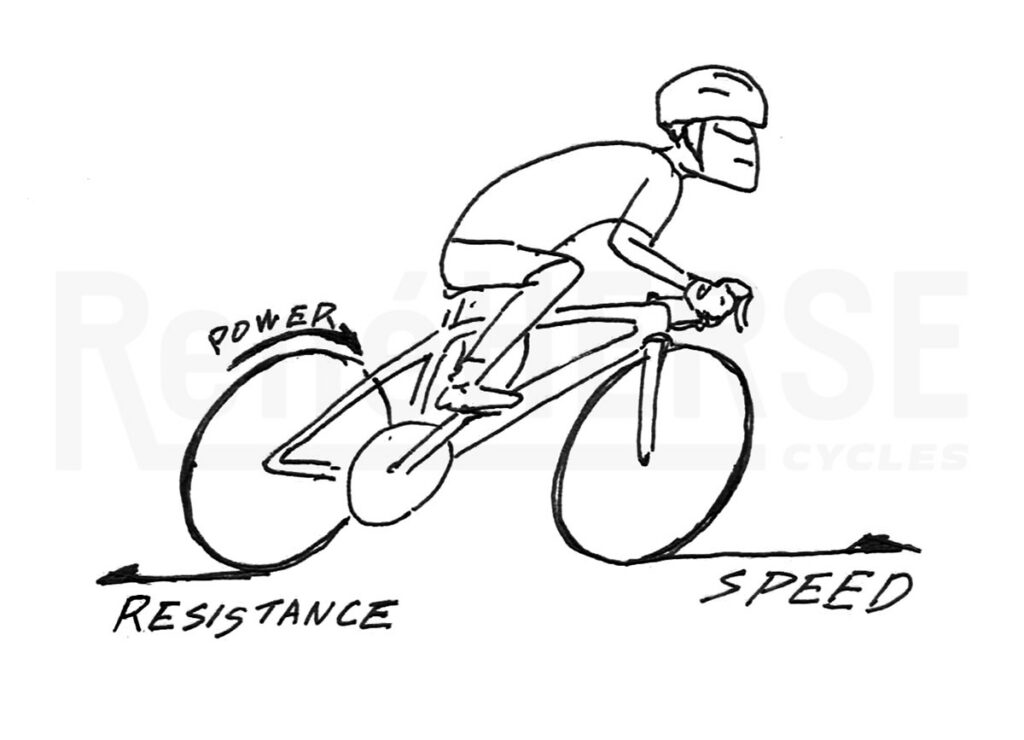
We also worked with Myoshi to illustrate our book The All-Road Bike Revolution. A technical book researched and written by a bunch of PhDs can feel quite serious… Of course, the technical aspects of cycling are important: A great bike is more fun to ride than a mediocre one. That’s why we made sure that the science in the book is accurate and supported by the available evidence.
When it came to illustrating the concepts and ideas, we felt that a whimsical touch was called for, to remind all of us that cycling is fun. And that we shouldn’t take ourselves too seriously.
When it’s time to get a new bike, it’s worth doing the research and finding a bike that’s fast, comfortable, versatile and reliable… In other words, a bike that will be a lot of fun. Once we’ve got the bike, it’s up to us to ride and enjoy it—to figure out how to get the most fun out of it. Fun can be about watts and miles-per-hour, or feelings we have while riding, or places we visit, or people we meet… There are many ways to have fun on a bike, and all are equally valid.
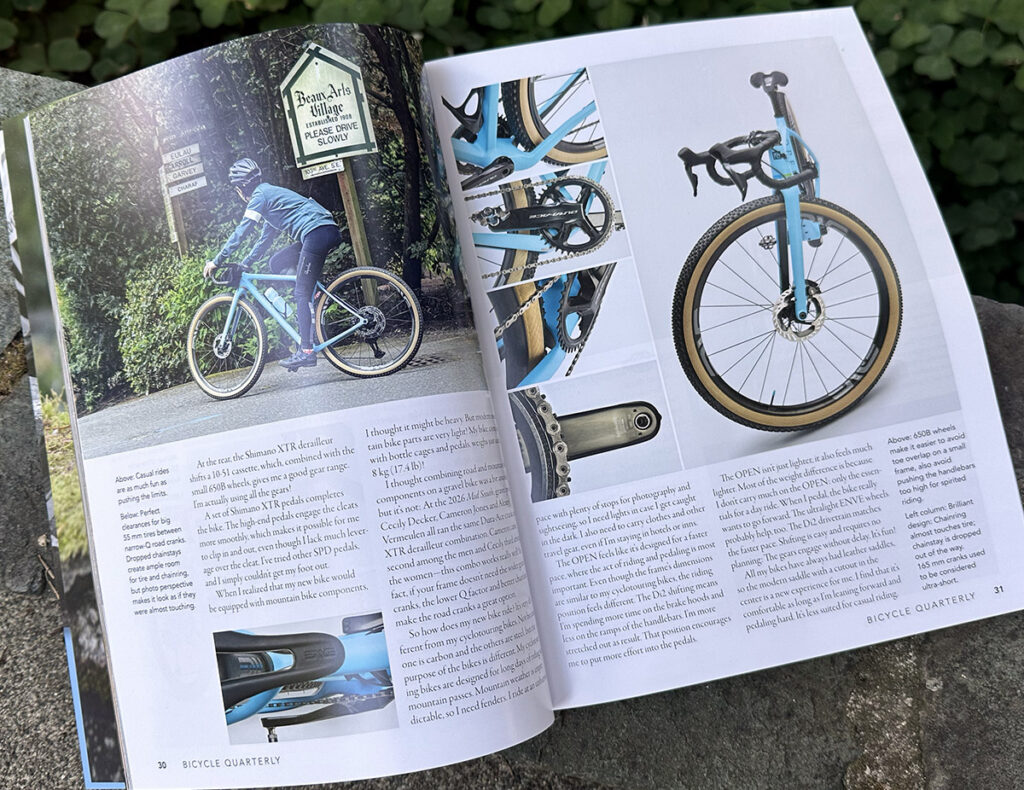
Fun is a topic that’s essential to everything we publish. We invite you to join the fun—we’re preparing another mailing of the current Bicycle Quarterly this week. Subscribe today, and we’ll include a copy for you. And if you haven’t read our book The All-Road Bike Revolution yet, readers have told us that they found it informative and fun-to-read.
More Information:
- Bicycle Quarterly, the magazine about the passion (and fun) of cycling
- The All-Road Bike Revolution: Make your bike fast, comfortable and reliable