


Fender Science: Why the Spray Zone Matters
Seattle is famous for many things: rock music, software, coffee, airplanes… but we’re probably most famous for rain. We are only half-joking when we call our home ‘Rain City.’ And those of us who ride year-round really care about fenders. Where most companies seem to treat fenders as relatively unimportant ‘accessories,’ Rene Herse fenders benefit from the same rigorous R&D as our supple tires and ultralight cranks.
During rainy brevets, other riders sometimes ask me: “How do you keep your feet from getting wet? And how do you keep your chain from squeaking after hours of riding in the rain?” The secret isn’t waterproof socks or better chain lube (although that helps), but keeping spray off feet and drivetrain.
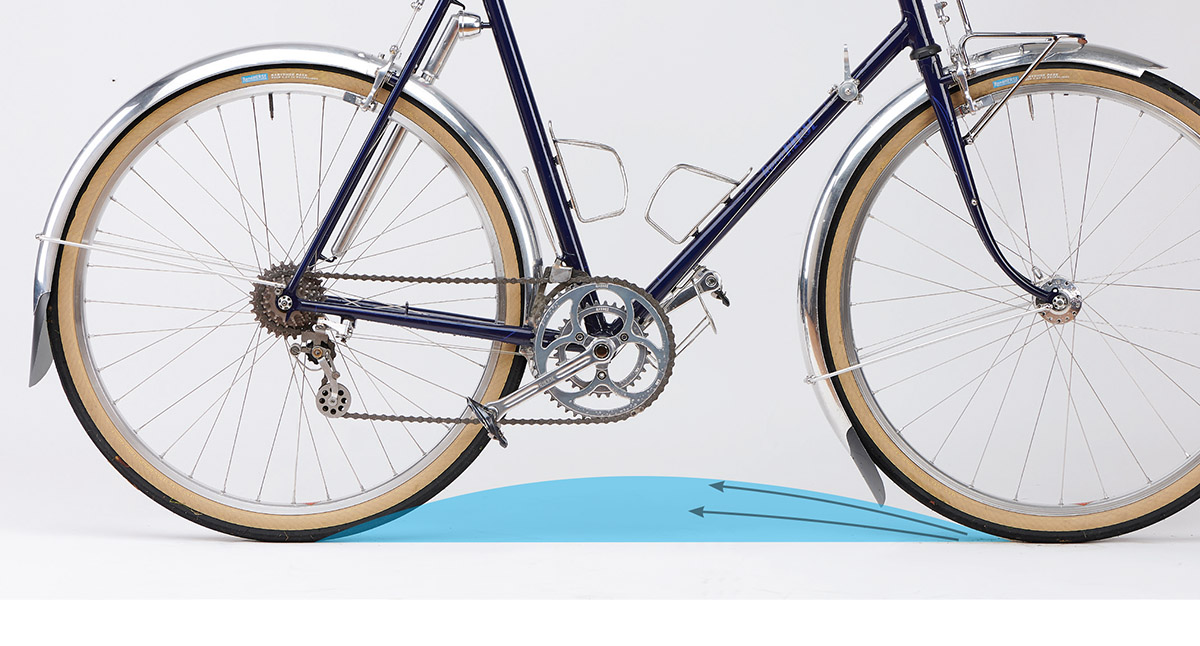
Looking at my bike above, the front fender covers most of the wheel. It reaches down as far as possible, leaving just enough room to clear curbs. There’s a mudflap that extends further down. As a result, spray from the front wheel never reaches my feet, nor my drivetrain. The spray zone is small and doesn’t impact the places that I want to keep dry.
Of course, there’s still rain coming down, but unless we’re riding in a typhoon, the spray is the real problem. The actual rain falling from the sky is a relatively minor nuisance by comparison. Anybody who has ridden a fender-less bike in the rain knows that our backsides gets soaked immediately, followed by our feet and shins, while the rainwater itself takes a while to work its way through our clothes—and can easily be kept at bay with a rain jacket.
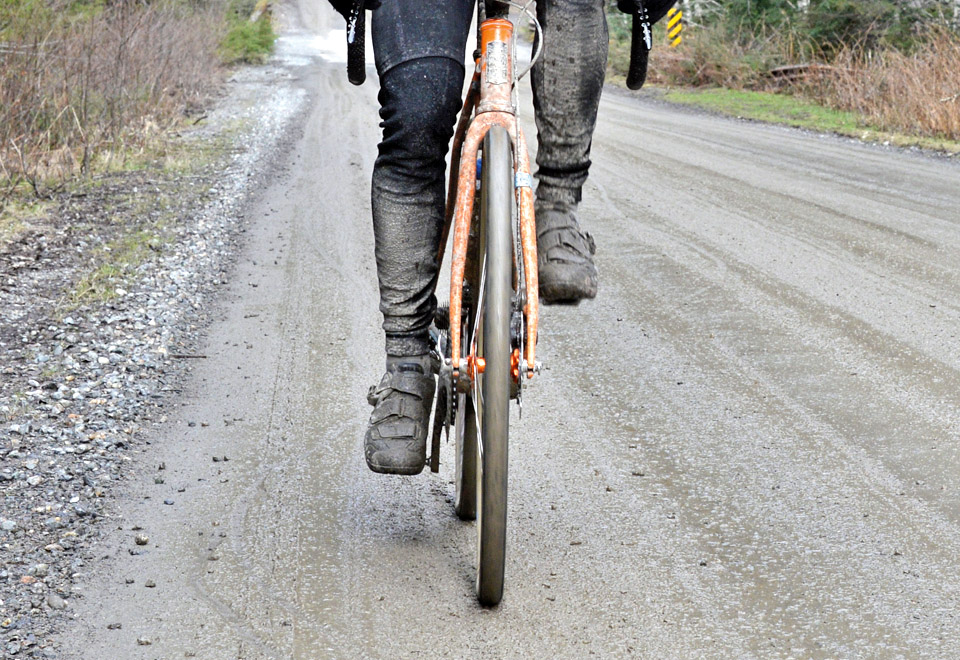
The faster we go, the worse the spray gets. Wide tires also pick up more water than narrow rubber. And if we ride on wet gravel roads—even if it hasn’t rained in a few days—we get a constant spray of mud (above).
There’s something else to consider: Rainwater is clean, but road spray is mixed with grit: It will quickly grind our drivetrains to pieces.
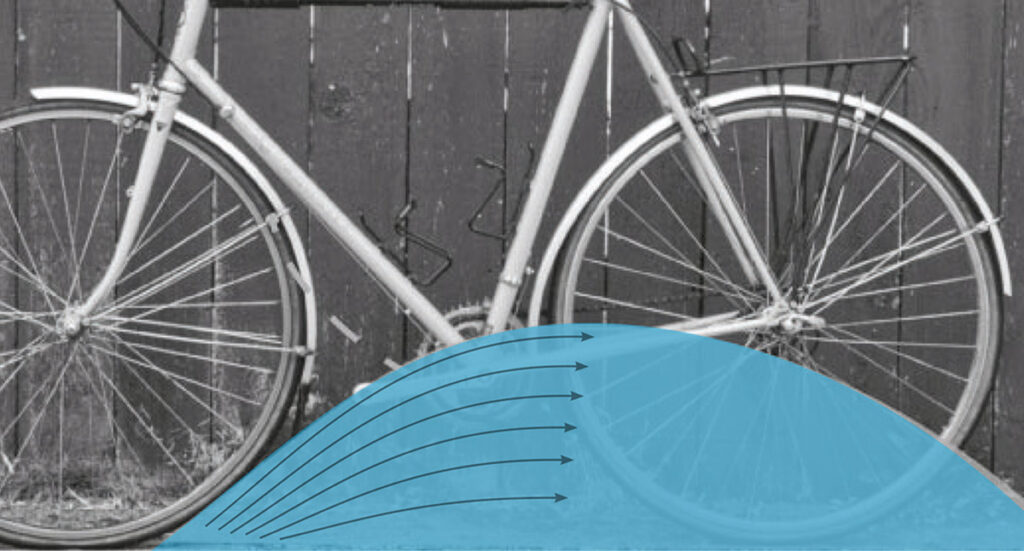
Ordinary fenders keep our backsides clean, but they do almost nothing to keep spray off our feet and drivetrain. The front fender is simply too short to be effective. Even a mudflap doesn’t really help: The spray zone still extends above the bottom bracket. Feet and drivetrain get soaked and gritty.
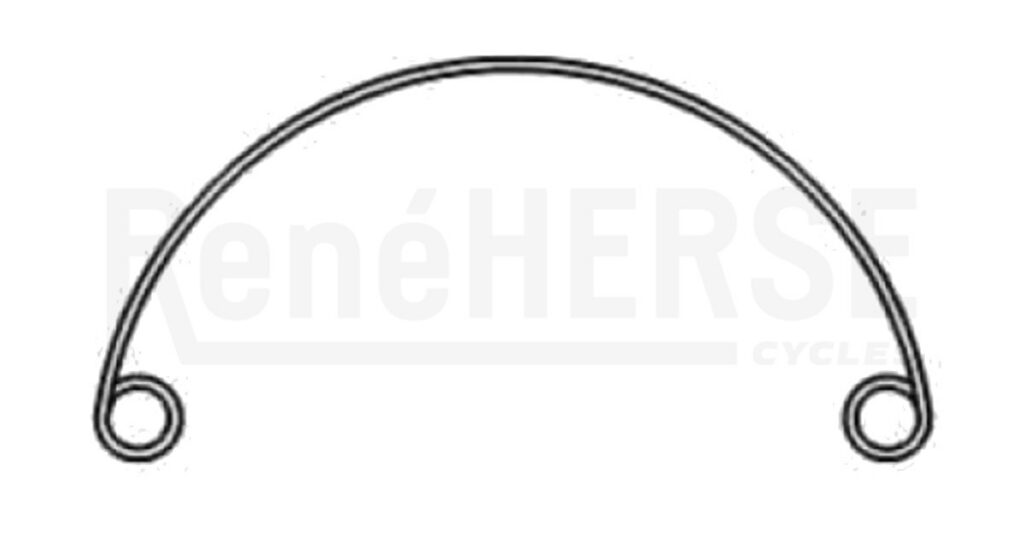
There’s more: The rolled edges of Rene Herse fenders keep water inside the fender. Plastic fenders have straight edges, and water drips off the sides—onto the rider’s feet.
The rolled edges also make our fenders stiffer. That’s how we can make our front fenders so long, yet they don’t flap in the wind.
When I first rode with metal fenders, I was surprised how much of a difference extra coverage and rolled edges made. Look carefully in the video above, and you see that my shoes are mostly dry, even though the road is soaking wet.
Since then, we’ve added even more coverage and many other refinements to our Rene Herse fenders. The reason is simple: We ride them ourselves, and we hate wet feet and gritty drivetrains. We’ve even designed a custom mudflap to eliminate as much spray as possible at the bottom of the fender.

There are other metal fenders on the market, but none offer the same coverage as ours. And none come with our custom-designed hardware that’s specifically designed to mount metal fenders securely and safely.

Our fenders also come with detailed, illustrated instructions that help you install them securely and without the inbuilt stresses that are the main cause for fenders (metal and plastic) to break.
In a future post, we’ll talk about why our metal fenders are lighter than plastic fenders.
More Information: