


How the Wide-Tire Revolution Took Off
Twenty years ago, we started testing tires on real roads, with a rider on the bike. Almost by accident, we found something that had the potential to revolutionize the cycling world: High pressure doesn’t make tires roll faster. Before, we all thought that tires were either wide or fast. Our results showed that tires could be wide and fast. You can catch up on that part of the story here.
Today we’ll look at how these exciting findings flew under the radar for a while, until a chance meeting pushed them into the racing world. Suddenly, Lance Armstrong was tweeting about rolling resistance, and the Cervélo TestTeam was testing 25 mm tires. Engineers from ZIPP called me and later sent a top-of-the-line wheelset, as a ‘Thank You’ for sharing our research. And today, everybody agrees that wide tires can be fast, and nobody inflates their tires to 130 psi (9 bar) any longer. Here’s the untold story of how we got to where we are now.
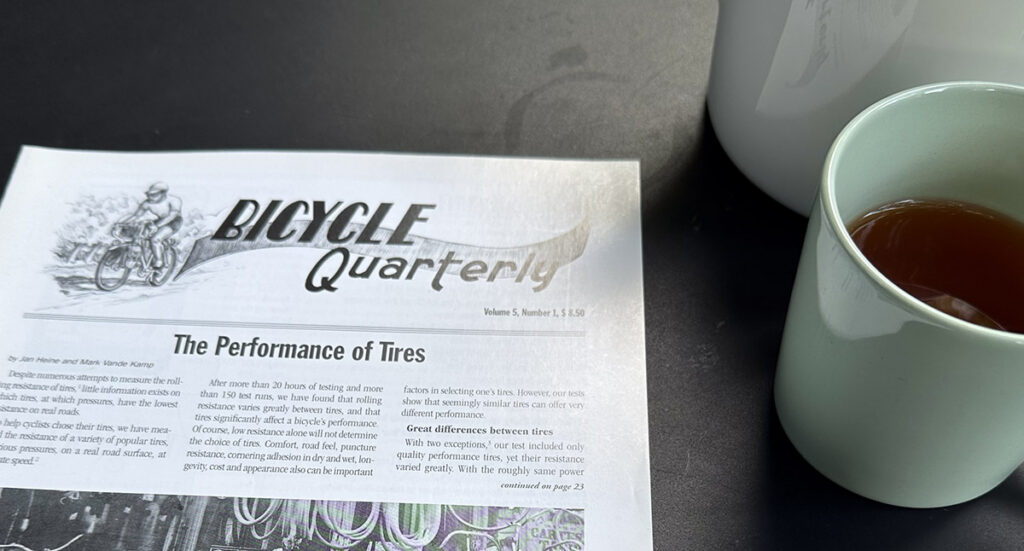
In September 2006, we published the results of our first tire tests. New findings are often met with healthy skepticism. That’s natural and useful. It makes sure that new findings are sound before they are widely accepted. After Bicycle Quarterly 17 landed in people’s mailboxes, online discussions raged for weeks. People questioned whether there was really no wind when we tested, whether our test rider could maintain the same position for run after run, and much more. We pointed to our statistical analyses and all the other safeguards we had built into our testing, but it was hard to convince the cycling world. Our results were just too far out there. The controversy wasn’t always fun, but it spurred us to further check our results and expand our research—more about that later.
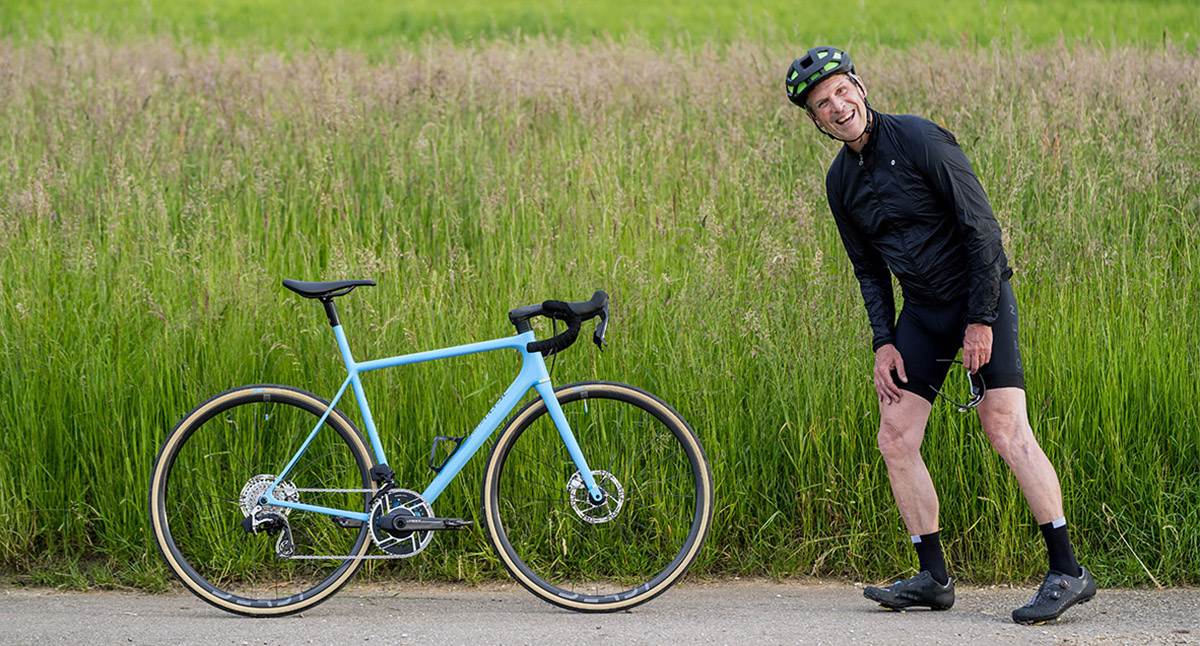
Of course, there were also experts who were excited about our findings. Not just the people who had reviewed our work, like Frank Berto and Jim Papadopoulos, but also local legend Ric Hjertberg, one of the founders of Wheelsmith, Gerard Vroomen and Andy Kessler (above), and a few others. However, the mainstream cycling world ignored our results. From time to time, a BQ reader would comment on an online tech article about tire performance, pointing to our research. They were treated like conspiracy theorists who comment on a story about NASA, insisting that the moon landings never happened. It seemed that nobody was willing to engage with the substance of our research. To some degree, that made sense: We were just a few unknown cyclists, and there just isn’t enough time to examine every outlandish claim about bicycle performance. And the idea that high pressure doesn’t make tires roll faster seemed pretty outlandish at the time.
Twenty years ago, nobody mentioned ‘wide tire’ and ‘fast’ in the same sentence. Even some friends asked me: “If wide tires roll faster, why don’t pro racers use them?” To which I usually replied: “Just give them time…”
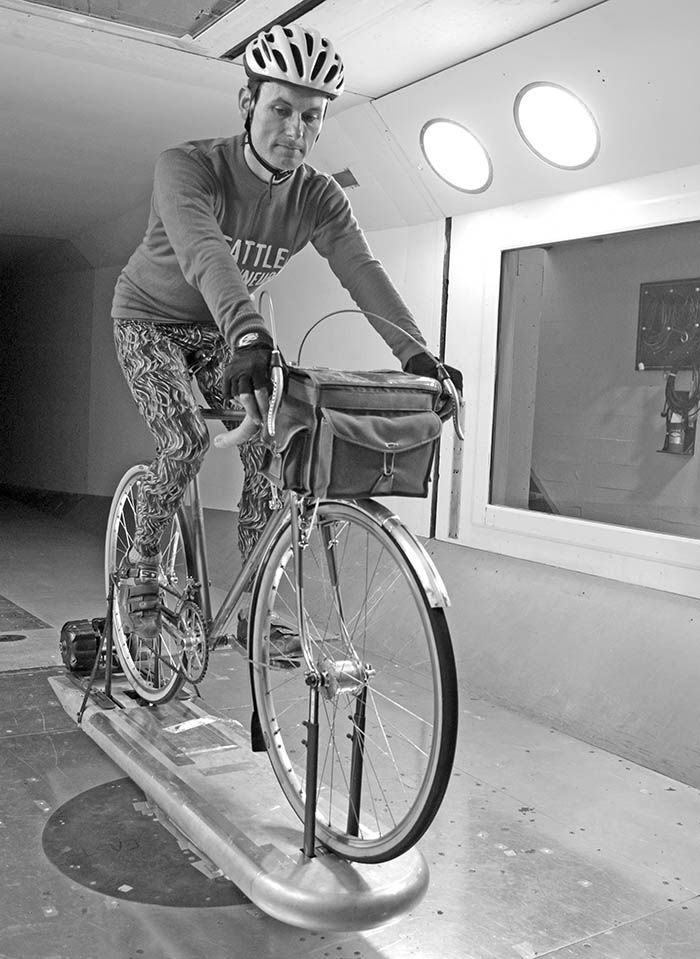
A chance meeting pushed our research into the mainstream: In 2007, we started to work with the Department of Aeronautics & Astronautics at the University of Washington. With Boeing in town, they have one of the world’s best wind tunnels. We were able to get two full days in the wind tunnel to test things nobody had tested: Whether wide tires are less aero than narrow tires. Whether fenders can make a bike more aero. (The photo shows the telescoping fender that allowed us to test different fender configurations.) How much clothes affect aerodynamics. Whether front or rear racks are more aero. All the questions that matter to long-distance cyclists, but that nobody had cared to ask. During those wind tunnel tests, we also confirmed that our test rider was able to assume the same position time and again. (The photo also reminds me that fashion in cycling tights has changed in the last 20 years!)
A few days before the test, the team from the wind tunnel put me in touch with Len Brownlie, a Canadian sports aerodynamics consultant. In the past, he had rented the UW wind tunnel for work with Lance Armstrong, Nike and other big names in sports. Now he wanted to piggy-back onto our wind tunnel session for a quick test of zig-zag strips that he mounted on the bike frame. He hoped they would improve aerodynamics. No problem: We tested his strips first thing. (They didn’t make the bike more aero, sadly.)
Len stuck around for the day, watching what we were doing and offering advice. We were using a test rig they had built for Lance. It held the bike on a streamlined platform, and also rotated it automatically to measure the effect of cross-winds. We appreciated Len’s advice and experience, and he was clearly impressed by what our work, especially the rigorous statistical analyses that Mark was doing to check our results. During a break from the wind tunnel testing, we talked about our tire research, which was still fresh and had occupied our minds for much of the last year. I gave Len a copy of Bicycle Quarterly 17 with the results of our first tire tests.
Len was one of those people whose name you don’t see in the press. I suspect that teams that work with him prefer that the competition doesn’t know about him. (Google him, and you’ll find plenty of scientific articles, especially on the aerodynamics of fabrics from his work with Nike.) Once we gave that Bicycle Quarterly to Len, our tire testing article was apparently shared widely. The following year, Lance Armstrong tweeted: “Lots of talk these days about tires/rolling resistance too.”
A little later, Cervélo TestTeam started testing 25 mm tires—perhaps not coincidentally the width that had proven fastest in our testing. They also started testing tire pressures, where before everybody had just inflated to maximum pressure. Gerard Vroomen, founder of Cervélo, told cyclingnews.com: “Every mechanic of every professional cycling team puts too much pressure in the tyres. We’ve weaned them off of that, so at least there’s not 12 bar in them any more.”
By 2010, Cervélo TestTeam was running 25s in the Tour de France, the first team to do so. This was new in more ways than one: Technical developments at the time usually originated in Europe, especially with respect to tires: All the big tire companies that sponsored pro racers were in Europe. But the move to 25 mm tires started in Canada, shortly after we had given our results to a Canadian consultant to the pro cycling world. From there, it spread to the U.S., and only then to Europe.
The wheel sponsor of the Cervélo TestTeam was ZIPP, which had just been acquired by SRAM. Out of the blue, I got a call from Michael Hall, Zipp’s director of R&D. He was working with Josh Poertner, then still at Zipp, on the next generation of wheels. They were interested in our research. Over the years, Michael and I had many conversations about tire tech, tubeless standards and other topics. This started a long friendship that continued as he moved up in the SRAM company hierarchy. Among other things, that’s how we got prototypes of the first XPLR components for testing, which I still run on my Firefly…
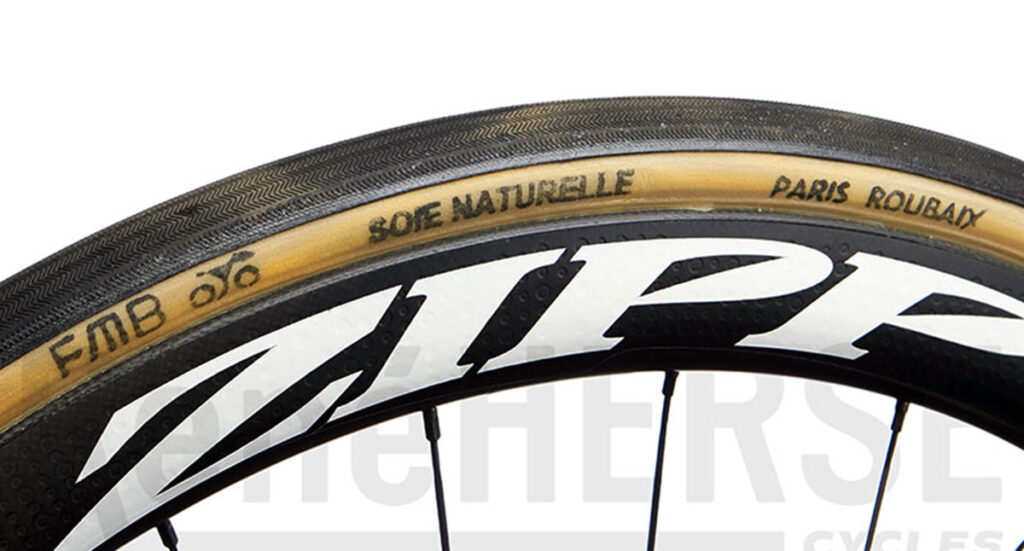
Then Michael told me he was sending me a set of their top-of-the-line tubular wheels as a ‘Thank You.’ That was a bit of a mystery until I saw SRAM’s new ‘White Paper’ about suspension losses. It echoed our findings that high pressure didn’t make bikes faster, because energy was lost due to vibrations. Josh Poertner once characterized their research: “We are not PhD’s and don’t consider this science at all but rather race engineering… as much as I’d love to know why any of this happens, that’s just not the job we’re paid for.” That makes sense: They were trying to figure out what would make their racers fastest, based on whatever information they had. The underlying science apparently came from Bicycle Quarterly. And the carbon wheelset was a (much-appreciated) Thank You.
Others had also seen our research. For example, Global Cycling Network talked about how wide tires were faster. They were the only ones who actually mentioned Bicycle Quarterly. We really appreciated that. Back then, we were on a quest to change the (cycling) world, and we were happy to share our findings with anybody who was interested. Even so, it’s still nice to be given credit.
Back then, many in the bike industry apparently thought that we were just two unknown kids. Bicycle Quarterly may have flown under the industry radar, but we already had more than 5,000 readers all over the world. Even today, people continue to underestimate us. Just recently, a mainstream cycling expert told me after we mentioned his work in the RH Journal: “I had no idea how many people read your blog!”
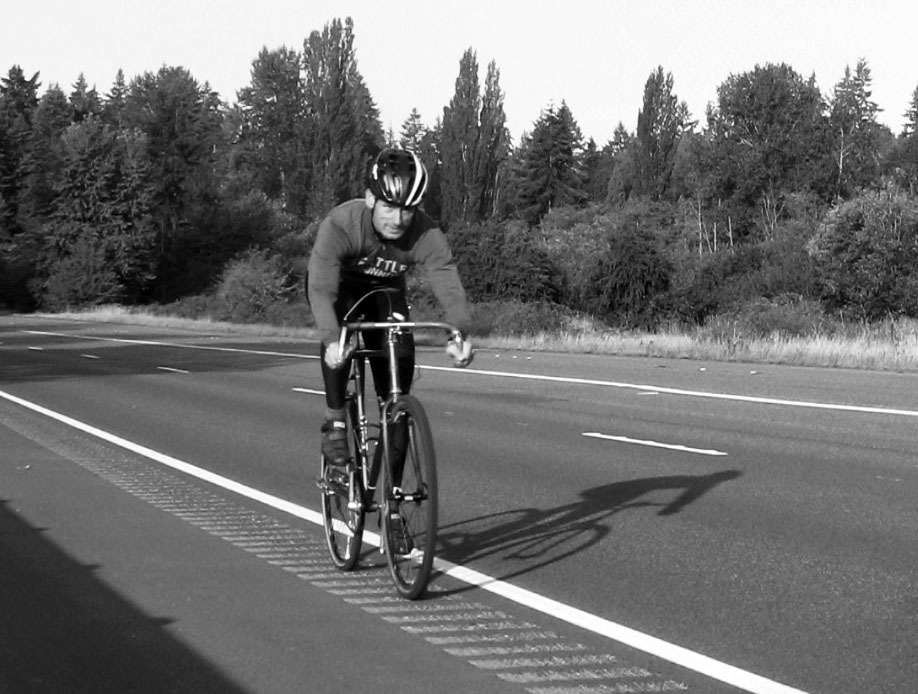
In the meantime, we continued our research. Our wind tunnel tests confirmed that our rider can assume the same position time and again. That took care of a major criticism of our roll-down tests.
We used rumble strips to quantify suspension losses and found that the added resistance due to vibrations explains why high pressures do not provide an advantage on real roads.
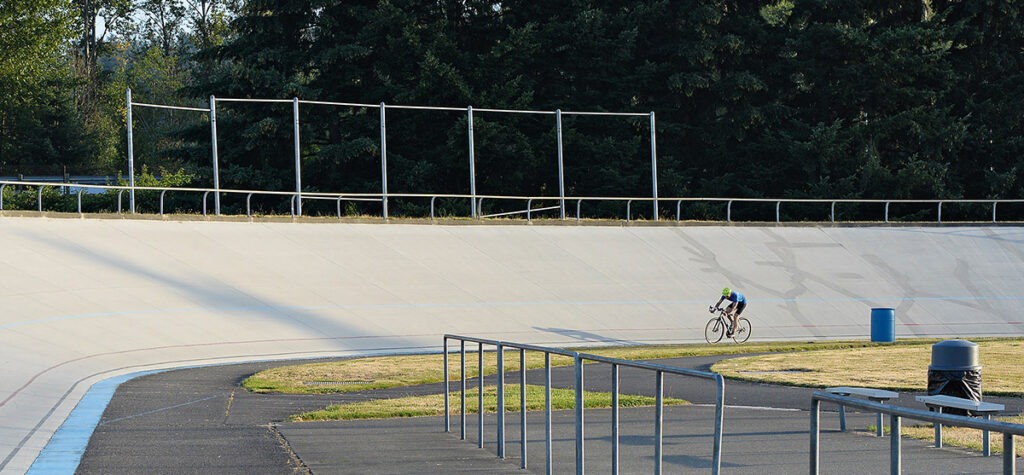
We replicated our roll-down tests with power meters on road and track. The results are the same, confirming our original findings with a different methodology.
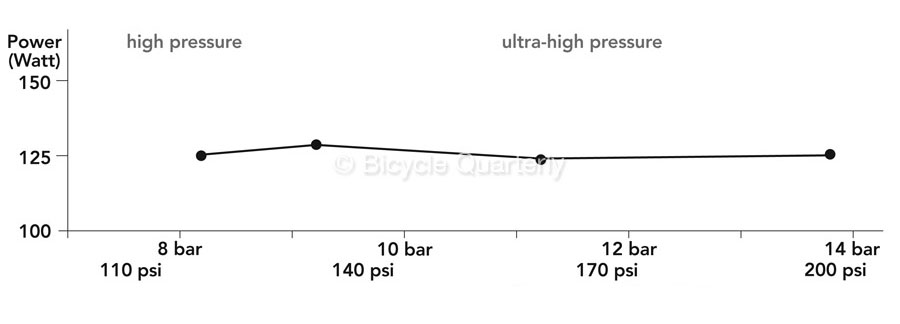
We expanded our testing to ultra-high pressure, and found that even 200 psi (13.8 bar) did not improve a tire’s speed (above). At the other end of the spectrum, we tested ultra-low pressure. We were surprised that tires continued to roll with almost undiminished speed, almost to the point where the bike started wobbling because the tires had so little air. We also expanded our tests to tires up to 54 mm wide and found that they rolled as fast as narrow tires.
Together, all these findings left no doubt: High pressure is not helping tires roll better. And: Wide tires are as fast as narrow tires, provided they use the same supple casings.
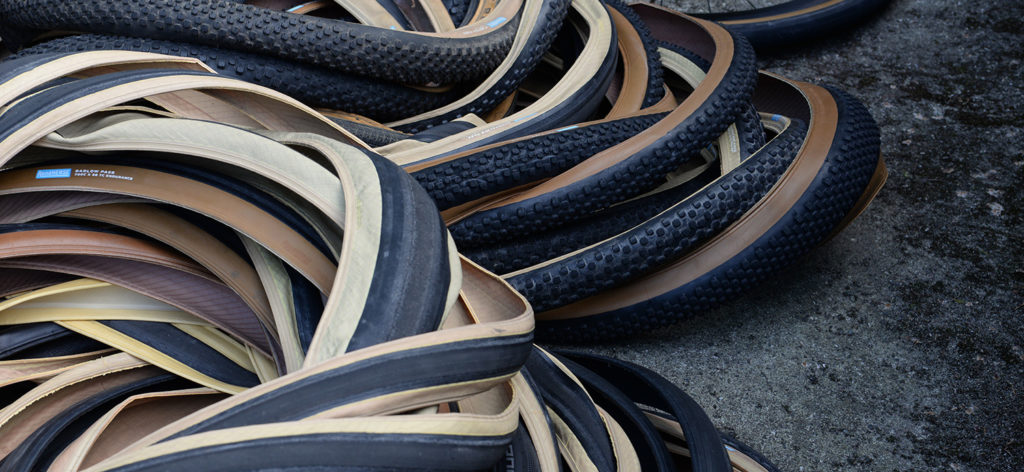
By now we had given up hope that our research might persuade tire makers to develop wide, supple and fast tires. We decided to take matters into our own hands. We talked to various suppliers, settled on a spec, and designed tire molds. In 2014, we introduced our tire program, at first with 700C tires from 26 to 38 mm wide, plus 650B models. I still remember the engineers from our supplier asking: “Why do you want to make wide high-performance tires? Who will ride them?”
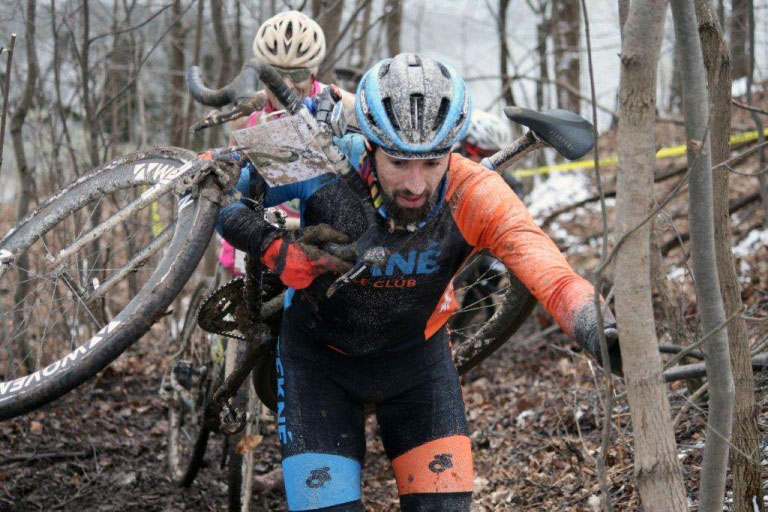
The obvious answer was: We wanted those tires for our own adventures. But there were plenty of others interested in wide-and-supple tires. This included some of the first gravel racers. Above is Matt Surch on his way to winning the 2016 Steaming Nostril on the first-generation 700×35 Bon Jon Pass tires. Since then, we’ve continuously updated our tires, even if the names have remained the same.
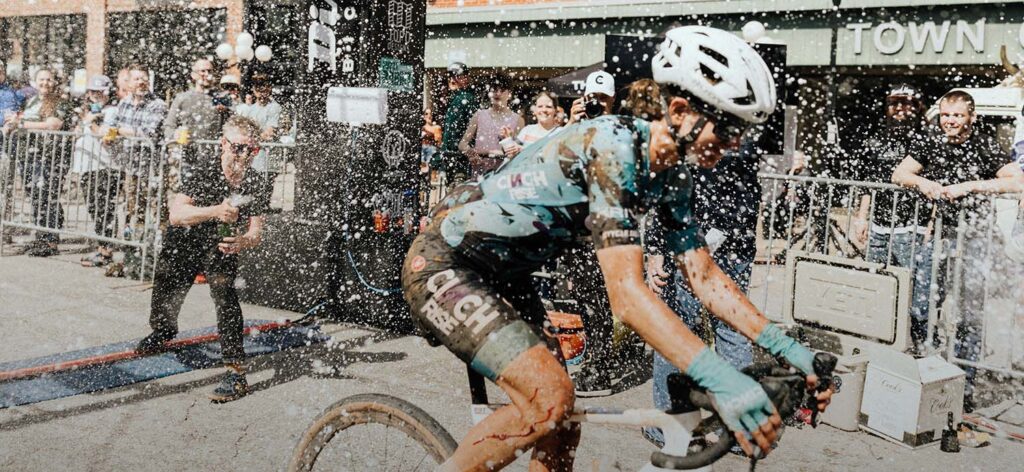
We started working with individual racers and also the Cinch and Mazda-Lauf gravel teams. We gave them tires to test as part of our R&D. We also shared our research with them. Soon Ted King, Lauren de Crescenzo, Brennan Wertz and Jenna Rinehart were winning races on tires that were wider than those of other racers. It’s hard to know whether that caused other gravel racers to move to wider tires, or whether racers simply were curious about wider tires and found that they rolled faster on rough gravel. It’s probably a combination of both.
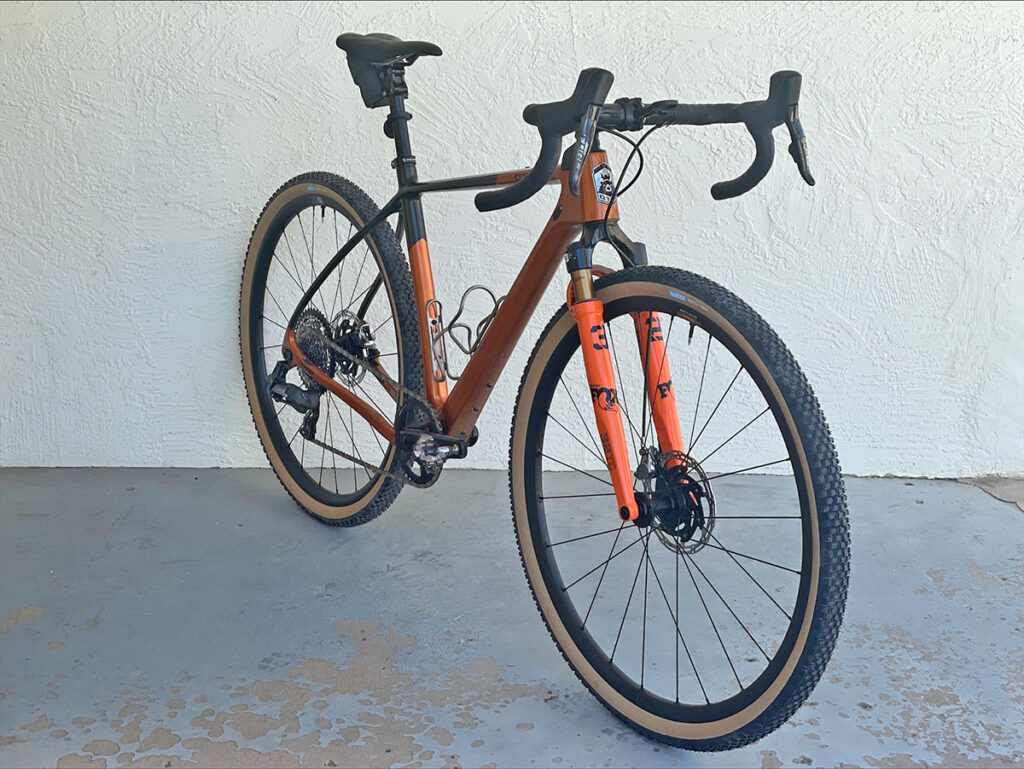
Many in the bike industry started riding Rene Herse tires on their personal bikes. They were excited about the ride and speed of our tires, and they sent us photos. Above is the bike of Bicycling magazine’s Senior Test Editor Matt Phillips…
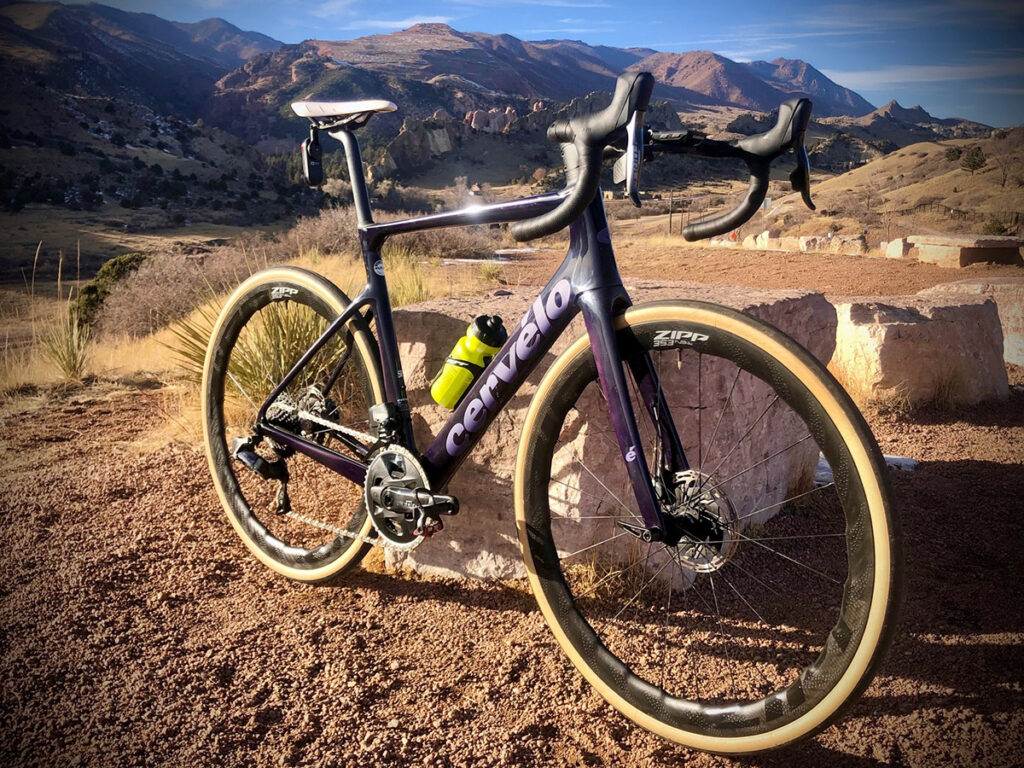
…and here is ZIPP Product Manager Bastien Donzé’s bike. Our friends at ZIPP equipped their bikes during dealer product launches with our tires, too, to show their wheels in the best light. Of course, not everybody was at liberty to be as open about it as Andy and Gerard from OPEN, whose personal bikes were featured as ‘Bike of the Month’ on their website (top photo). All these personal experiences probably did more than anything to get wide tires accepted in the mainstream.
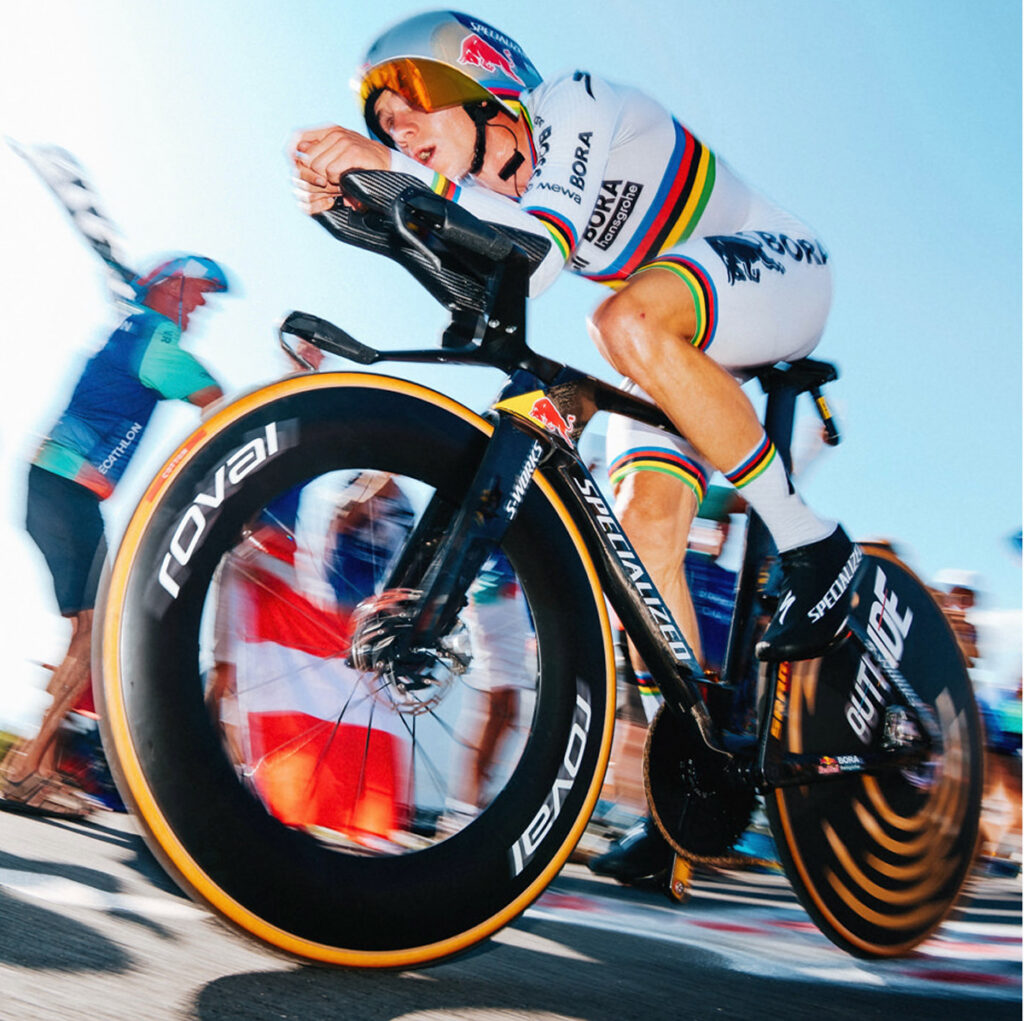
That’s where things stand today. Pros have moved beyond 25 mm tires to 28 and even 30 mm on the road, although they’ve recently pulled back a bit for time trials. The reason: With a tire that wide, you need very deep wheels for good airflow, and now the UCI has limited wheel depth. Plus, our research shows that the performance benefits of wide tires level out above 25 mm: Wider tires are neither faster nor slower, at least on smooth roads.
Gravel racers have been moving to wider and wider tires. On rough surfaces, there’s no doubt that wider tires roll faster. Our tires continue to win races, which hasn’t gone unnoticed by other tire companies. Major parts of our research have been replicated by the Escape Collective, with similar conclusions. A study at the University of Delft has confirmed our rumble strip testing. Narrow 23 mm tires and 130 psi pressure seem ludicrous today, but that was state-of-the-art when we started our research.
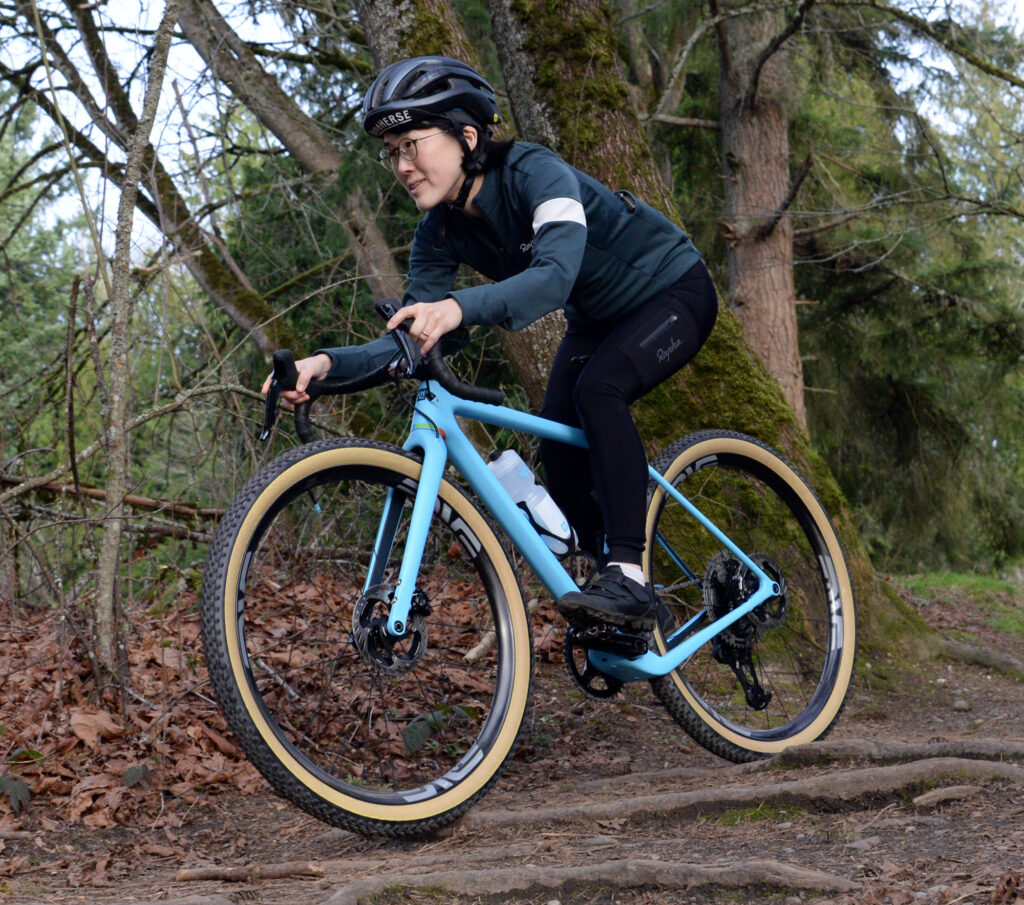
Twenty years is a long time, but in terms of acceptance of new scientific ideas, it’s actually pretty short. It’s exciting that our conclusion from 2006 no longer reads like a far-out dream, but accurately describes the reality today:
“For most cyclists, wide, supple tires at low pressures offer more speed, better comfort, increased versatility and improved safety than the currently favored narrow high-pressure tires.”
When I’m watching the final stage of this year’s Tour de France and see the racers zoom up and down the cobbles of Montmartre in Paris on their 30 mm tires, and when I go out for a ride and see so many cyclists on wide tires, I’m reminded how much our research has changed the cycling world for the better. And that’s really all we wanted when we published our first test results, 20 years ago.
More Information:
- Bicycle Quarterly, the magazine for the Passion of Cycling, continues to publish exciting new research.
- Our book The All-Road Bike Revolution details all the findings of our tire tests (and much more)
- Rene Herse tires: the original supple tires for real-road riding
Photo credits: Marc Gasch/OPEN Cycle (Photo 1); Alex Wetmore (Photo 3); Mark Vande Kamp (Photos 5, 6); Matt Phillips (Photo 10); Bastien Donzé (Photo 11); Jered Gruber (Photo 12)