


Why Rene Herse TPU Tubes are safe with electric inflators—and rim brakes, too.
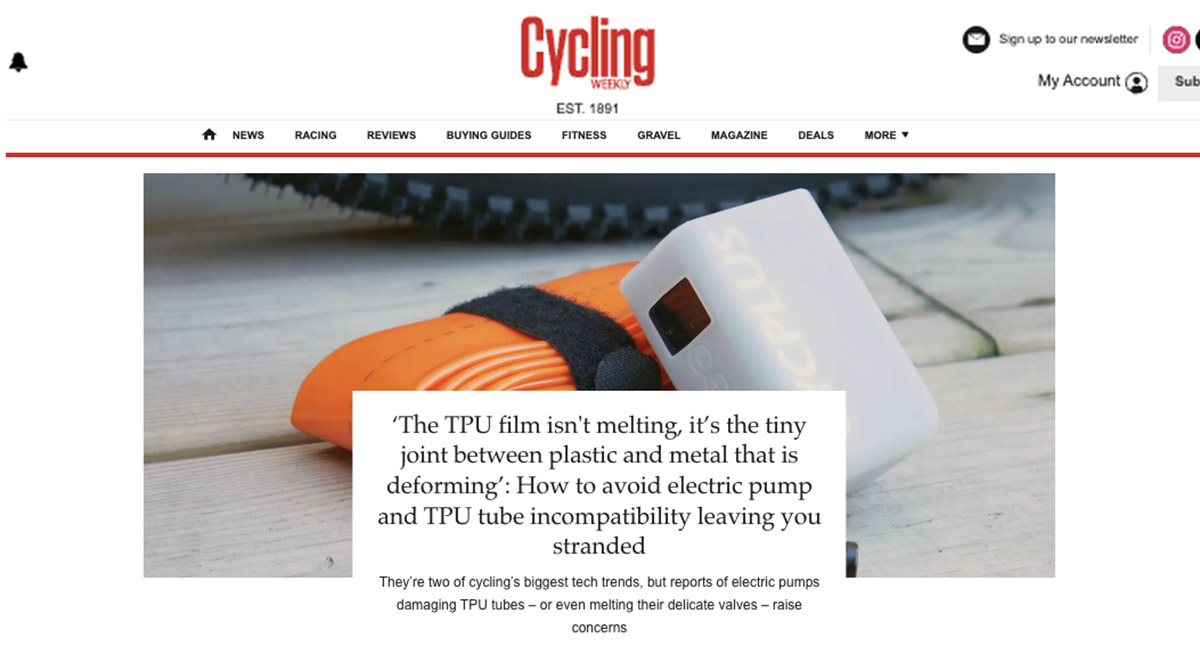
A few weeks ago, Matt Ischt-Barnard from Cycling Weekly contacted me and asked about electric inflators and why the heat they produce can damage TPU tubes. Yesterday, his article was published. He called electric pumps and TPU tubes “two of cycling’s biggest tech trends.” He continued: “TPU tubes have become ‘the’ go-to alternative to tubeless setups, offering a clean and faff-free installation, while still being lighter and more durable than traditional butyl rubber inner tubes.”
But what if the two ‘biggest tech trends’ aren’t compatible? Are TPU tubes safe to use with the hot air generated by electric pumps? You can read the Cycling Weekly article here. This seems like a good time to revisit what we know about heat and TPU tubes—not just in the context of electric inflators, but also their compatibility with rim brakes and other concerns.
TPU is short for Thermoplastic Polyurethane. ‘Thermoplastic’ means that you can melt TPU and make new things out of it, again and again. This makes TPU infinitely recyclable. It has also created rumors that TPU tubes are not heat-resistant. Some ‘experts’ have proclaimed that TPU tubes are not safe with rim brakes. Won’t the tubes melt when the rim gets hot from the friction of the brake pads?
Fortunately, that’s not a problem. TPU can get very hot before it melts. In fact, it’s more heat resistant than butyl, which has traditionally been used for bicycles tubes. TPU has a higher melting point—about 360°F / 180° C—than butyl, which melts at 300°F / 150°C.

That’s not just theory. In the real world, TPU tubes are perfectly safe with rim brakes. We test all our products on the demanding roads of the Cascade Mountains before we release them. Since then, we’ve use TPU tubes on our bikes for many adventures. When Becca Book and I rode to the MADE Show in Portland this summer, we took a mountainous route that included descents on twisty singletrack. Braking hard and often caused no problems with my TPU tubes and rim brakes. (Becca ran her Fleecer Ridge tires tubeless and has discs.) I also ran TPU tubes for the FKT ride on the Oregon Cascades Volcanic Arc 400, which included long descents on twisty gravel roads.
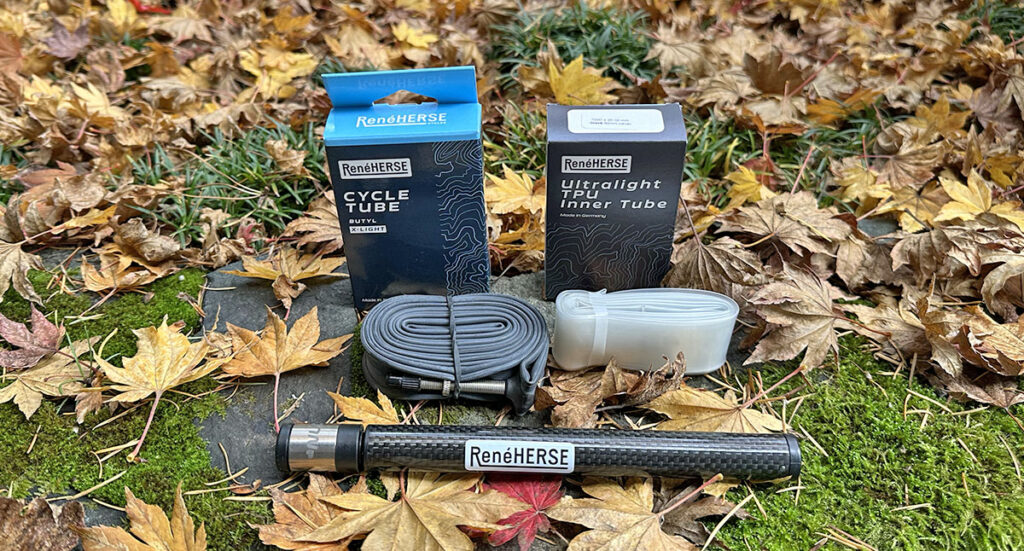
If TPU tubes are more heat-resistant than butyl tubes, why are there problems with electric inflators? It comes down to how the valve attaches to the tube: With butyl tubes, a metal valve is encased in a rubber cone, and that cone is vulcanized onto the tube. TPU is not as flexible as rubber, so manufacturers had to find other ways to attach the valve to the tube. The simplest way is to use a plastic valve stem that’s glued onto the TPU tube. The (metal) valve core screws into the plastic stem. That where the problems start: The plastic valve stem doesn’t hold threads well, and it tends to deform or even crack when the valve core is tightened. That’s the reason for mysterious leaks that affect many TPU tubes. Tightening the valve core more—which is what you’d normally do if it leaks—makes the problem worse.
That’s why many manufacturers now use a two-piece valve stem: The bottom is made from plastic that’s glued onto the TPU tube. Into that they glue a metal valve stem, which is threaded at the top to accept the valve core. This eliminates issues with the threads, but it creates new problems: Metal and plastic expand at different rates when they get hot. That’s why there are problems with inflators: The motors get hot, and compressing the air also heats it up. The air that’s pushed into the tube is very hot. The upper metal part of the valve stem expands rapidly, which can break the bond with the lower plastic part.

The patented all-metal valves of Rene Herse TPU tubes create a mechanical connection with the tube: The tube is trapped between the valve stem and a ring that press-fits over the valve stem. That eliminates problems with differential thermal expansion—which is a problem not just with inflators, but also when temperature changes during a ride, or when you bring your bike outside on a cold day.
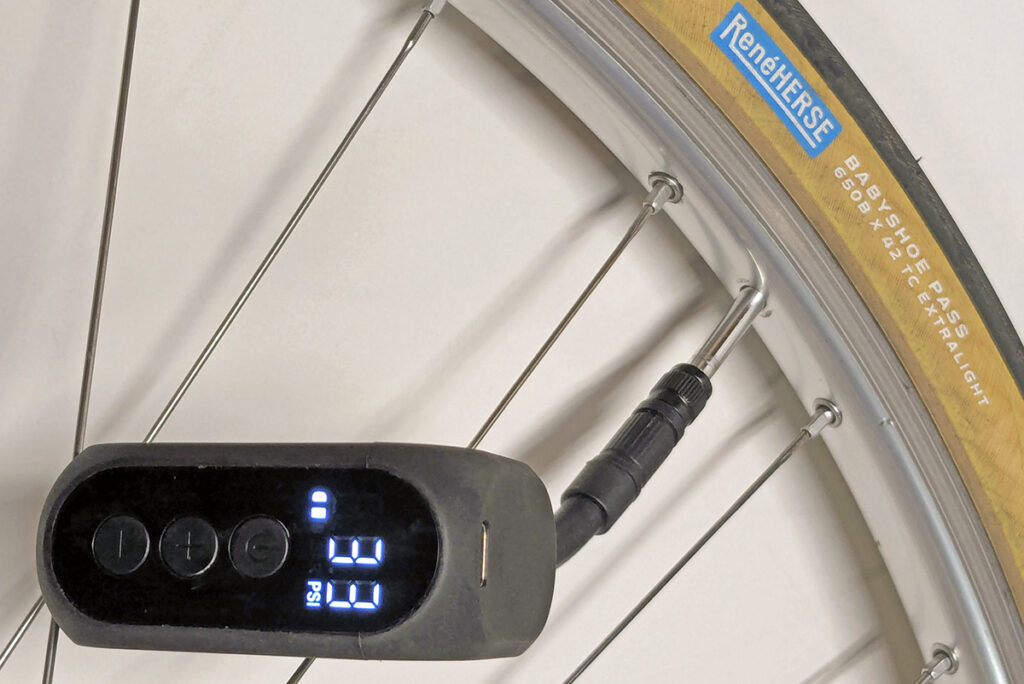
Does that mean that Rene Herse TPU tubes are totally safe with electric inflators? Yes, we’ve tested it, and there are no issues.
The opposite, getting the tubes too cold, is more problematic. That can happen with CO2 cartridges: The expanding CO2 is so cold that it can make the tube brittle. Then the sudden increase in pressure can rupture the tube. That’s why we don’t recommend using CO2 for initial inflation of your TPU tubes. (It is fine for topping up your tubes, as the cold CO2 mixes with the warmer air already inside the tube.) What about sub-freezing weather? That’s no problem, because the tube cools slowly: It’s inside the tire and thus insulated.

A discussion of heat from braking would not be complete without mentioning the risk of tires blowing off rims that get too hot. It’s often assumed that this is due to the air inside the tube expanding. That seems unlikely—even heating the tire by 100°C (212°F) increases tire pressure by just 35%—which is usually within the margins of safety, especially if you run tubes. And to heat the air inside the tire/tube by 100°C, the rim would have to heat up much more, since the tire is cooled by the air that rushes past it.
What seems to happen instead is that the tire itself can melt where it touches the rim. The gooey rubber then acts as a lubricant that allows the tire to slide off the rim. Some riders have reported seeing partially melted tires right at the bead after prolonged braking, especially on tandems.
The best way to avoid problems is to let the bike roll, then brake hard, then let the bike roll again. This allows the heat to dissipate and the rims to cool between applications of the brakes. Using this technique, I’ve checked my rims after long descents and found them to be warm, but not too hot to touch.
This technique is just as important with disc brakes. While there’s no danger of melting the tire, disc rotors have much less surface area than rims to dissipate the heat of braking: Disc rotors get much hotter than rims. Rotors can warp and the pads can ‘fade’ and lose much of their brake power.
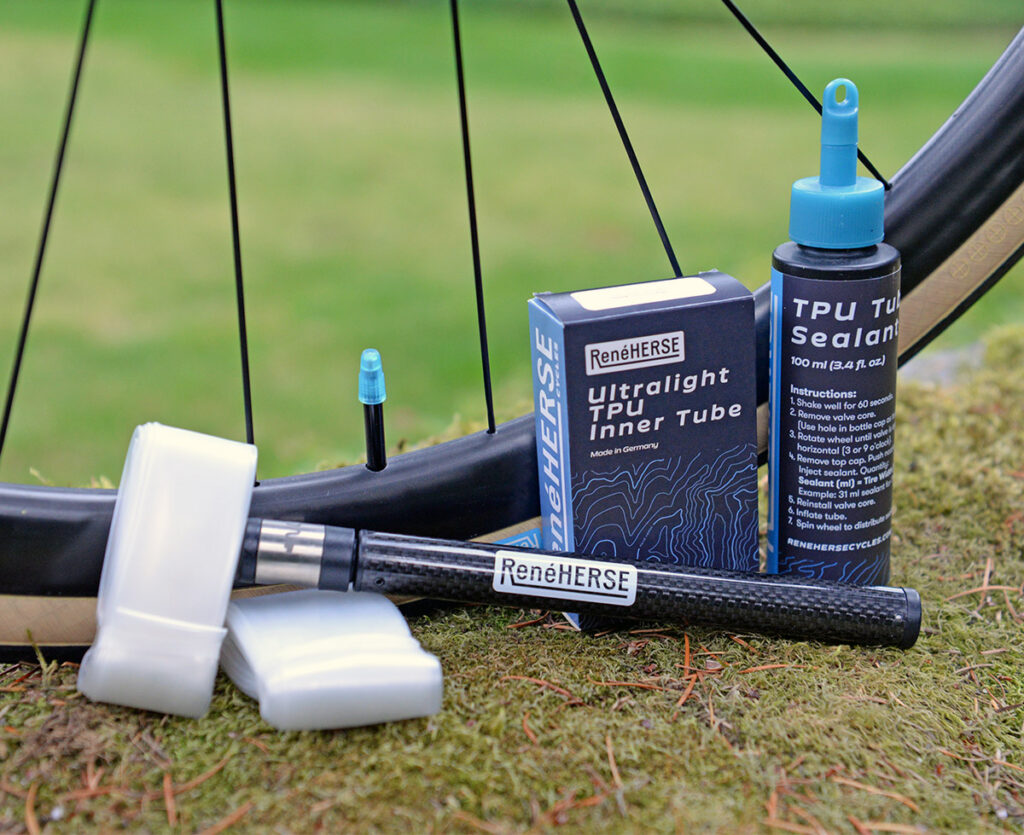
To summarize, TPU tubes are safe with rim brakes. Rene Herse TPU tubes are safe with electric inflators. And during long descents, keep your speed in check by braking hard and letting the bike roll in between, rather than ‘feathering’ the brakes continuously for a long time. That’s all—our goal is to keep cycling simple, so we can focus on the ride rather than our equipment.
More Information:
This article has been updated to reflect that electric inflators are safe to use with Rene Herse TPU tubes, without special precautions.