


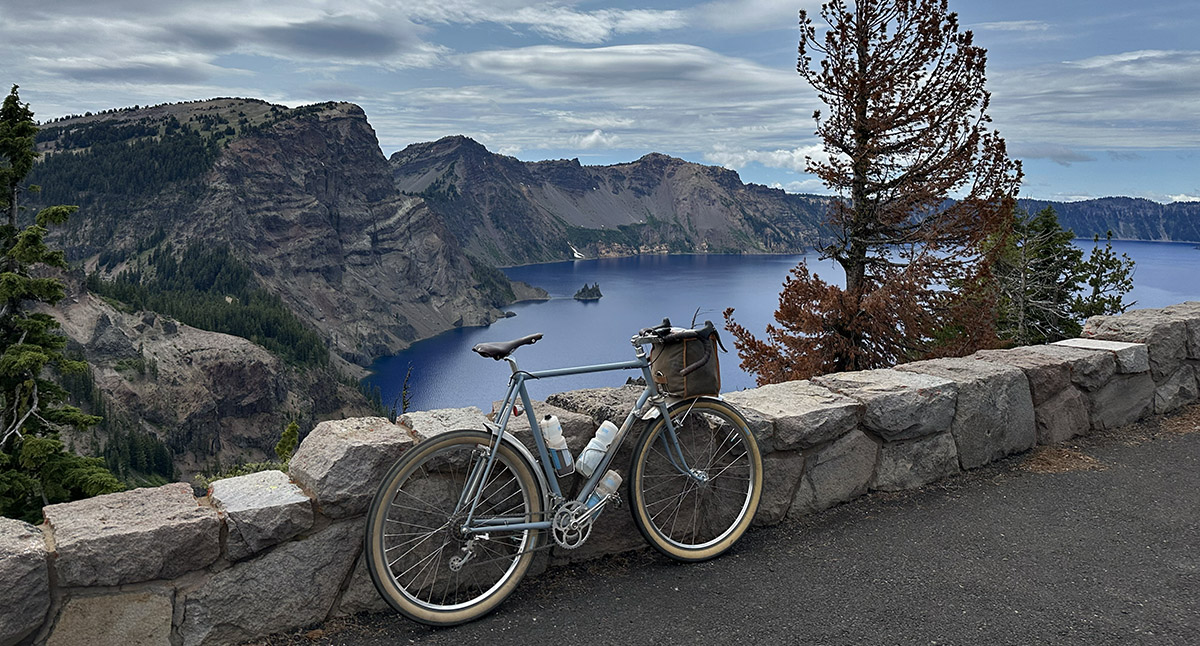
FKT on Oregon Cascades Volcanic Arc 400
The bike is dirty. The rider is tired. And there is a new FKT (Fastest Known Time) for the Oregon Cascades Volcanic Arc 400 bikepacking route. That makes it a successful outing on all counts!
Here are the stats:
- Distance: 419 miles / 674 km
- Climbing: 31,500 ft / 9,600 m
- FKT: 41 hours 13 minutes
Inspired by Meaghan Hackinen’s incredible ride in the Tour Divide—she set out to break her own record and did so in convincing fashion—I headed to Klamath Falls to have another go at the Oregon Cascades Volcanic Arc 400. When I set the FKT (Fastest Known Time) on this iconic bikepacking route last year, I found more snow than expected, which made for 11 miles (18 km) of unplanned hike-a-bike on slippery surfaces. I knew that my time of 49:58 hours could be improved. More importantly, last year’s ride remains one of my most memorable—and fun—adventures. Two good reasons to head out again. And when the snow melted early this year, and a short window appeared in my busy schedule, I booked a one-way ticket on the train to Klamath Falls.
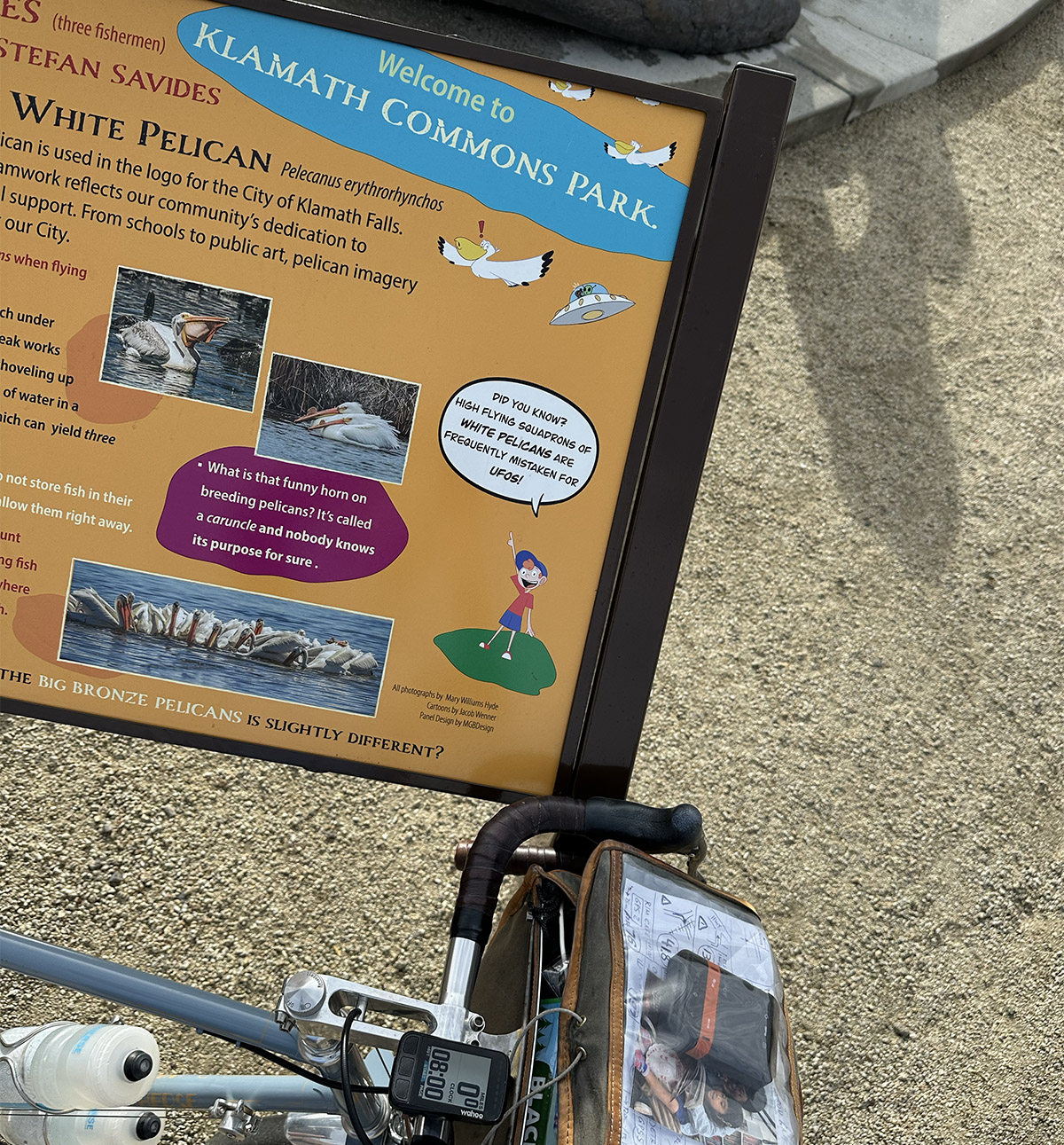
On Monday morning at 8:00 a.m., I left Klamath Commons, full of anticipation. For almost 42 hours, I got to do what I like best: ride my bike on beautiful, empty roads—both paved and gravel—with nothing else to think about.
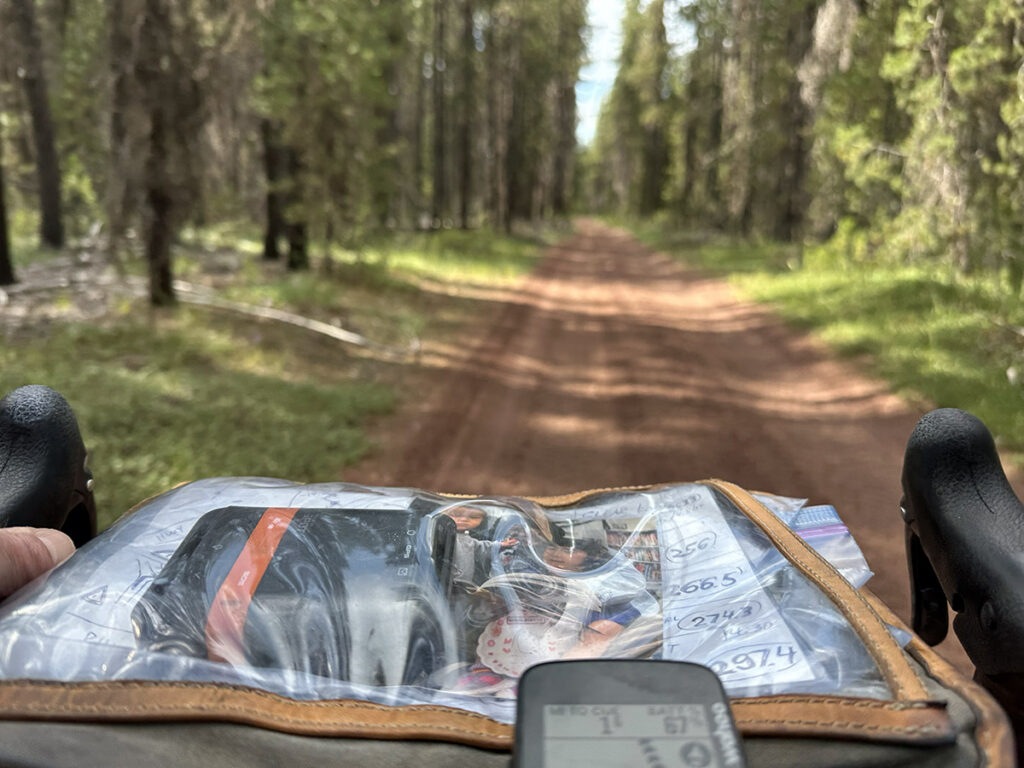
What followed were two days of living to the fullest. Ryan Francesconi has scouted an incredible—and challenging—route. There are many highlights: criss-crossing the forests on the slopes of the Calapooya Mountains for miles and miles on remote roads (above)…
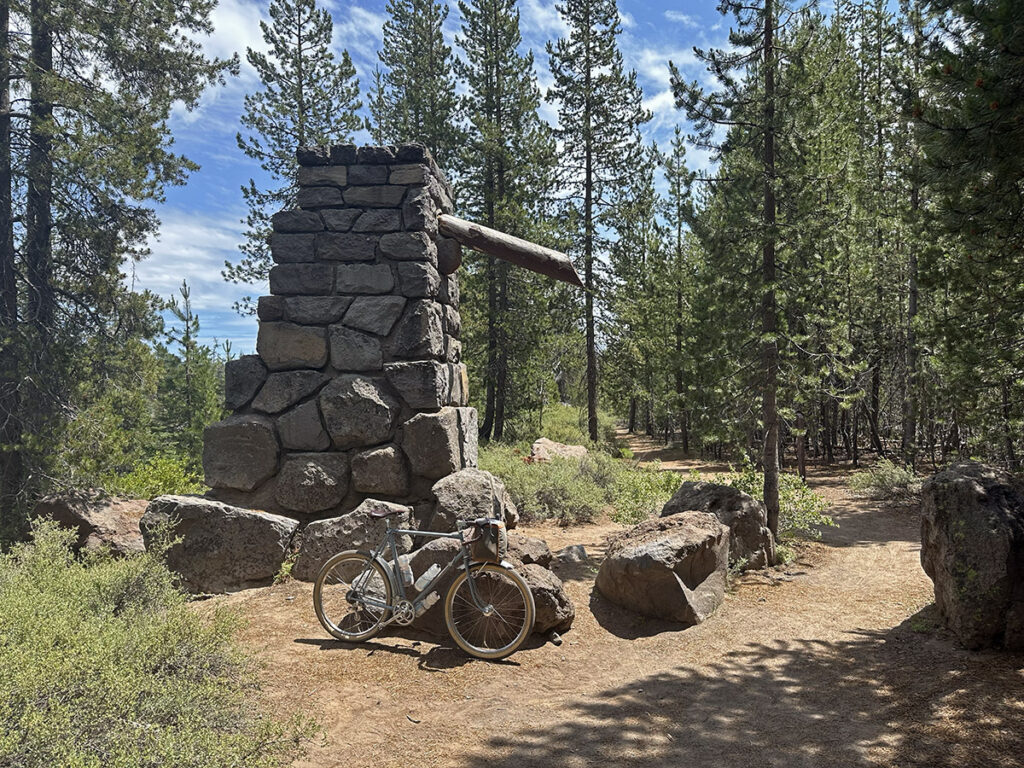
…entering Crater Lake National Park via the no-longer-used South Entrance…
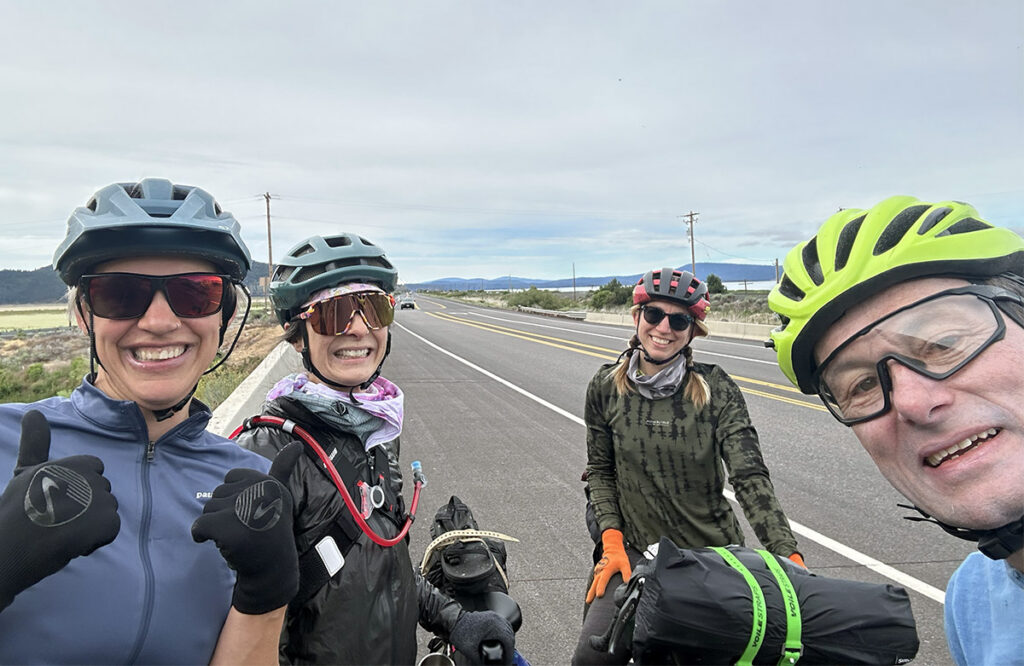
The highlights even included meeting a large group of bikepackers riding the same route. They must have left Klamath Falls just before me: We met at the foot of the first big gravel climb—and the last time any of us saw a car for at least half a day! I chatted with three of them while the others were busy clambering across an embankment—not all of the OCVA route is always rideable.
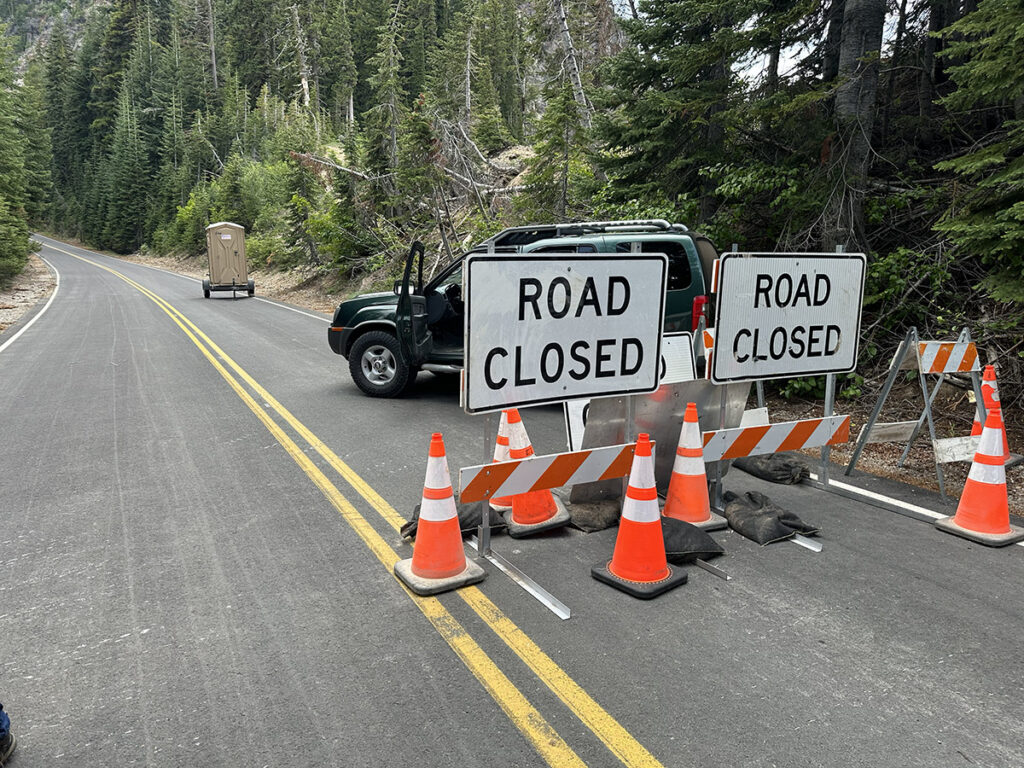
This year, that included part of the road around the rim of Crater Lake. There was construction that seemed to involve a landslide: A huge 6-wheeled articulated dumper truck drove past the sign while I asked the guard whether a cyclist could pass through. The guard didn’t need to explain…and I headed around the crater on the other side of the rim.
That meant no resupply at the Rim Cafe, but more views of the crater (top photo). I added an out-and-back climb to a little lookout, which coincidentally ensured that the distance and elevation gain of the forced detour were both a little greater than the ‘official’ route. Ryan texted after the finish, when he accepted my FKT: “It’s always something on this route somewhere, it seems like. It’s hard to call any route definite.”
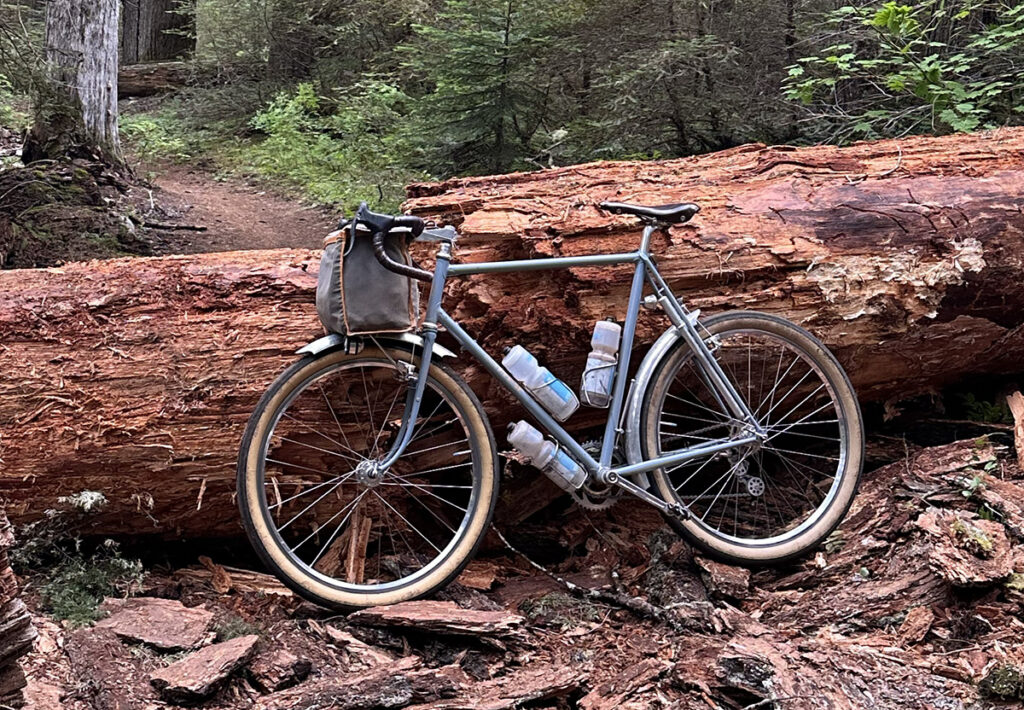
Other obstacles were big, but not unsurmountable. Like this giant tree that had fallen onto the trail near Clear Lake. Lying on the ground, it was as tall as my bike, but I managed to climb over it, cyclocross-style.
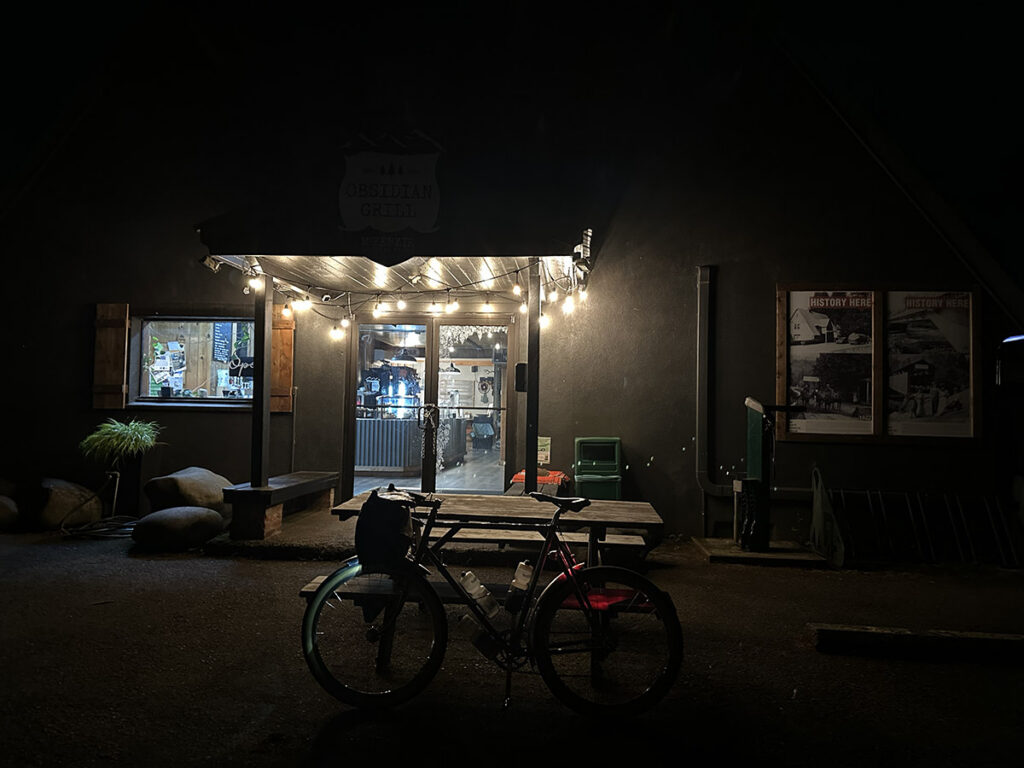
The biggest challenge this time was the cold. It was really, really cold!
That made for a long night, especially since I was ahead of schedule and arrived at McKenzie Crossing and its famous cafe long before it opened.
This also meant that I had to ride most of the 15 miles (24 km) of the gnarly McKenzie River mountain bike trail in the dark. And dark it was, as there was no moon due to the clouds. To my surprise, I was faster on this section than last year in daylight! Perhaps the dark focused my mind, and the adrenaline made my legs turn faster?
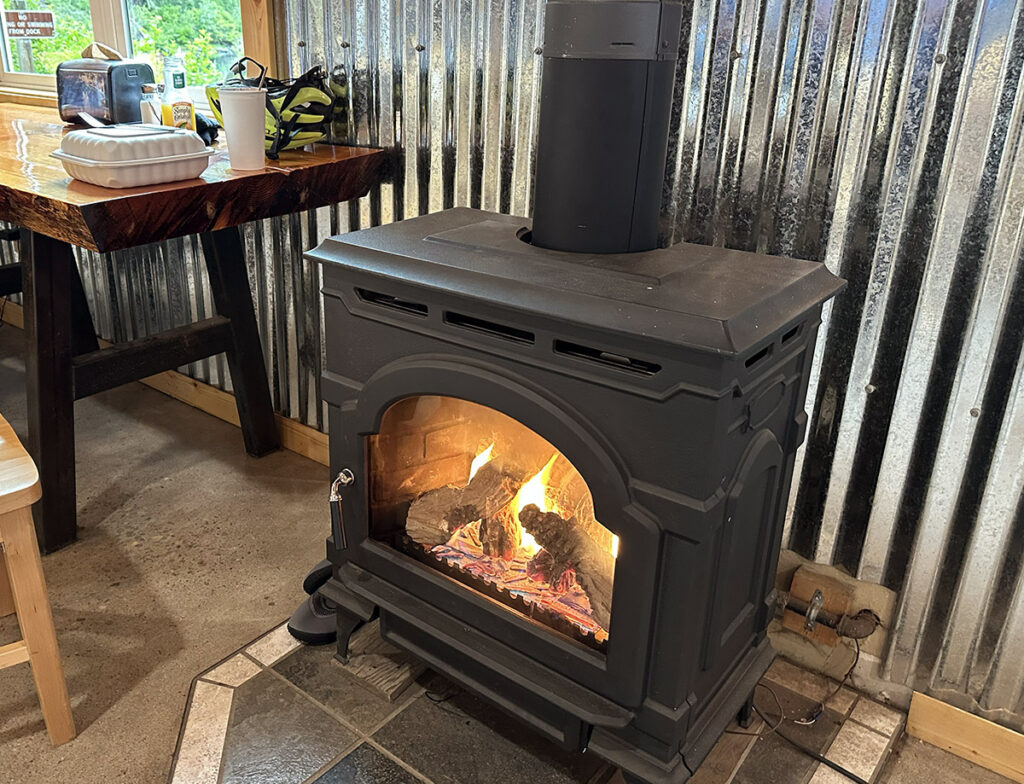
I was lucky at the next stop. I had not been able to find out when the cafe at Clear Lake opens in the morning. The website still lists winter hours. Google suggests it opens at 11 a.m. And the county parks that run this wonderful place didn’t return phone calls.
When I pulled up just after 8 a.m., wearing every shred of clothing I had with me, the sign said ‘OPEN’! Inside was a fire blazing, and the ranger warmed up two slices of apple pie for me. (No ice cream, thanks!)
Last year, the thermometer outside showed 97°F (37°C) when I arrived here. This year, I was too much in a rush to get inside to check, but it felt more like 37°F (3°C). I was surprised that the cold bothered me more than the heat. I guess as long as the air is cooler than my body temperature, riding faster creates more breeze to cool me. Whereas in cold weather, riding faster just makes me even colder…
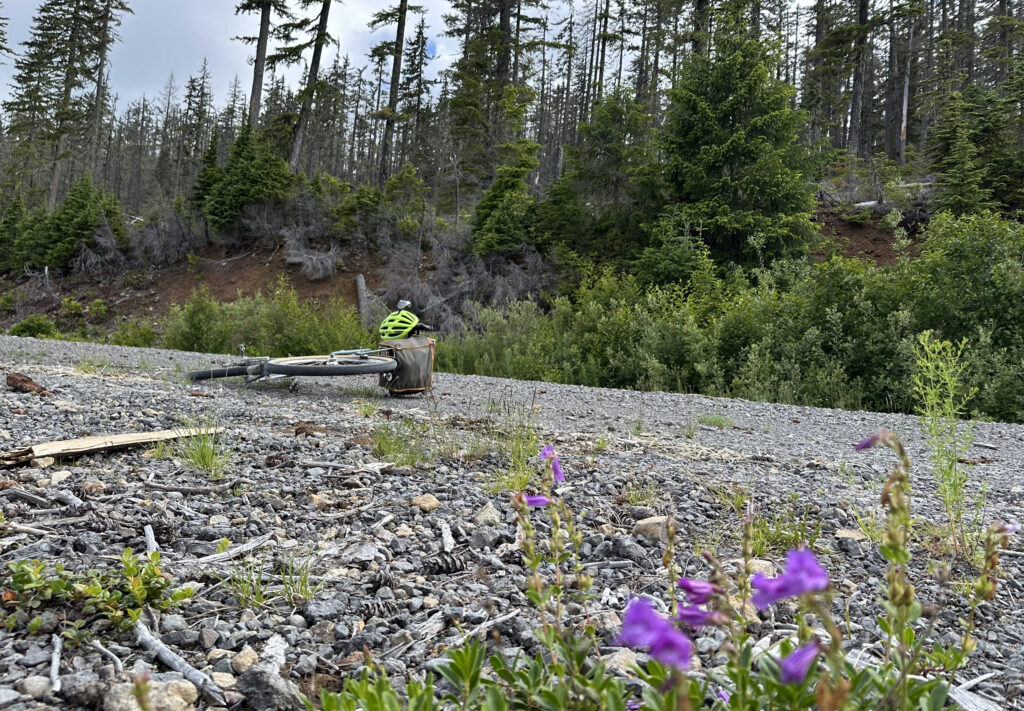
Riding on so many remote roads is just such a treat. Above is Graham Pass—a place that few people ever get to visit. There’s no sign, and almost no washboard, because so few cars come here.
And despite the challenges, I had a really good ride in every sense.
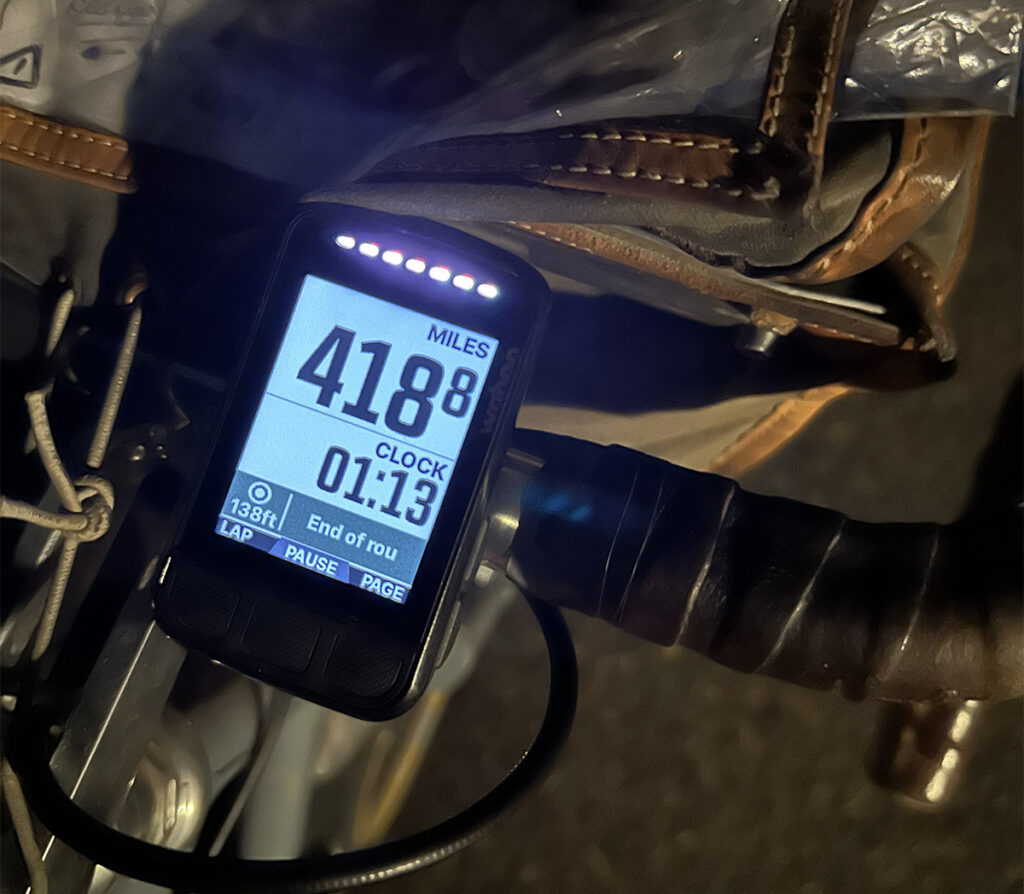
When I arrived at the finish, on top of Mount Tabor overlooking Portland, at 1:13 a.m., Bicycle Quarterly reader Dennis Howe stepped out of the darkness. He had followed my tracker and come out to greet me. And he even brought a burrito, figuring I might be hungry. (I was starving!)
My time of 41:13 hours was 8.75 hours faster than last year. Some of that is because there was no snow. A missing bridge had been replaced. I managed to keep my stops short—a total of almost exactly one hour off the bike during those 2 days and 1.5 nights. And I just had a good ride.
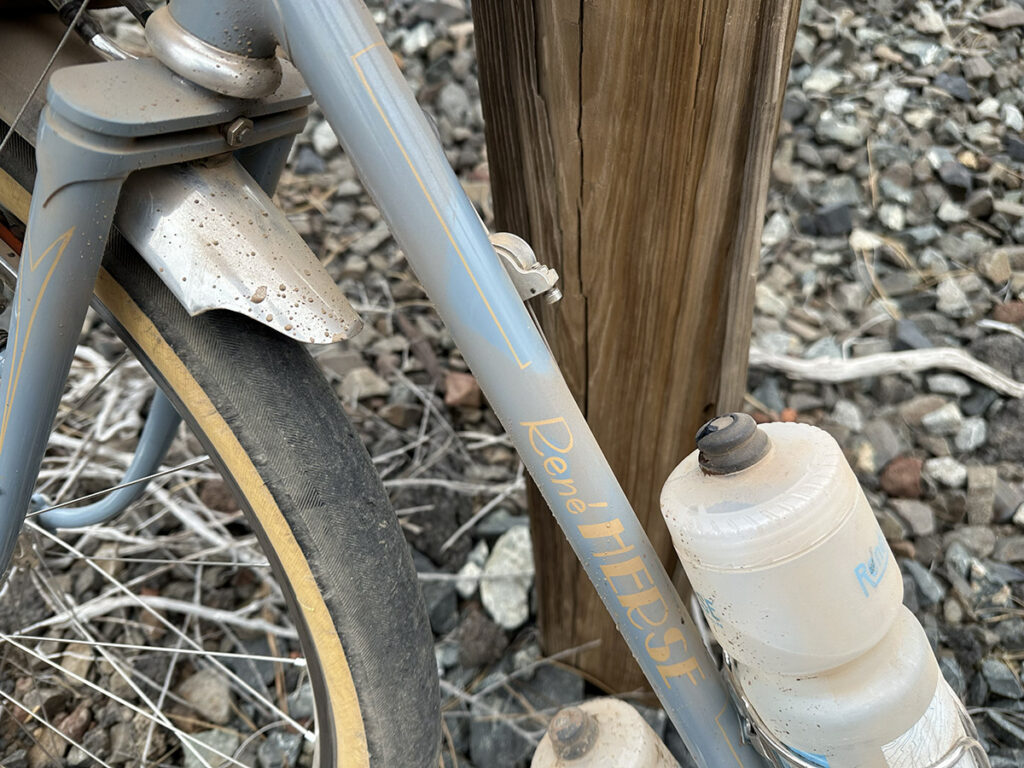
In a future post, I’ll cover some more stats from the ride, and also what it’s like to ride an analog bike on such a challenging course—and why I chose this bike over my others with electronic shifting.
More Information:
- Tracker of the FKT ride
- FKT ride on Strava
- OCVA 400 Stats and Gear Check
- Analog Bikes for Speed? The logic behind my long-distance Rene Herse bike.