


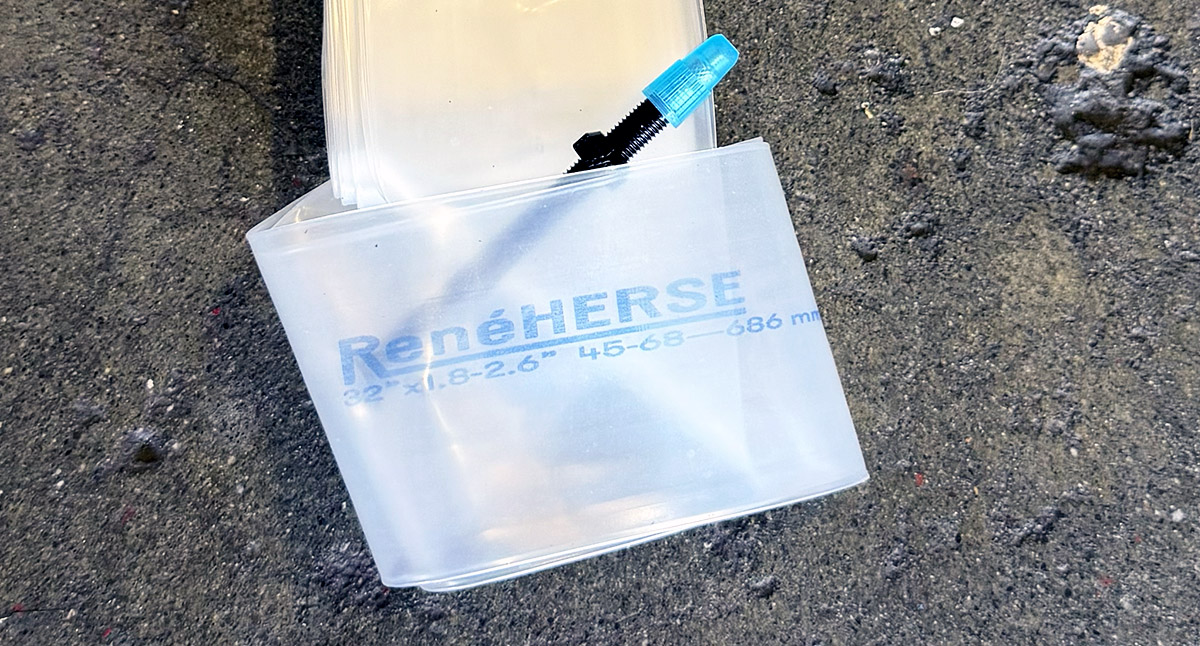
Rene Herse introduces 32″ TPU Tubes
It’s become a little quiet around 32″ wheels recently. The revolution hasn’t happened (yet): Many observers expected the new bikes to make a clean sweep of the races they entered. Cameron Jones, the winner of the 2025 Unbound, enthused that his new 32″ gravel bike made him feel like he was “levitating over the surface.” He added: “I’m genuinely scared how fast I’ll be able to corner.”
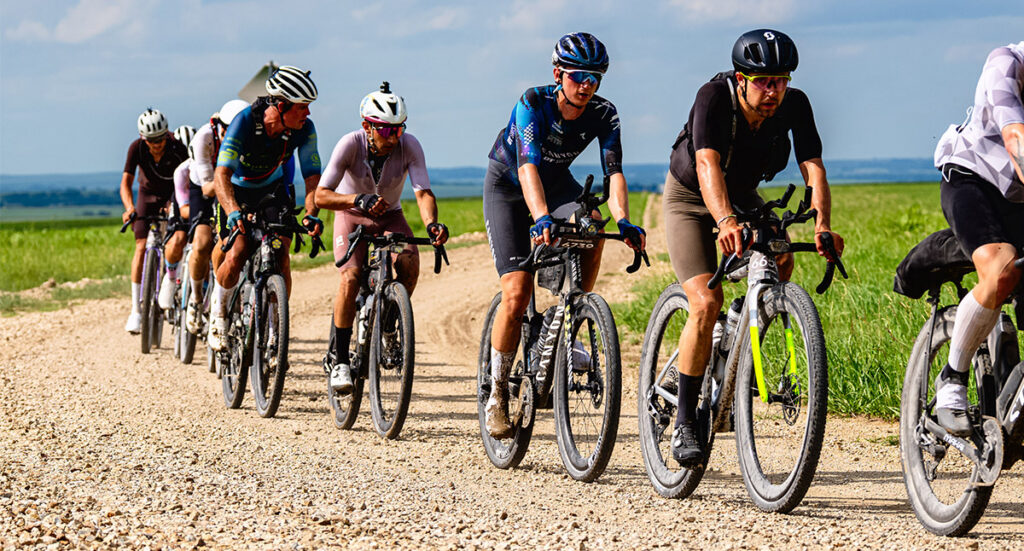
Now there has been a reality check: The winnings have been slim for the new 32″ bikes. In the 350-mile Unbound XL, the overall favorite, Robin Gemperle, did indeed win—on a 32″ bike (above, with yellow fork). But he probably would have won on (almost) any bike, as long as it didn’t break.
In mountain bike racing, Thömus Maxon caused a stir when the brand showed up at their home race in Lenzerheide with prototype 32″ mountain bikes. In the cross-country race, none made it onto the podium. However, Alessandra Keller rode one of the 32″ bikes to 3rd place in the Short Track event. That and Gemperle’s Unbound XL win appear to be the only podiums achieved with the new wheel size so far. As to Cam Jones, he faded during this year’s Unbound, on a flat stretch where the bigger wheels should have offered their greatest advantage. He finished 10th—which, it has to be said, is a good placing in the world’s most competitive gravel event.
Of course, there aren’t many 32″ bikes in the peloton yet, so the odds are not in their favor. All we can say is that the larger wheels don’t appear to be game-changers. If they provide an advantage, it’s small enough that it gets lost in the noise. In other words, the jury is still out.
However, there is no doubt that 32″ wheels are coming. The industry has too much invested, and it’s desperate for something new to persuade riders to upgrade from their existing bikes. At the Leadville 100 mountain bike race this weekend, more 32″ bikes will be introduced. And once more racers are on 32″ bikes, more races will be won on the big wheels. That’s inevitable—a self-fulfilling prophesy.
However that plays out, having more choices can be good for all cyclists. Of course, there is legitimate concern that the new standard will displace existing ones. For now at least, that fear is unfounded. Manufacturers are not discontinuing development of 700C / 29er bikes—they continue to offer them in parallel with the new wheel size. Nobody seems to be quite sure whether cyclists will accept the big wheels. Will they enjoy bikes that corner as if they were on rails? Will they like the greater inertia of the large wheels, that are said to keep rolling once they are up to speed, but require more power to get there? Time will tell…
Here at Rene Herse Cycles, our position on 32″ wheels has sometimes been misunderstood. We are neither ‘for’ or ‘against’ large wheels. We don’t tell cyclists what they should ride. It’s our job to provide information so you can make informed decisions.
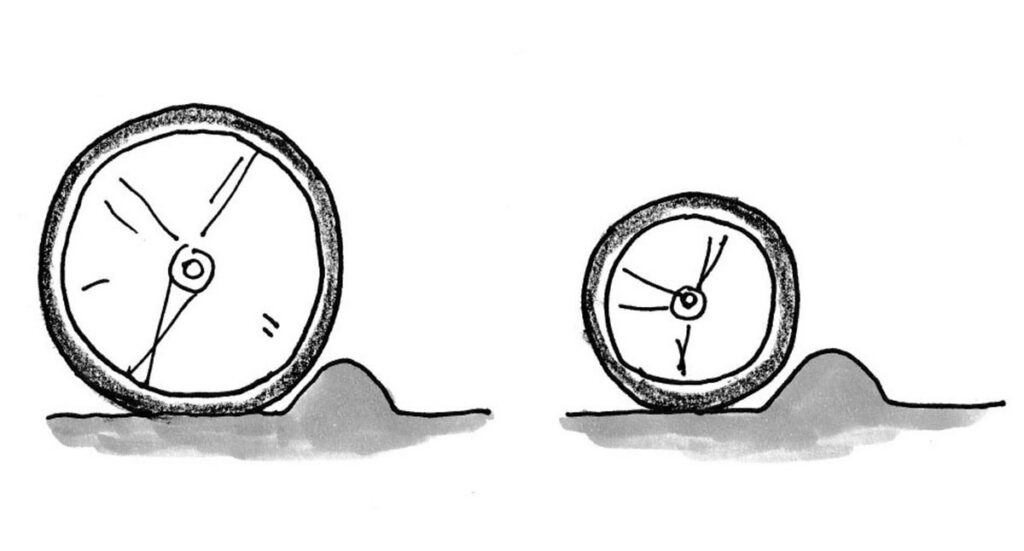
That’s why we reported that the available science does not support claims that larger wheels have better ‘roll-over’—at least for gravel bikes. Pneumatic tires are flat at the bottom. They roll over obstacles by deforming and absorbing the bumps, not by lifting the bike. And physics tell us that the greater inertia of the larger wheels is only due to their greater weight. The larger diameter cancels out: At the same speed, larger wheels roll at lower rpm. For riders who want the greater inertia of heavier wheels, there’s no need to change wheel sizes: Just ditch the expensive carbon rims in favor of aluminum hoops.
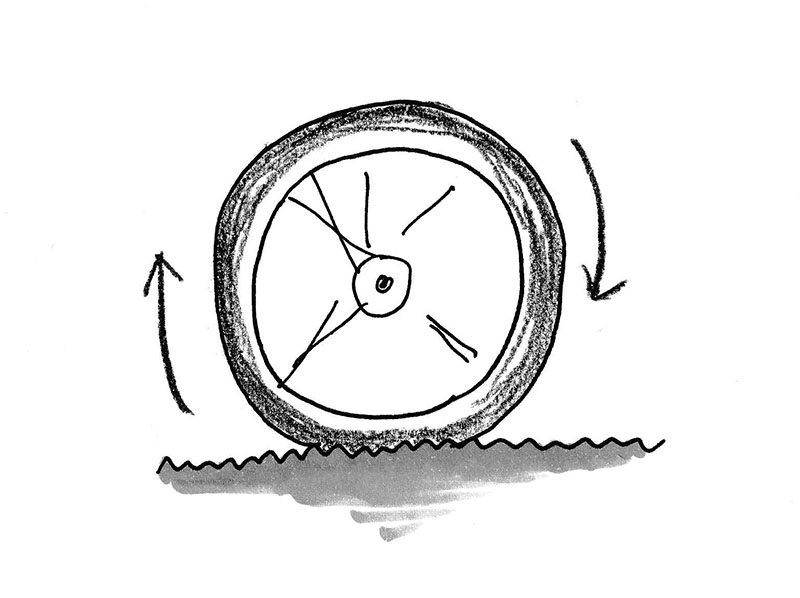
This doesn’t mean that there is no place for 32″ wheels. Larger wheels make the bike feel different. The greater rotational inertia makes the bike more stable. Could that make them less likely to crash? Most crashes on gravel start when the front wheel slides. Then the fork turns into the slide, which can make the slide unrecoverable. Could more rotational inertia keep the fork from turning and make the slide recoverable? In theory, the contact patch of the larger wheels is (marginally) longer and narrower. Does that contribute to make the bike more stable? Perhaps that’s what Cam Jones was talking about when he mentioned the ‘scary-fast cornering’?
Rotational inertia also affects how the bike feels when it’s rocking from side to side, during out-of-the-saddle climbs and sprints. Personally, I love superlight wheels because they make the bike easier to rock from side to side. Stronger and heavier riders might benefit from more resistance to push against. There may be other, yet unexplained factors that make larger wheels faster or more pleasant to ride in circumstances we haven’t tested yet. Science is always evolving.
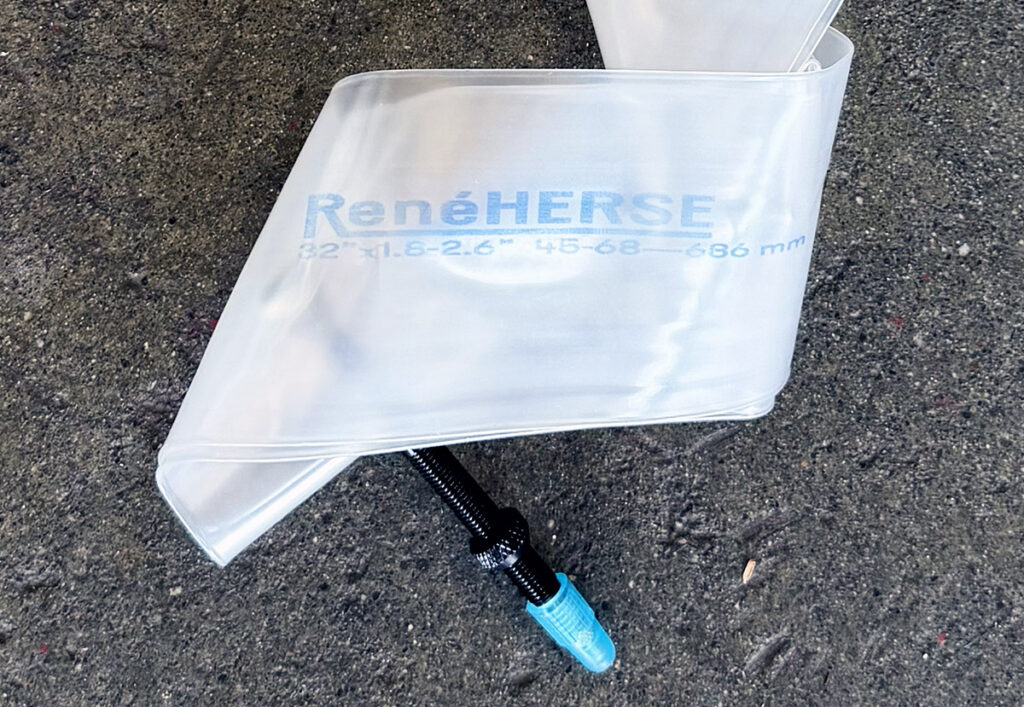
In that spirit, we’ve added 32″ TPU tubes to the Rene Herse program. Sized for 45 – 68 mm (1.8 – 2.6″)-wide tires, they are ideal for the coming generation of mountain and gravel bikes. We suspect most riders will set up their new 32″ bikes tubeless, but they’ll still need spare tubes in case their tubeless tires fail on the road or trail. With the increased diameter, conventional 32″ tubes are heavy and bulky. That’s where the light weight—just 66 g—and small packing volume of TPU tubes comes in handy.
They new 32″ tubes are now in stock. If you’re already riding on 32″, get a few tubes to carry on your rides—or install in your tires for the ultimate in speed. If you’re excited about 32″ bikes and plan to ride one in the future, you can rest assured that we’ve got you covered, as far as tubes are concerned. Does this mean we’ll add supple 32″ tires to the Rene Herse program? In this day and age, we’re reluctant to make the considerable investment in tire molds before we know whether there really is demand…
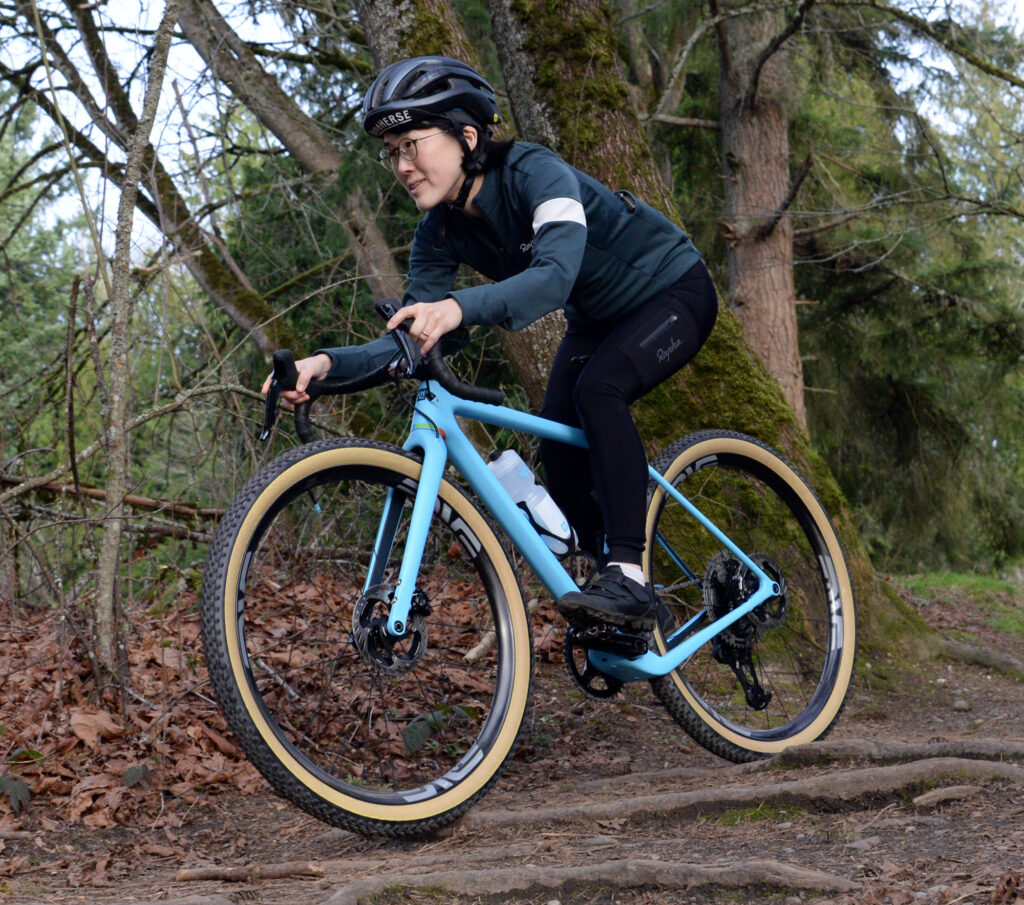
We also want to reassure our customers: Even if 32″ wheels take over, we’ll continue to support ‘obsolete’ wheel sizes. In fact, we remain committed to offering tires and tubes for 650B and even 26″ bikes. You can trust us on this—because we ride them ourselves—the photo shows Natsuko on her new 650B OPEN × Rene Herse.
More Information: