


Patent 3: Tread Radius
Making a good semi-slick tire is harder than it may seem at first. How do you balance the features that make Rene Herse tires perform so well on pavement and on loose surfaces:
- Thin tread: to keep the tire supple (but thick enough for long service life)
- Round profile: to avoid sudden changes in grip as the bike leans into corners
- Light weight: for obvious reasons (achieved by using as little tread rubber as possible)
At least the fourth one is easy:
- Supple casing: for speed and comfort
We use the same casings for all our tires, whether road/all-road, dual-purpose knobby, or semi-slick. But what about the other three? Can we make a semi-slick with a thin tread and a round profile that’s also lightweight?
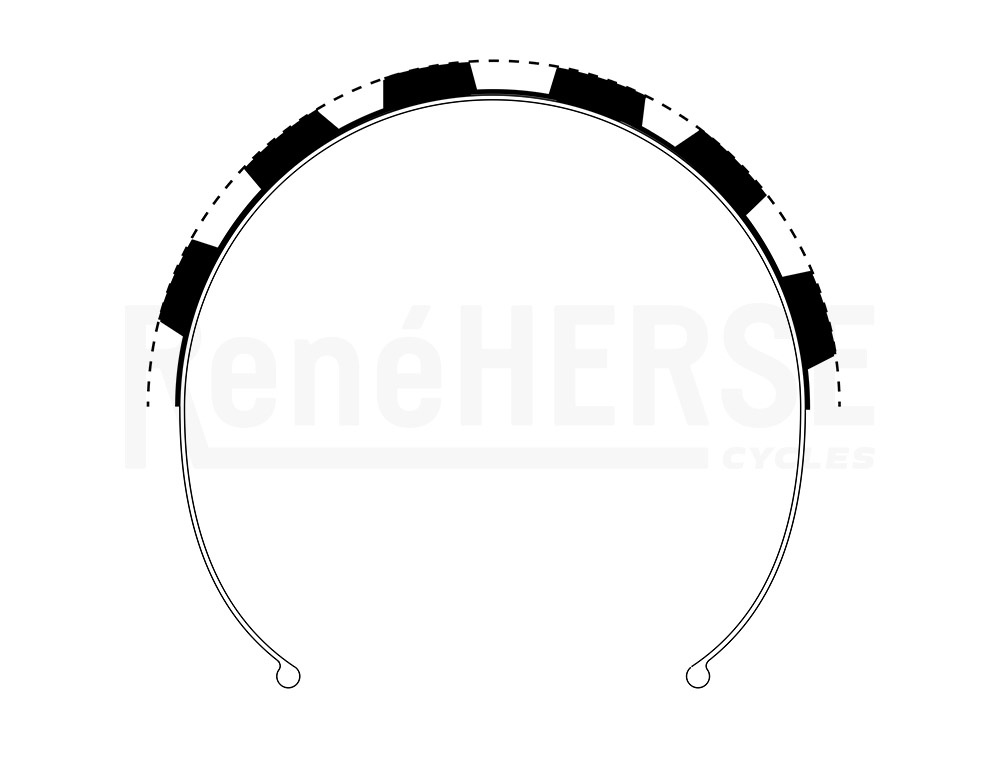
What if we take one of our dual-purpose knobbies and fill in the gaps between the knobs in the center to create a semi-slick? Well, that would add a lot of rubber. The result would be a very heavy and stiff tire. We want to keep the center tread light and supple. The last thing we need is a semi-slick that’s much heavier than our dual-purpose knobbies.
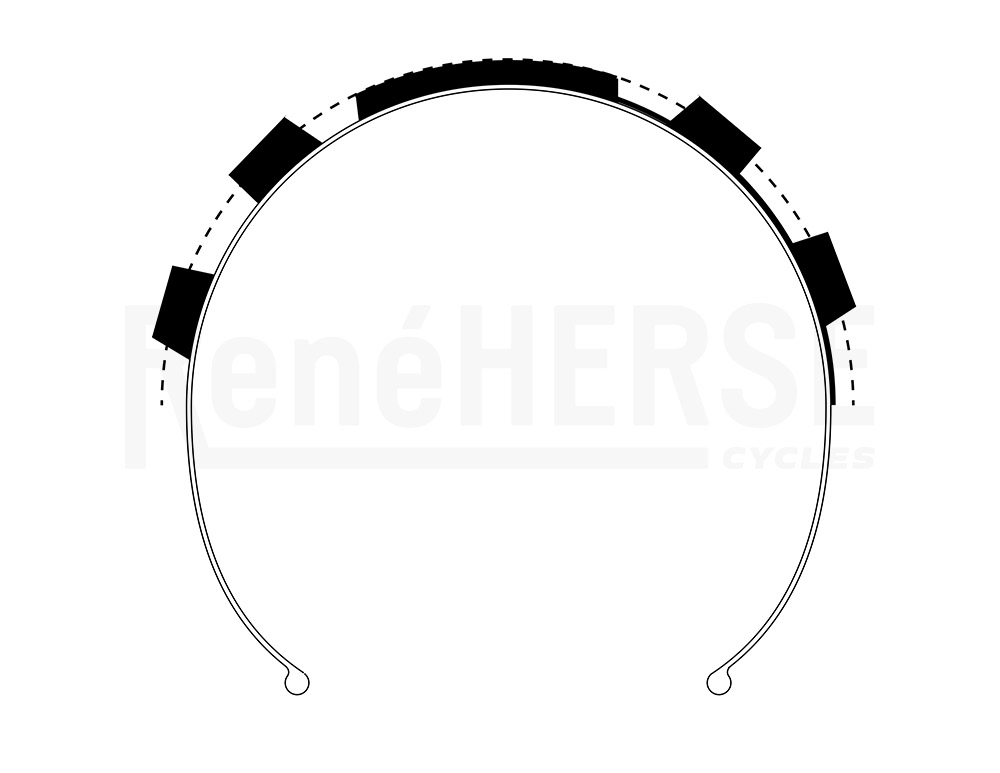
That’s why most semi-slicks have side knobs that stick out beyond the slick surface—but then you lose the round profile. You get a sudden loss of traction as the tire rolls from the smooth slick tread onto the side knobs during hard cornering. Anybody who has felt that doesn’t want to repeat the experience. That’s why Gerard Vroomen (OPEN Cycles) wrote: “The last thing you want is side knobs hitting the road instead of smoother rubber.”
Obviously, we don’t want to create a semi-slick that corners worse than our dual-purpose knobbies.
Other makers have also realized this. That’s why most semi-slick these days have very small and shallow side knobs. However, we know that knobs should be large and tall to bite into the surface. Small knobs might look the part, but sacrificing performance is not an option for our Rene Herse tires.
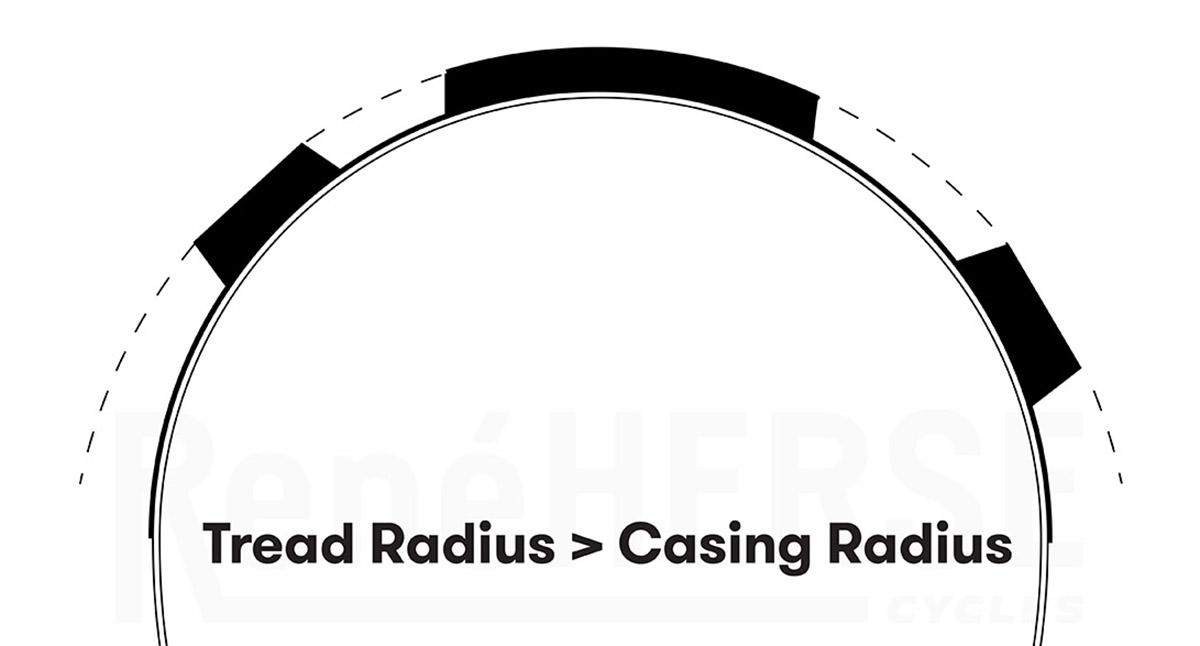
Here’s what we did instead: a complete rethink of how tire tread works. Usually, tire tread follows the radius of the casing. Sometimes, as in the case of the smooth Rene Herse road and all-road tires, there’s a little more tread in the center, to make the tire last longer without affecting its performance.
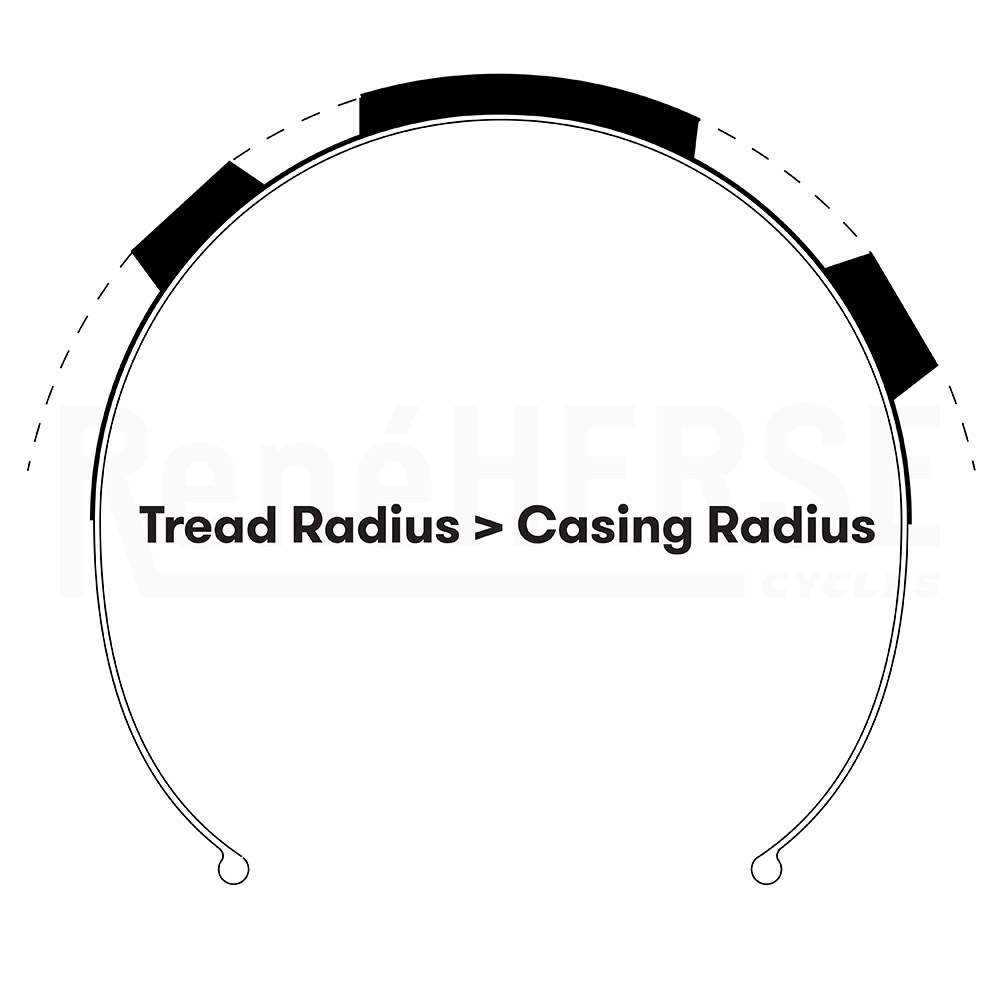
What if we reverse this, and make the tire thin in the center, but increase the thickness toward the side knobs? If we want to keep the round profile needed for excellent cornering, we’ll end up with a radius of the tread that’s much larger than the radius of the casing. And that’s the third patent we’ve filed for our semi-slick tires.
The much-larger radius of the tread has another benefit: The tire corners and grips like a much-wider tire, since the larger tread radius puts more rubber on the road.
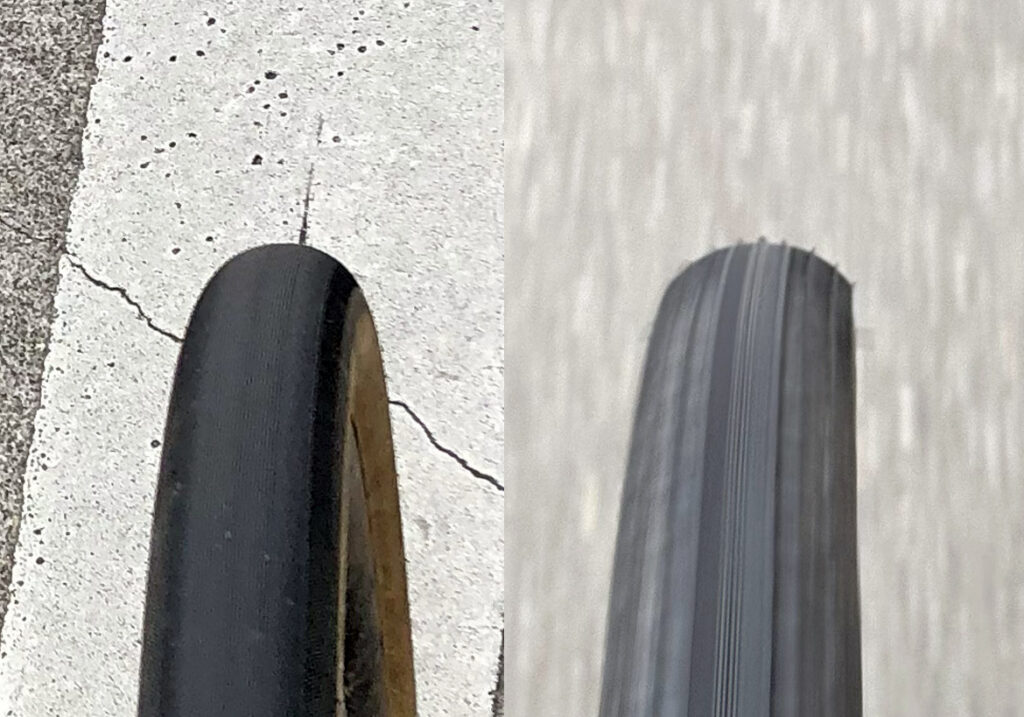
It’s hard to photograph this, since the tire needs to be spinning. Otherwise, you see the individual knobs, but not the radius of the tread. Above is a 48 mm Rene Herse all-road tire on the left, and a 48 mm semi-slick on the right. Both tires share the same width, yet the radius of the semi-slick tread is much larger. That puts a lot more rubber on the road when you corner.
You’ll notice this when riding our semi-slicks. On pavement, they have a huge amount of grip. They also grip better on loose terrain, where more knobs engage with the surface. More tread on the road is always a good thing.
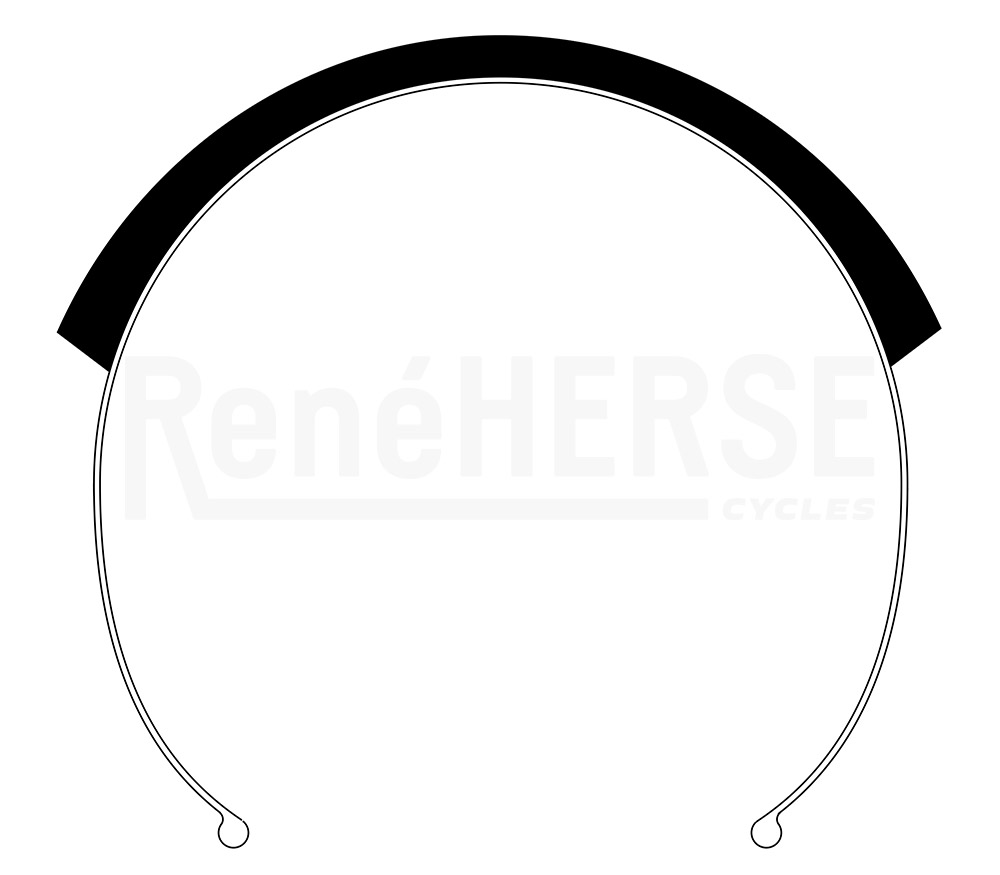
That leads to the obvious question: Why not apply this patent to our smooth road and all-road tires. Could we improve their traction even further? Well, making the tread thicker on the shoulders—effectively filling the gaps between the knobs with rubber—would increase weight and make the tire stiffer. And we don’t want that.
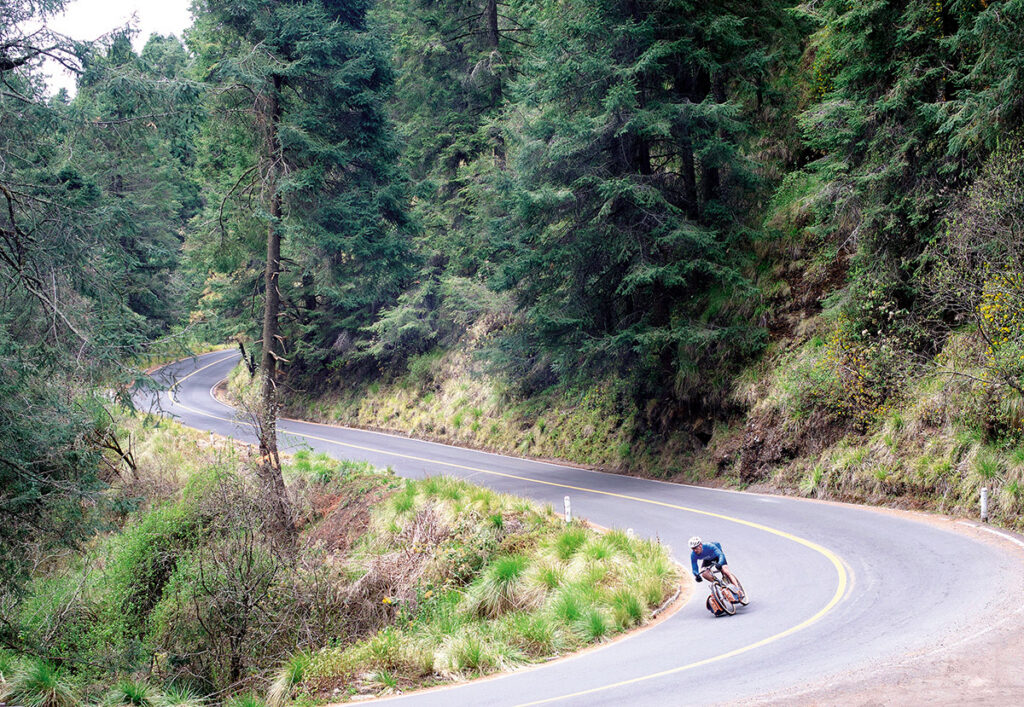
There’s really no need to increase the traction of our smooth tires, especially the wide ones. There’s already a lot of rubber on the road. And the supple casing keeps that rubber in contact with the surface, even when the bike goes over bumps. That’s how the supple casing further reduces the risk of losing traction in bumpy corners. Anybody who’s ever descended a mountain road on wide Rene Herse tires will remember the sensation of (almost) limitless grip.
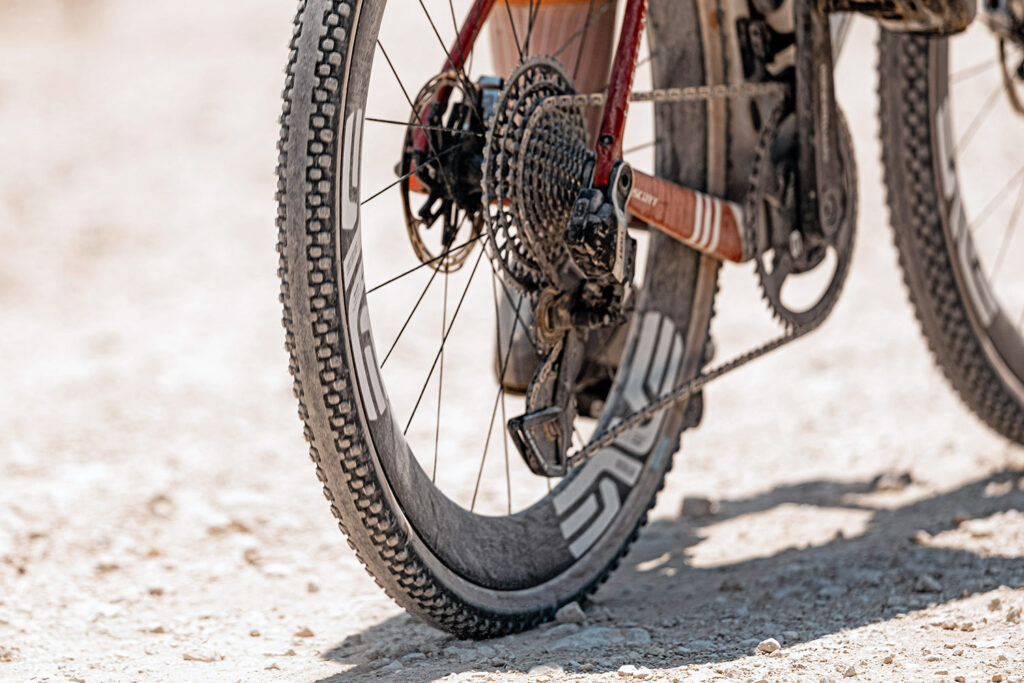
Back to our semi-slicks: All three patents work together. The gradual transition from slick center to side knobs (Patent 1) is also why we anchored the first row of knobs on the smooth center tread (Patent 2). That makes these knobs stiffer, increasing traction and reducing rolling resistance. And the gradual transition and round profile only work because we increased the radius of the tread (Patent 3). That way, we combine a (relatively) thin center tread—to reduce weight and increase suppleness—with tall side knobs—to bite into loose surfaces. As a (welcome) bonus, the large tread radius increases cornering grip.

Ted King, who ran Rene Herse semi-slicks in numerous events in 2025, said:
“Working with the Rene Herse team over the years, it was clear that something in between a slick tire and their characteristic dual-purpose knobby would be useful, and the semi-slick Corkscrew Climb—an homage to the original SBT GRVL course—was the result. I’ve put my Corkscrews through their paces all throughout the year in races clear across the country, from California to Vermont, and call them a standout favorite. I especially like that they corner like a much-wider tire.
“In a similar vein, the Corkscrew Climbs now have a bigger brother, Poteau Mountain. That’s a tire I took with me on my FKT across Vermont on the 300-mile VTXL late in the season. With the 4-mm jump from 44 to 48 resulting in 19% more air volume, the Poteau is the tire I opt for on longer outings or more chunky terrain. So it was my go-to for Unbound XL, as well as a second-place finish in the early-autumn, 400+-mile Megahopper.”
More Information:
- Patent 1: Semi-Slicks with Gradual Transition
- Patent 2: Anchored Side Knobs
- The Science of Tire Tread
- Rene Herse Tires
Photo credits: Jim Merithew / @tinyblackbox (Brennan Wertz’ bike, Ted King at Gravel Locos)