

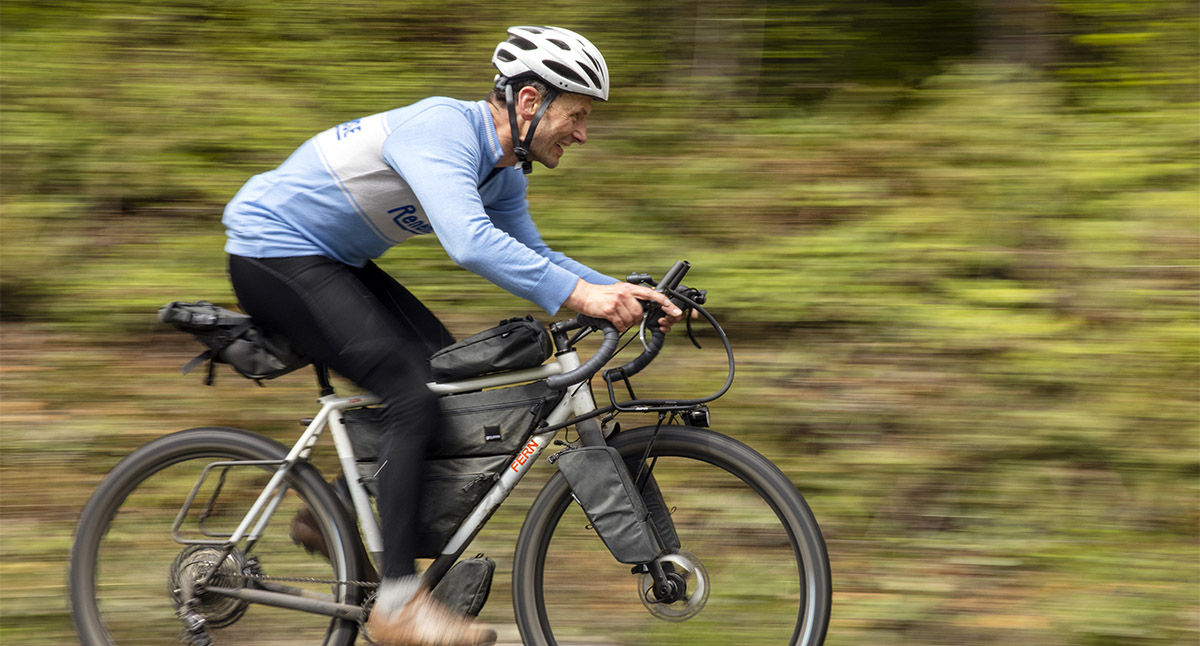
Everything Matters: Wool Jerseys
We just received a small shipment of our ultra-soft Merino Wool Jerseys… That’s a good opportunity to revisit why we go through the trouble of making our favorite jerseys in tiny numbers: They are a key component for our rides and adventures. It’s no exaggeration to say that these jerseys have changed the way we ride.
During my early explorations of the Cascade Mountains, I got sweaty on uphills and then chilled on downhills—even if I stopped on the pass and put on extra clothes and a rainshell. During one cross-mountain ride, it started to drizzle on the descent from Snoqualmie Pass, and I got borderline hypothermic. I was riding on the shoulder of the freeway—that’s what we did back then!—so I’d have been OK (hopefully) if I had been unable to continue. Exploring the unknown would have been too risky in conditions like that.
Then I discovered Merino wool jerseys. They are comfortable over a wide range of temperatures. They don’t lose their ability to insulate when they get wet. Unlike the scratchy wool jerseys I had experienced before, the best Merino wool is so soft that it’s comfortable to wear directly on the skin (unless you have an allergy). As an added plus, wool doesn’t retain odors. Tired of the garish cycling wear in those pre-Rapha days, I designed a simple jersey for our club, the Seattle Randonneurs. It became so popular that our riders were simply known as ‘Blueshirts’ for a while.
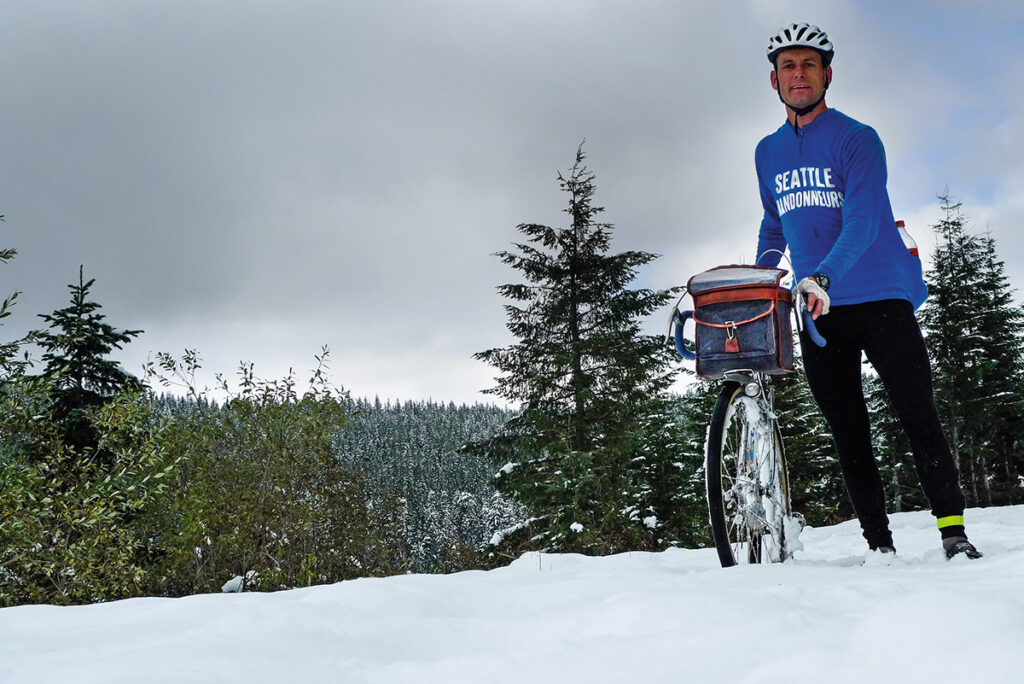
During one especially memorable adventure, made possible by these wool jerseys, I headed into the Sawtooth Mountains in late autumn. We just had received prototypes of the then-new Extralight tires with their new and ultra-supple casings, and I wanted to test them before the winter set in for good. The first snow had already fallen.
“Good luck!” was the send-off from the burly guy with the snowplow truck who’d tried and failed to make it across the mountains on my route. He was not wrong: I had to hike the last mile to the pass, because the snow was too deep to ride. On the pass, I took a selfie (above). For a moment, I hesitated: “Continue into the unknown or turn around?” Then I pushed forward, rode down the snowy mountain—gravity now on my side—then hiked across a huge washout and forded a creek, and finally made it to my hotel in Packwood, a few hours late, but none the worse for wear.
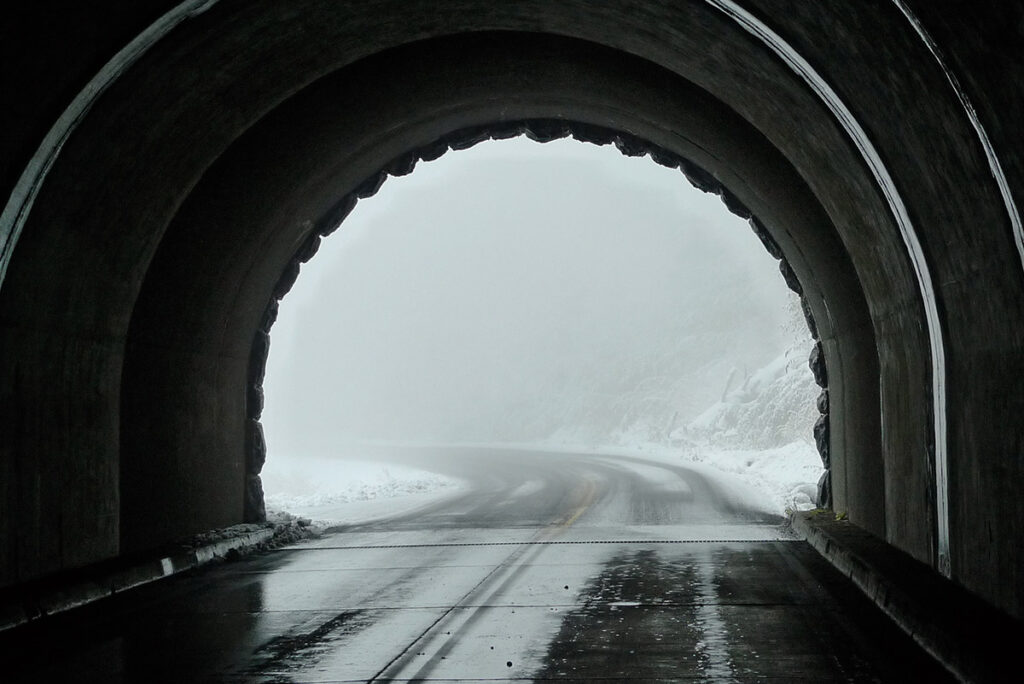
“Good luck!” said the road crew worker the next morning when I told him I was heading up Chinook Pass. Two-thirds of the way up, I traversed a tunnel. On the other side, snow was falling in heavy flakes, and the road was turning white. Without a wool jersey, this view would have had me turn around. Instead, I stopped inside the tunnel to put plastic bags onto my feet. (I had forgotten to bring booties.) Then I continued.
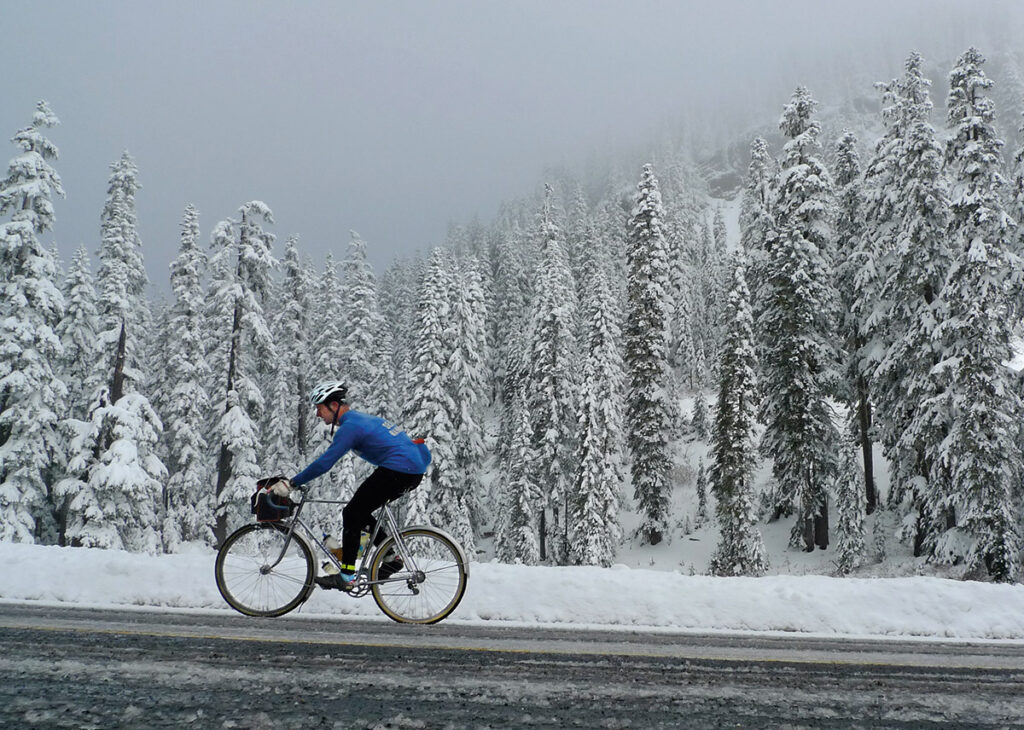
I made it across Chinook Pass without problems, then explored another gravel road to Lake Eleanor, which turned out to be impassable. I turned around and showed up at my favorite cafe in Greenwater for a late lunch. The owner, who had seen me come through on various adventures, exclaimed: “I’m glad you’re still crazy!” I returned home that night, my testing of the new Extralight casing complete. The new tires had proven their speed and strength under these harsh conditions.
I hadn’t even though about my clothing…and I had created memories that will last a lifetime. (The full story of this adventure was published in Bicycle Quarterly 81, our 20th anniversary edition.)
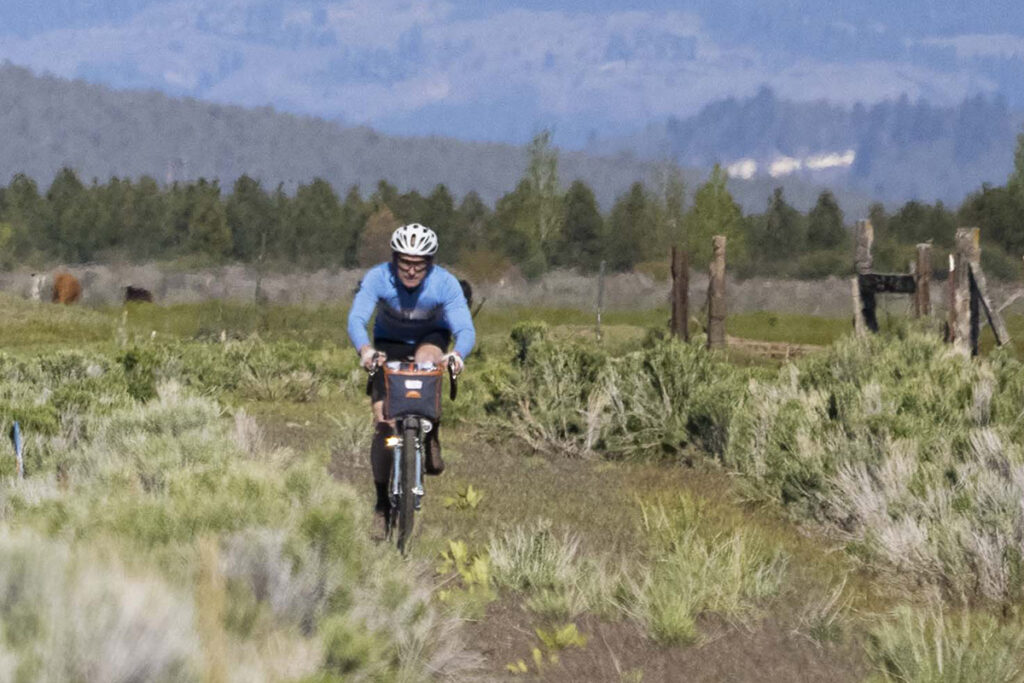
Not having to add and subtract layers for every climb and downhill also saves valuable time. During my FKT ride on the Oregon Outback, I took off the long-sleeve jersey and wool tights mid-morning and then put them back on after sunset. In the middle of the night, I added a rainshell for a particularly long and cold descent, then took it off before the next climb. That’s already the extent of dressing and undressing for the entire 585 km, 26-hour ride across multiple mountain ranges.
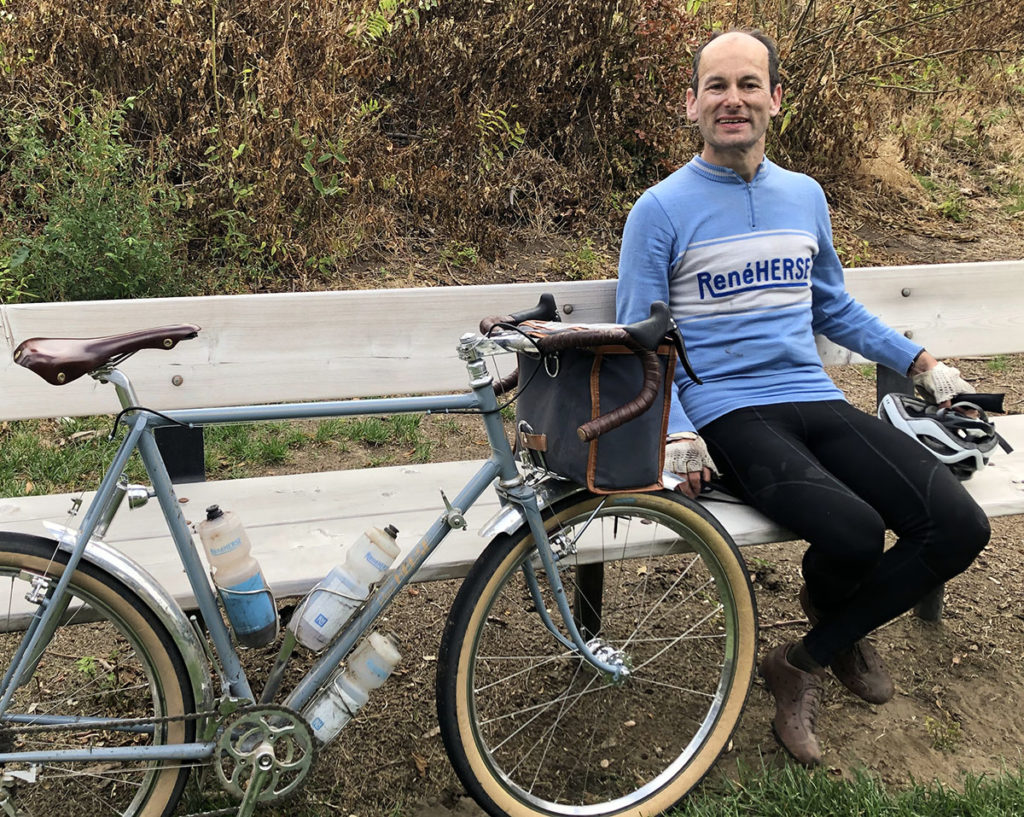
At the finish (above), I was still wearing the wool jersey, even though temperatures had gone from just above freezing to somewhere in the 60s (Fahrenheit, or about 15°C). That’s how adaptable wool is. (Ask sheep, who don’t take off layers when it gets cold or rainy, either.) When I’m competing with riders much stronger than me, not stopping is the easiest (and only) way to get ahead.
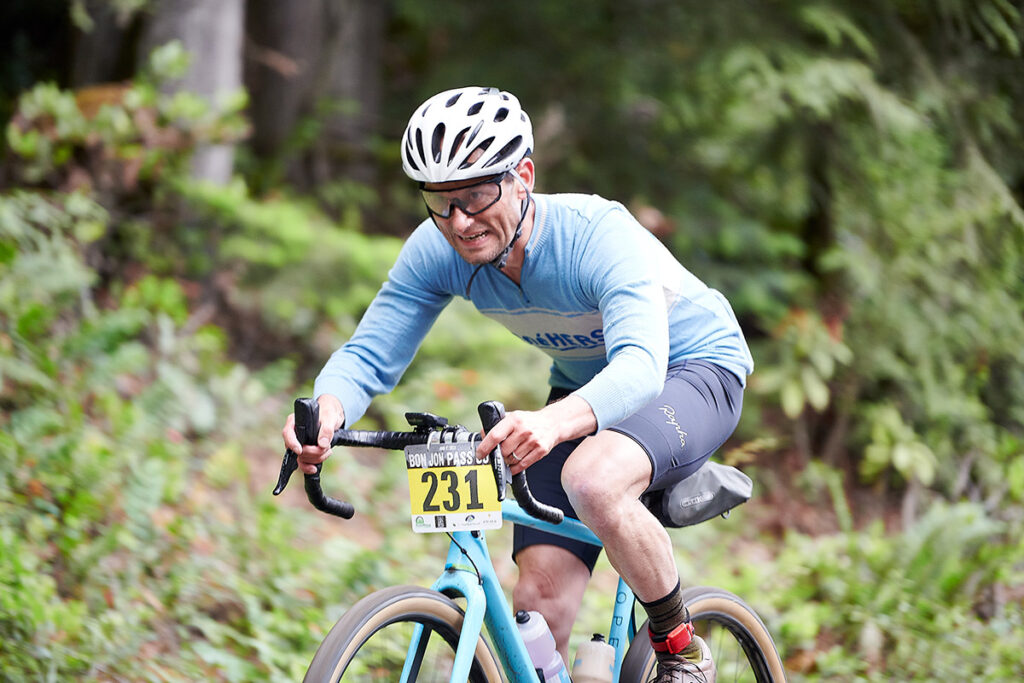
Wool jerseys aren’t just great for multi-day bikepacking adventures and ultra races. Even for a race like Bon Jon Pass Out—with a climb and descent over its namesake pass—my wool jersey takes the stress out of planning my clothing. The climb will be hot no matter the weather, but the descent can be very cold. Having a jersey that is comfortable over a wide temperature range, and even in the rain, is essential for an enjoyable ride or race.
Since those first ‘blueshirts’ I designed for the club, we’ve updated the design with help from the team that designed our OPEN × Rene Herse limited edition frames. It’s still understated, but a lot nicer. (I’m not a designer; they are!)
There’s a reason why big clothing makers prefer synthetic fabrics, and it has nothing to do with performance. Great Merino wool is expensive and hard to source. (There are many different grades of Merino. We’re using the very best.) If we applied normal clothing mark-ups to these jerseys, they’d cost twice as much—about the same as a top-shelf Merino sweater. In fact, we made a wonderful Merino sweater with the same materials for our 85th anniversary. (Sorry, those are sold out.)
“He’s really trying to sell those jerseys,” you may think, but that’s not really true. We’ve only got 22 of them, and a number of those are reserved for me and my friends on the BQ Team. The reason they exist is simple: We need them for our rides and adventures. If you’d like one for yourself, get one while they last.
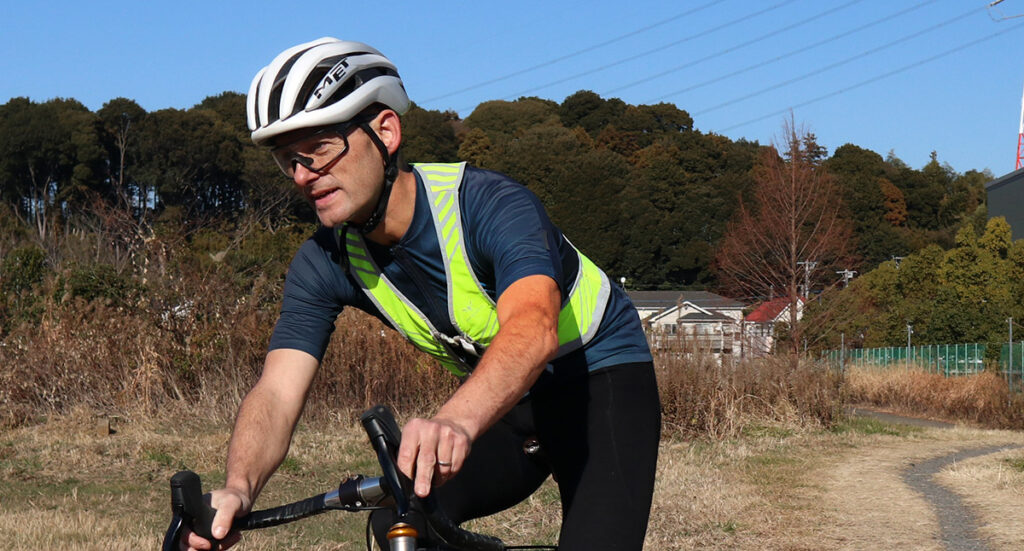
In other clothing news, Apidura’s Packable Visibility Vests are on the way. Incredibly light and breathable, and not flapping in the wind even at high speeds, these are the reflective vests I’ve wanted for years. Now that Apidura has made them, I carry mine on all my adventures. You can pre-order yours now.
More information:
- Clothing in the Rene Herse program
- Bicycle Quarterly 81, our 20th anniversary edition with the snowy adventure and other great stories
- Oregon Outback Rene Herse—a (successful) combination of method and madness
Photo credits: Rugile Kaladyte (Photos 1, 5); Mark Ahrens (Photo 6); Daniel James (Photo 7).