

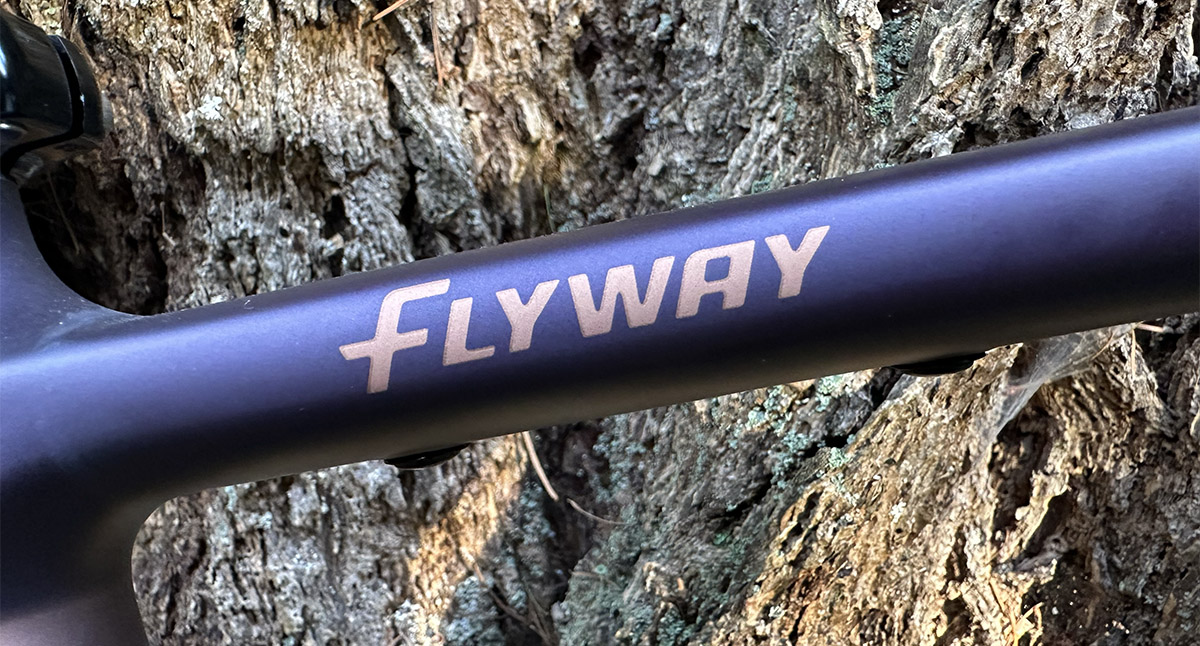
Meet the new Salsa Flyway
Today Salsa is launching their new Flyway gravel bike. It’s replacing the 4th-generation Warbird that’s been around since 2019. We loved that Warbird, but not the moniker. So it’s perhaps timely that the new bike has a more peaceful name: Flyways are the established travel patterns of migratory birds. When cycling in a group of close friends, we’ve often talked about the analogy to a flock of birds. To me, the name captures the joys of spirited riding.
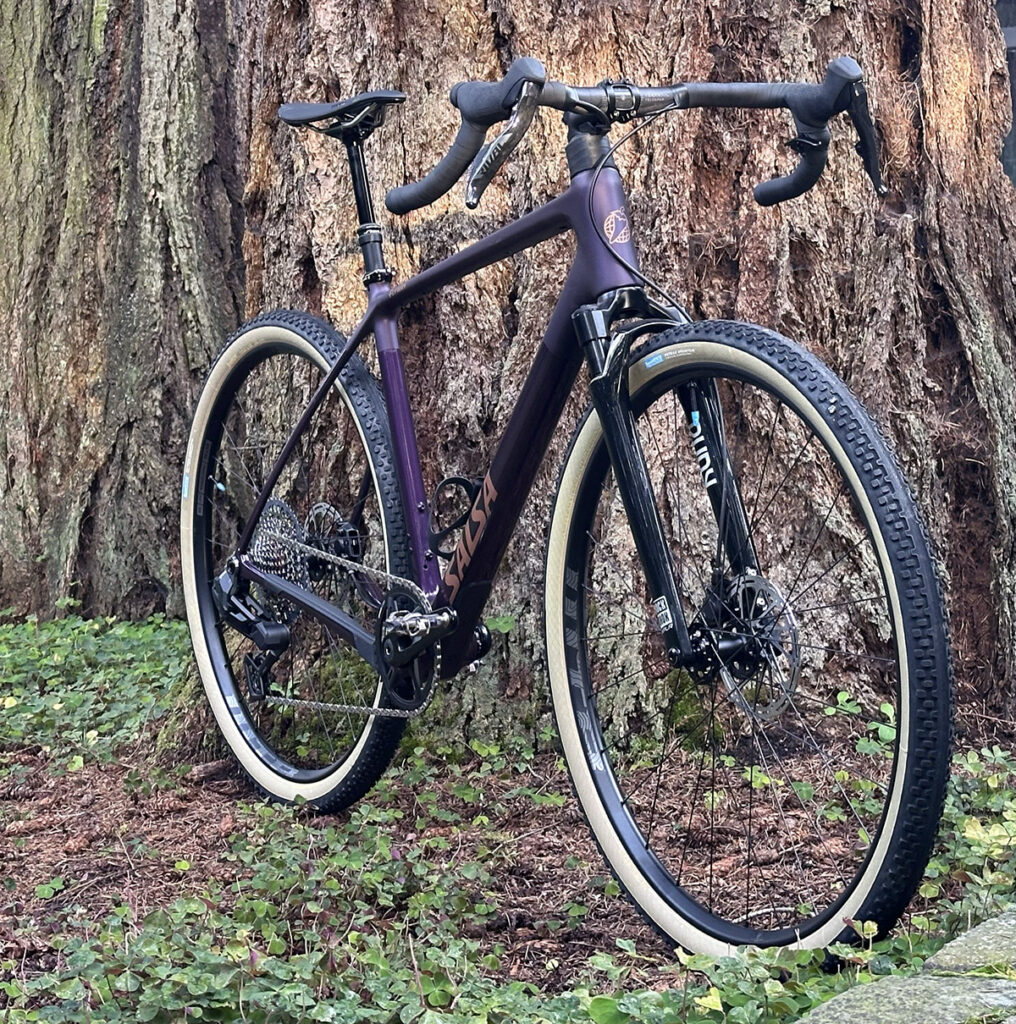
So what is the Flyway exactly? Salsa’s marketing materials helpfully states: “Flyway is for riders who want a race-capable gravel bike that doesn’t sacrifice comfort, cargo capacity, or the joy of wandering without a finish line.” In other words, a versatile bike for spirited riding. Exactly the type of bike we love here at Rene Herse and Bicycle Quarterly. So we asked Salsa for a test bike.
Like the old Warbird, the new Flyway is a no-nonsense option for riders looking for performance without paying premium prices. It’s a sign of the times that even ‘non-premium’ prices aren’t exactly budget-friendly: Flyways cost from $ 3,500 with Shimano GRX 610 to $12,000 for the ‘halo’ model with Red XPLR AXS 13-speed. Our test bike, with RockShox fork and electronic SRAM Rival drivetrain, sits in the middle of the lineup, at $5,500. You can also get the DLX frame/fork alone for $ 2,800. All models should be available this spring.
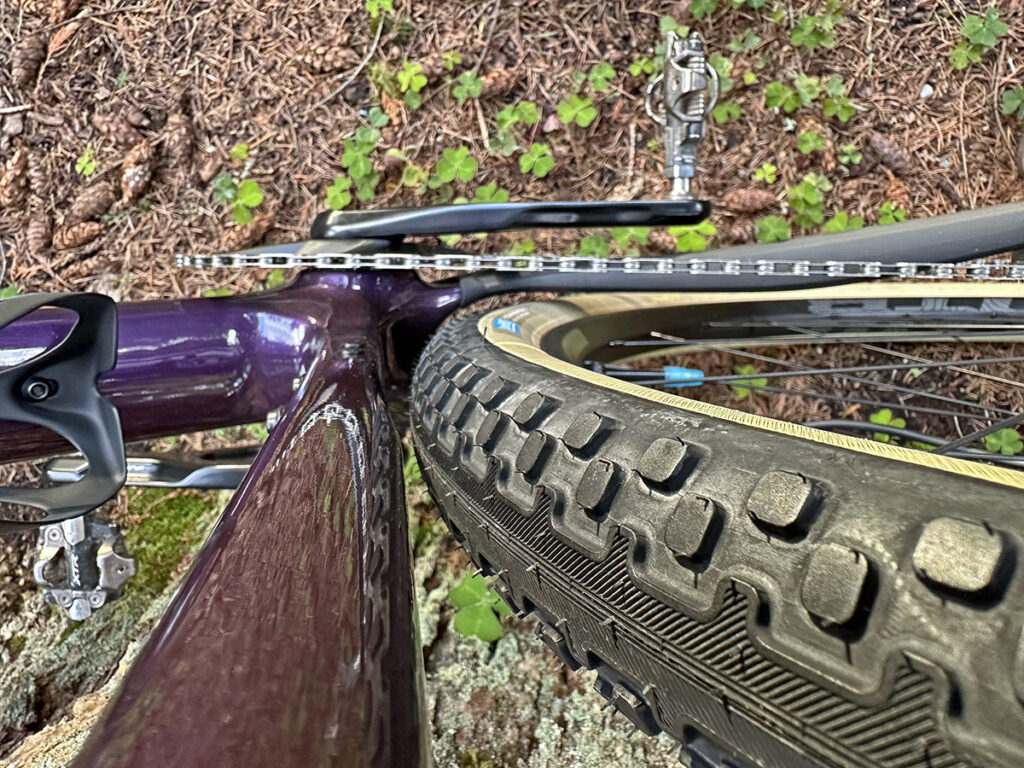
What’s new? Well, the gravel world has changed in the last 7 years. Back then, the Warbird was designed for 650B wheels if you wanted really wide tires, or 700C if you preferred narrower rubber. These days, it’s 700C all the way, and the Flyway clears 700C x 50 mm tires. That’s exactly how wide the 48 mm Poteau Mountain Extralights plumped up on our test bike’s 25 mm-wide rims (inner width). There’s plenty of clearance on the sides, but even with a carved-out seat tube, there’s a little less room on top of the tire. That compromise keeps the chainstays short (425 mm) despite the large wheels. We’ll see what happens when the tire throws some mud in there. (There’s plenty of mud in the rainy Pacific Northwest right now…)
The standard carbon fork is suspension-corrected, and our test bike even comes already equipped with a suspension fork as standard. It seems Salsa is hedging their bets when it comes to suspension on gravel bikes. For bikepackers, there are plenty of mounts for frame bags, and you can carry three large (0.7 l) water bottles in the main triangle.
Weight-wise, Salsa says that the top-end DLX frame weighs 1050 g—80 g lighter than the Warbird at 1050 g. The standard frame is a bit heavier than the old ‘Bird: 1200 g (all weights for ML frame). Salsa doesn’t have weights yet for the complete bikes, so we’ve weighed ours: At 10.3 kg as you see it in the photos (with pedals, cage, but also lightweight tires), it’s exactly 1 kg heavier than the 2019 Warbird we tested. The suspension fork, dropper post, electronic rear derailleur and larger 700C wheels all add weight, but it’s not excessive.
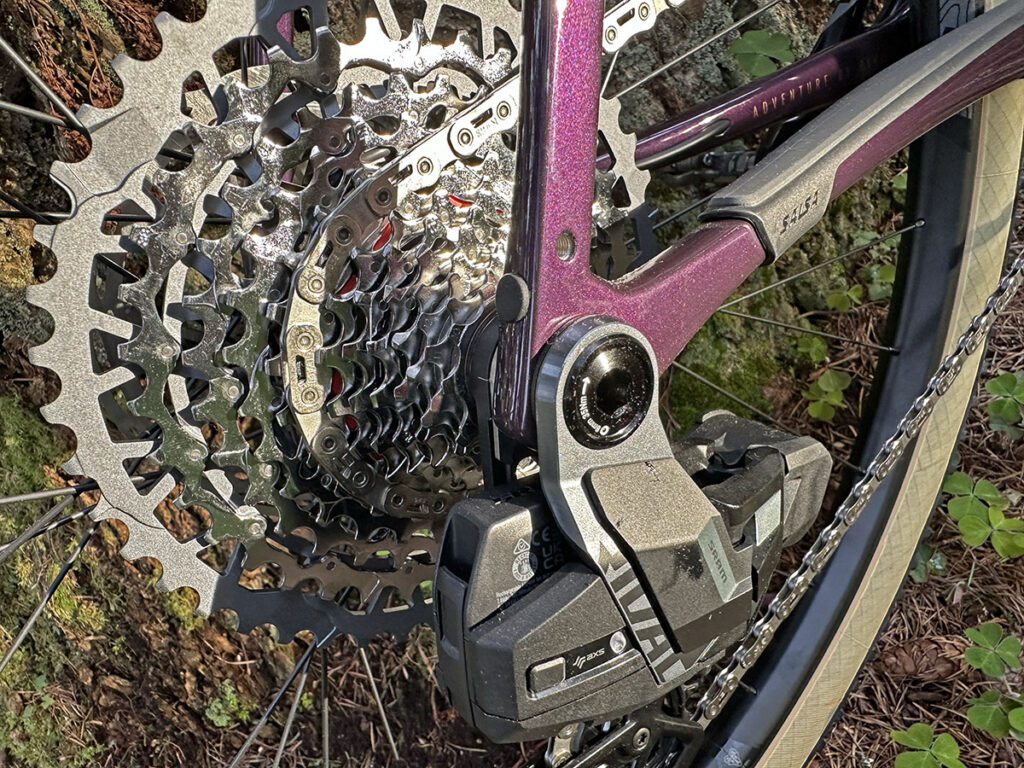
In the back, there is a UDH dropout that adapts to various derailleurs—in this case SRAM’s Transmission with a direct-mounted Rival derailleur. Just above you can see threaded inserts to mount a rack. Most Flyways feature electronic shifting—only the bottom model comes with mechanical Shimano GRX. All models are equipped with hydraulic disc brakes.
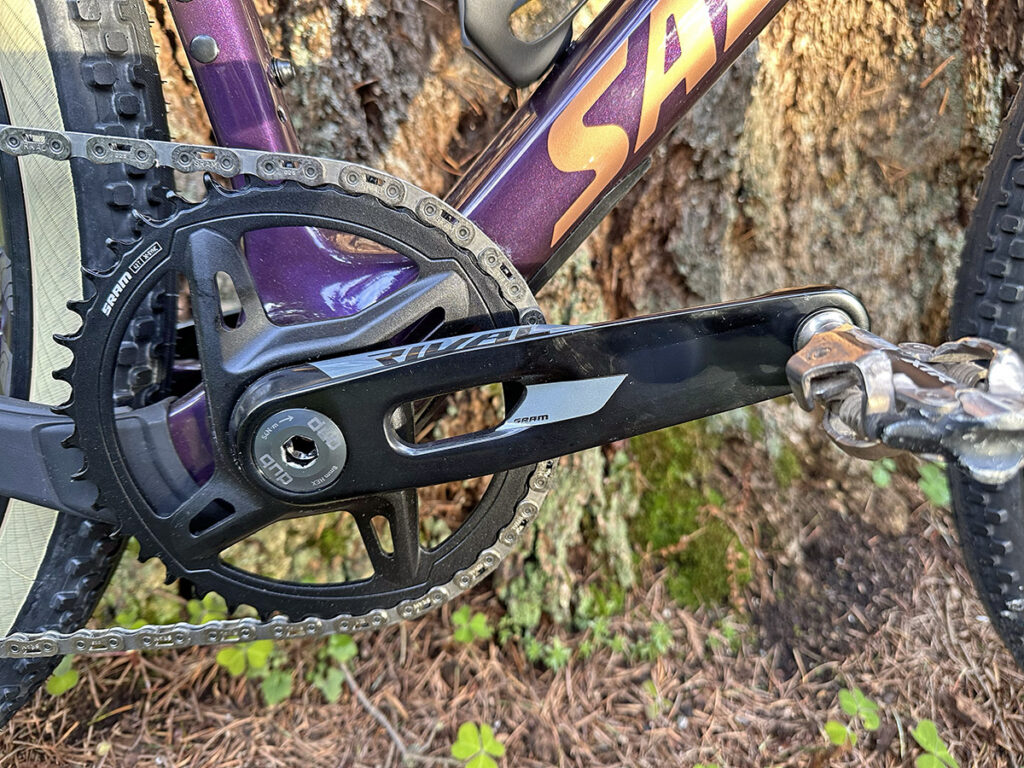
Back in 2019, our test bike was one of just a few Warbird models with One-By cranks. The new Flyways all come with One-Bys, but the frame is compatible with double chainrings, too. Tire clearance is reduced to 45 mm if you mount a front derailleur.
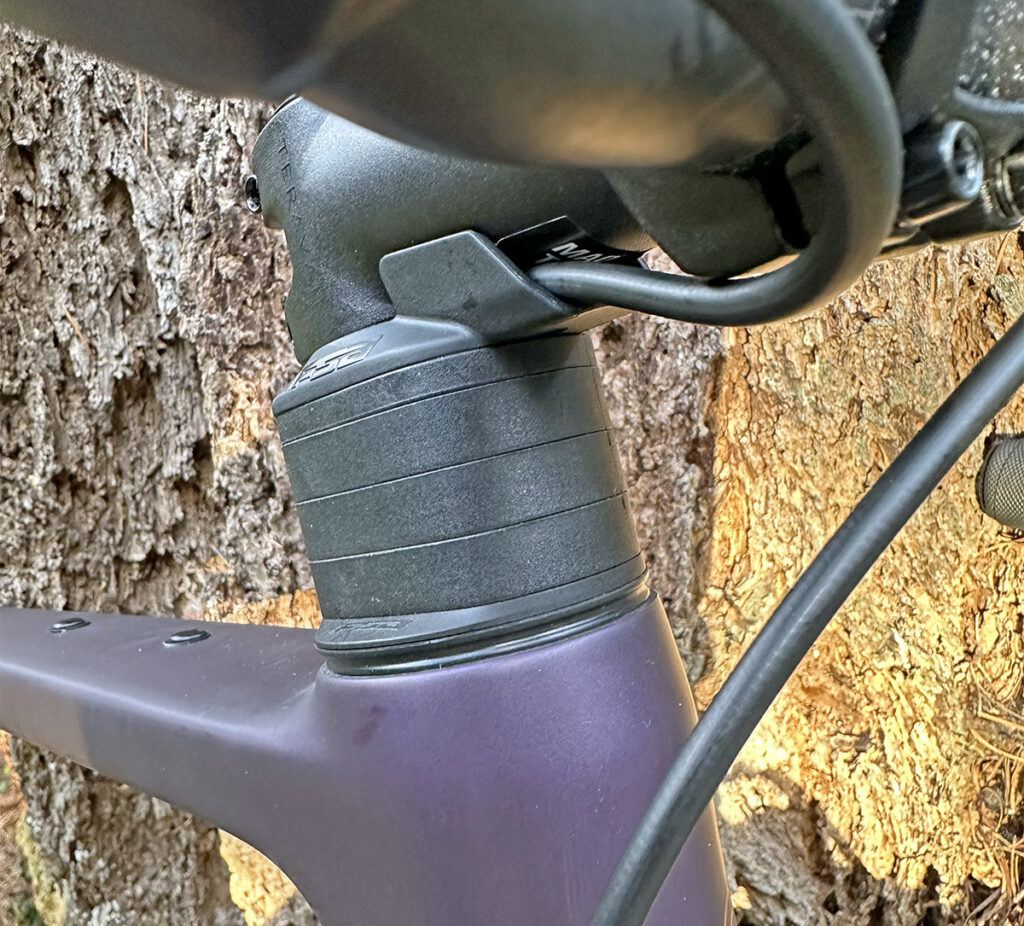
Another new feature is the Flyway’s FSA CRI headset with internal cable routing. I haven’t taken it apart yet, but from the looks of it, the cables run on the outside of the steerer tube behind these large fairings/spacers. It may not be quite as elegant as a truly internal system, but it has the advantage that the lengths of brake and dropper post lines are less critical. Removing or adding spacers below the headset is going to be a bit more involved than in the past, though.
Top-spec Flyways feature stems with internal routing. Our mid-range model has a guide underneath that does the same job with less complexity.
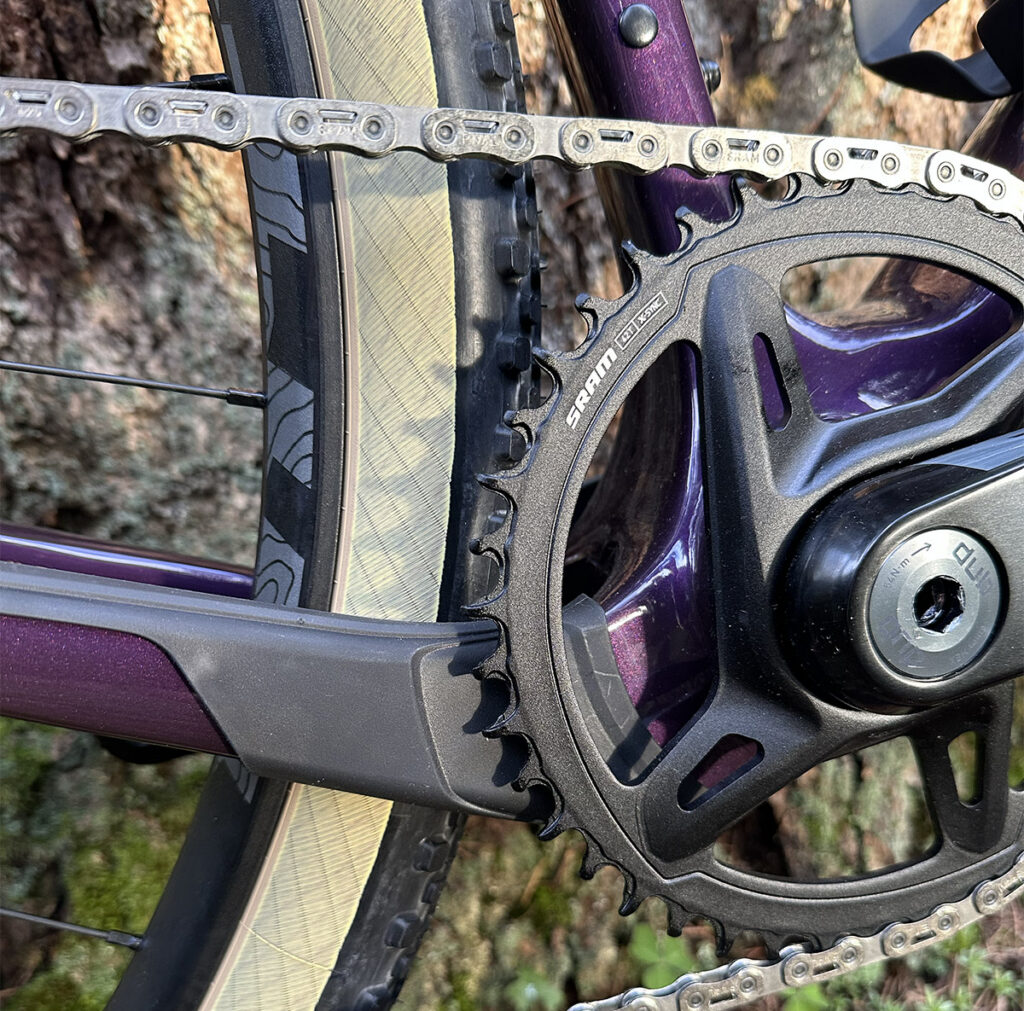
Salsas used to offer predominantly steel bikes. To avoid pushback from long-time customers concerned about the perceived fragility of carbon, the Flyway has rubber covers on the driveside chainstay and under the down tube.
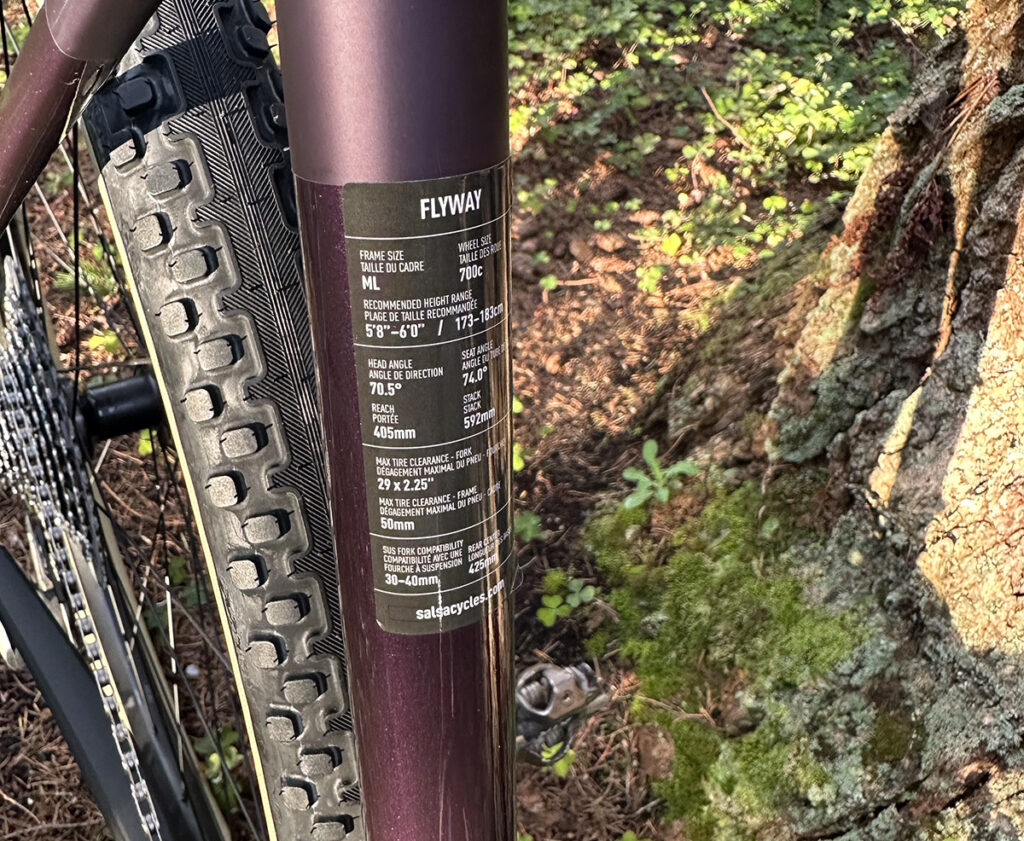
Flyways come in six sizes for riders between 4’11” – 6’6″ (152 – 200 cm). Generally, the Flyways have a slightly longer reach than many bikes today—our ML has 405 mm, which translates to an effective top tube length of 57.5 cm. That’s a good match for Salsa intent for the Flyway: spirited riding. How will these fit female riders, who tend to have shorter torsos? That’s hard to say just from the specs. We’d suggest heading to your local Salsa dealer for a test ride.
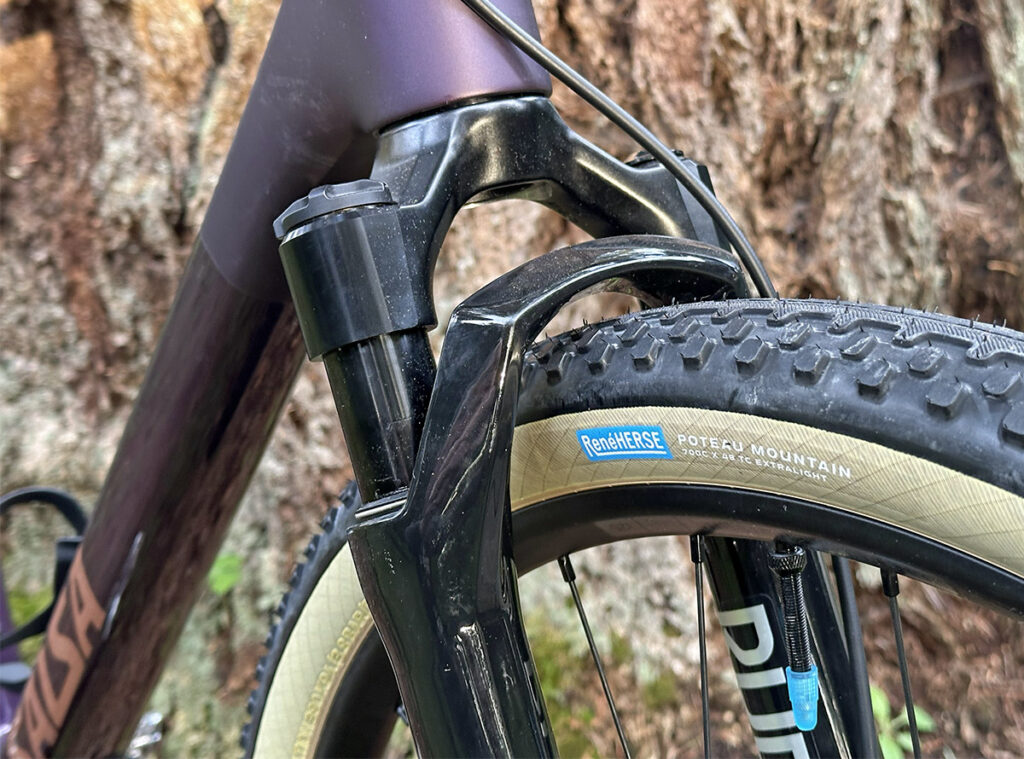
When Salsa asked which model we wanted to test, we opted for the Flyway Rival XPLR SUS. I’ve been curious about suspension on gravel bikes for a long time. My own bikes have flexible fork blades, and we loved the Lauf Seigla with its innovative fork. We’ll see how the Rock Shox Rudy with 40 mm of air spring travel compares. And to me, the Rival group seems like the sweet spot of the range, with plenty of performance, but without the cost of carbon for cranks and other components.
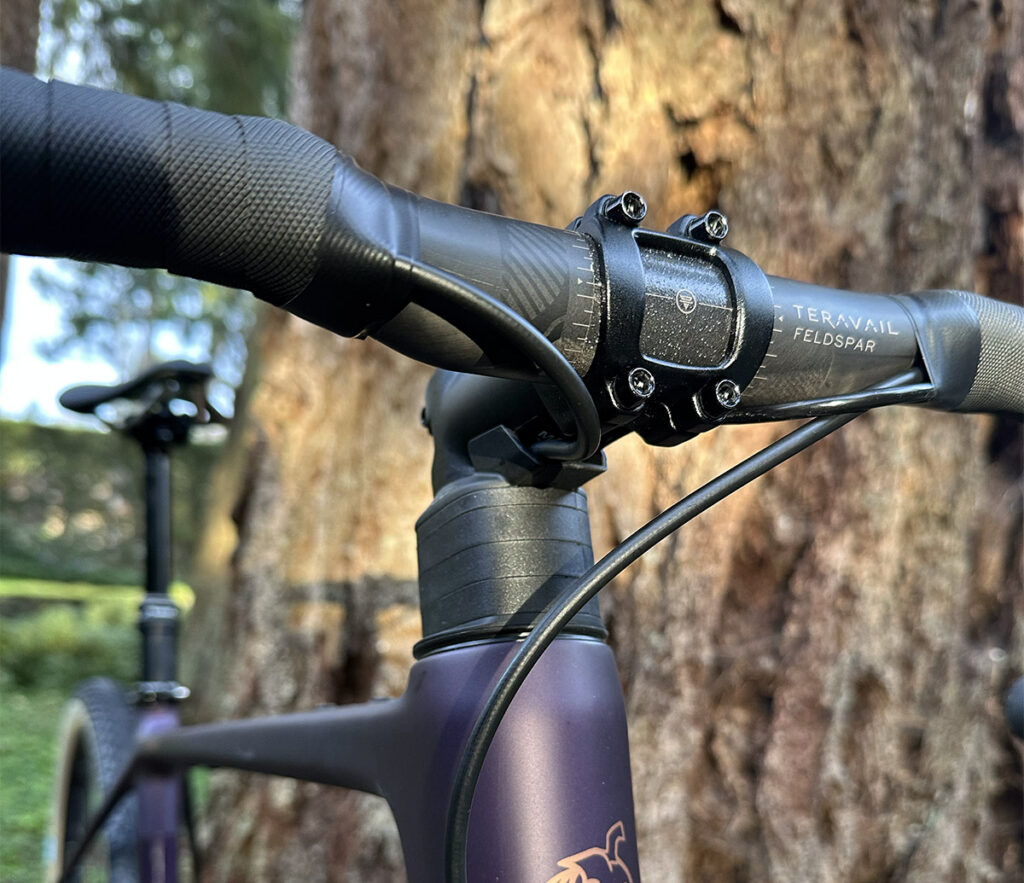
Is this model intended for mountain bikers who’re looking for a gravel bike? Perhaps that’s why you also get a dropper post and ultra-wide 50 cm bars. Fortunately, the bars are flared, so the ramps measure a more manageable 43 cm. (All measurements center-center.)
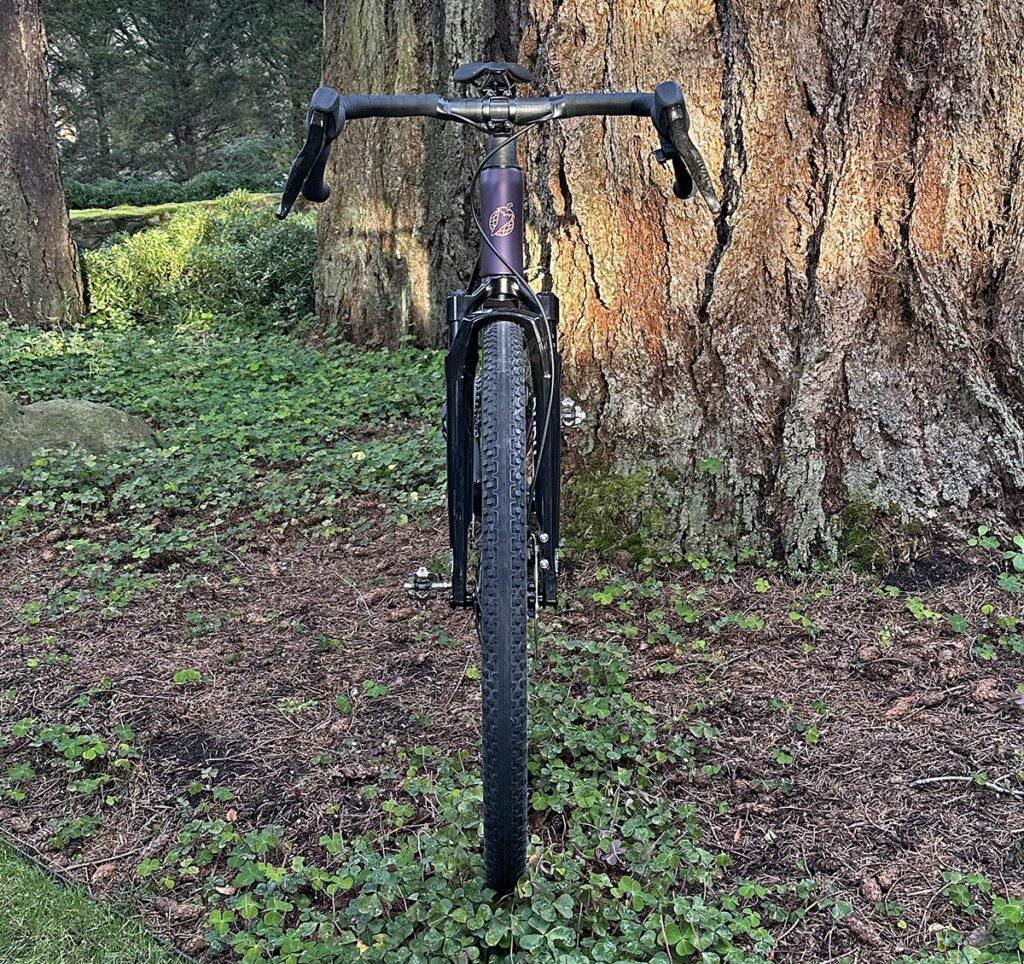
First riding impressions are positive, but that’s all I can say for now. I prefer to spend a few weeks on a new bike before I really begin to form an opinion. At Bicycle Quarterly, we ride our test bikes at least 200 miles (320 km). We live with the bike just like a customer who bought one. That’s essential for a thorough review. Sometimes, we find that we get used to things that stick out during our first rides. And conversely, things that don’t seem like a big deal at first can detract from the enjoying the bike in the long run.
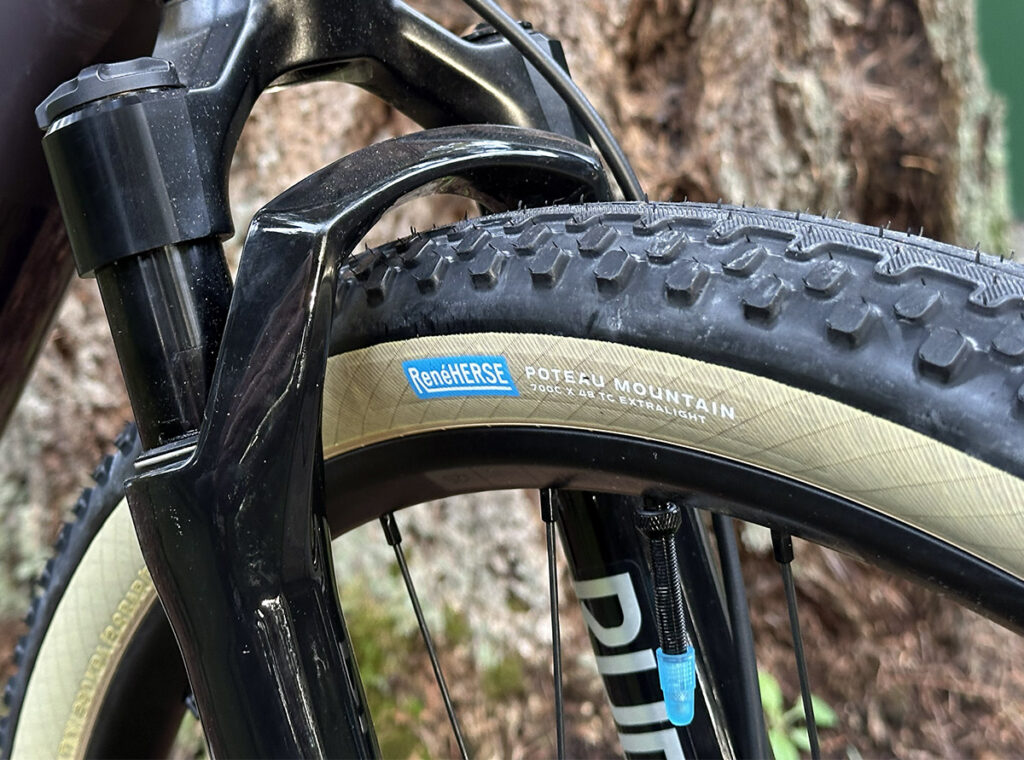
We’ve already swapped out the OEM Teravail tires for Rene Herse Extralights. We do that with all test bikes to level the playing field. Tires have such a big influence on how a bike rides, feels and performs. Otherwise, we’d mostly be testing the tires, and not the bikes themselves. Plus our Flyway has lost 290 g where it matters the most.
I’m giving the ultra-wide bars a little more time, but I may replace those as well—just like an owner would as they make the bike their own. Most of all, I can’t wait to find out how the suspension fork works on some of the rougher gravel routes here in the Cascade Mountains—and on smoother surfaces, too. How will this mountain-bikey Flyway feel on pavement? A great gravel bike can do double duty as a great road bike, whether it’s on mixed-surface rides or because many of us prefer to own just one bike for all the riding we do. Do suspension fork and dropper post—and the weight that comes with them—blunt the performance that we enjoyed with our old Warbird? Or will the inherent qualities of the lightweight frame show through?
We’ll know soon: The full report will be in the next Bicycle Quarterly that drops next month. If you’re curious about the new Flyway, it’s probably worth the subscription just to make sure you’re buying a bike that’s right for you. Our goal is to give you all the info you need, but leave it up to you to decide whether the bike is right for your riding style, terrain and budget.
For now, I’m hoping the weather clears so I can head out into the mountains to push the Flyway (and myself) to our limits.
More Information: