


OCVA 400: Stats and Gear Check
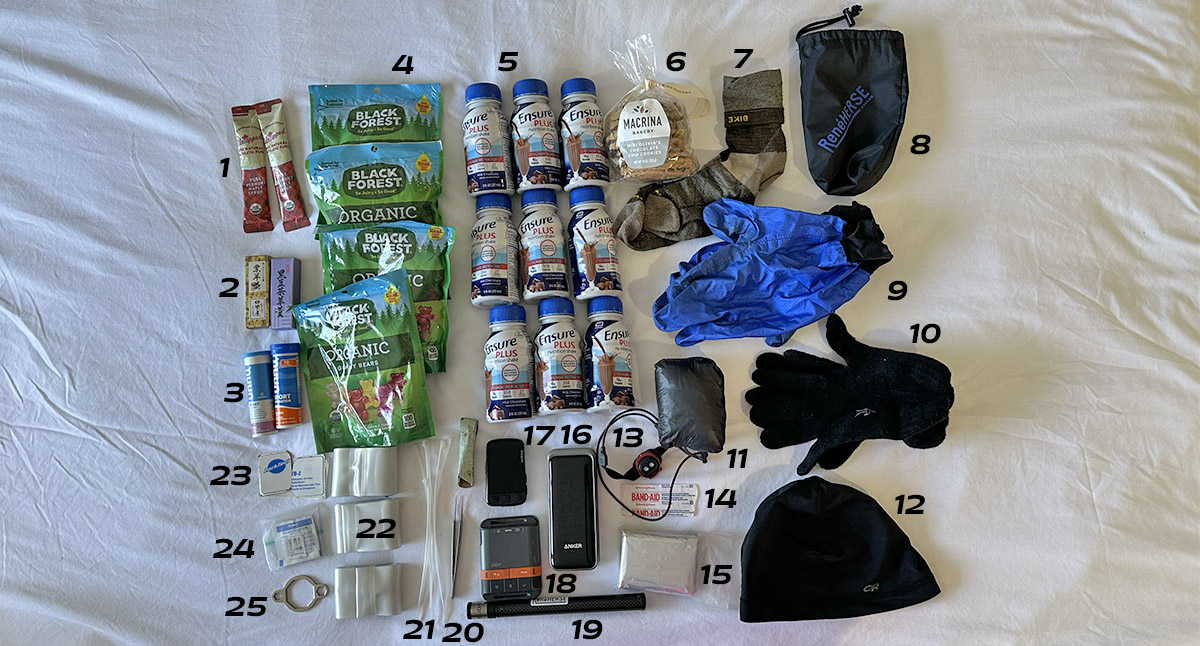
The Oregon Cascades Volcanic Arc 400 goes through remote country. During the 41:13 hours it took me to ride the 417 miles (674 km) of this beautiful route, there were only five places where I could resupply. What do you bring for a ride like this? Above is the contents of my handlebar bag. (Asterisks mark items that I carried, but did not use):
- 1 Untapped Maple packages (for quick energy; 100 kcal ea.)
- 2 Yokan bean paste bars (quick calories; 300 kcal/ea)
- 3 Electrolyte tablets for water bottles (15 kcal/tablet)
- 4 Fruit gummies with real juice (calories, electrolytes; 900 kcal/pack)
- 5 Ensure Plus (easy-to-digest calories; 350 kcal/bottle)
- 6 Chocolate Chip Cookies (200 kcal/ea)
- 7 Spare socks* (if feet get wet during creek crossings, rain or snow)
- 8 Ultralight Organizer Bags (to keep small things from getting lost)
- 9 Lobster Shell gloves* (outer layer in case of extreme cold)
- 10 Wool gloves
- 11 Ultralight rain/wind shell*
- 12 Skull cap*
- 13 Helmet light (for reading computer, map, night-time repairs, etc.)
- 14 Band-aid* (to protect skin if something rubs raw)
- 15 Emergency space blanket*
- 16 Power bank (to recharge GPS)
- 17 GPS
- 18 Tracker
- 19 Ultralight NUDA carbon pump*
- 20 Tweezers with cardboard cover* (to remove thorns, steel wires from tires)
- 21 Zip ties* (lightweight, can fix many problems)
- 22 TPU tubes* (so small and light that I now carry 3 spares instead of 2)
- 23 Tire boots*
- 24 TPU patch kit*
- 25 Rene Herse Rinko Headset Wrench* (8 and 10 mm sockets fit many bolts on the bike)
Not shown:
- Rene Herse Ultralight Musette Bag (to carry extra food after resupplies)
- Toothbrush (shortened); tootpaste; dental floss

That’s a lot of stuff—and most of it is food. The few and ultralight tools I pack allow me to bring more food. At the start, I carried a little over 10,000 calories. And I needed all of them, and then some! (Total energy intake was close to 12,500 kcal.)
Why so much food? The OCVA 400 route hugs the crest of the Cascade Mountains, which means that I was either climbing or descending. Total elevation gain is 31,500 ft (9,600 m). And since the climbs take much longer than the descents, I was climbing most of the time. As far as speed goes, the stats are:
- Moving average: 10.4 mph (16.7 km/h)
- Overall average (incl. stops): 10.1 mph (16.3 km/h)
The biggest challenge during a ride like this is eating enough. As Lael Wilcox once told me: “At the end of a race like the Tour Divide, you turn into an eating machine.” And if you go into a deficit, there’s no catching up—your body can’t digest calories as fast as it burns them. Don’t eat enough, and the only way to replenish your stores is to stop for an hour to let your digestion catch up. However, if you overload your stomach, it’ll reject all food, which will slow you down even more. Getting the balance just right is always a challenge. That’s why I am especially proud of this statistic:
- 302 kcal per hour
That was my food intake during the OCVA 400. For me, anything above 285 kcal means that my body is working at its absolute maximum. In fact, this is the first time I’ve seen more than 300 kcal/hr. Part of this was due to the cold, which increased my intake beyond what my muscles needed to power the bike, just to keep warm.
In fact, when I analyze my big rides and races afterward, I don’t look at average speed or power output. (I sometimes use a power meter in training, but not in the events themselves.). For me, the most interesting statistic are the calories I consume per hour. If that number is ‘just’ 250 kcal/hour, then I know that I didn’t have a great day.
With the Tour de France now dominating the headlines in the cycling press, it’s interesting to compare those numbers to the pro racers in the big tour: Their daily intake averages 5,000 kcal, with some racers eating as much as 8,000 kcal a day. My 24-hour intake was 7,250 kcal—at the upper end of what the pros eat. The actual foods consumed by pro racers and bikepackers are quite different, but the end result is similar.
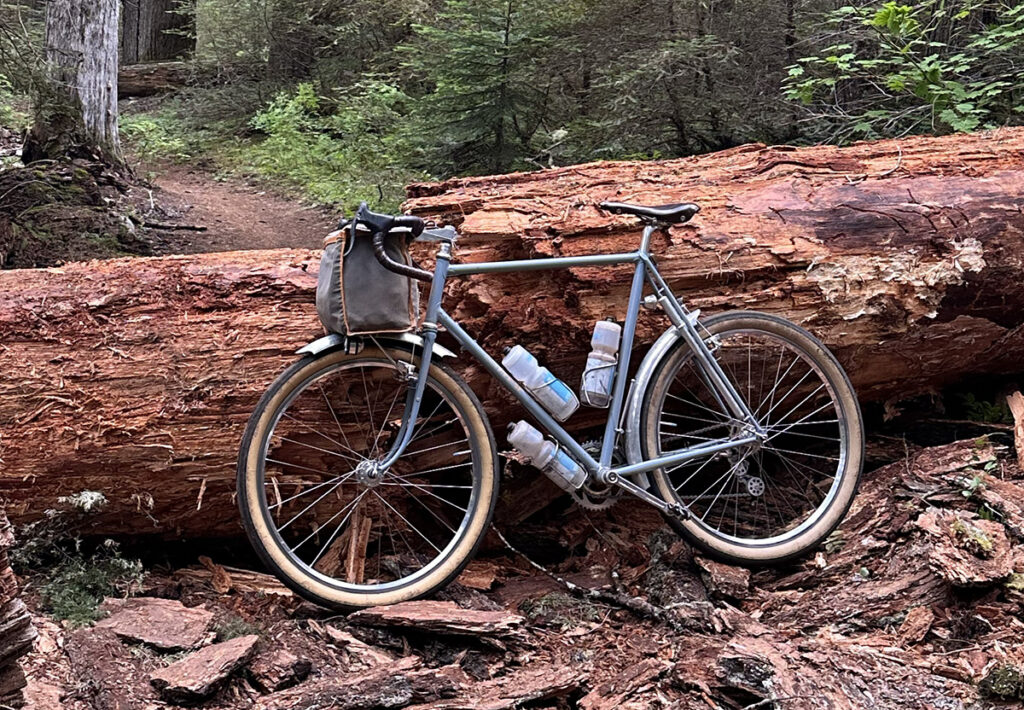
For me, that calorie intake is only sustainable if I bring foods that are easy to eat and easy to digest. I admire true bikepacking racers who can find sustenance at any convenience store. I struggle with that, that’s why I prefer shorter rides, where I can bring my own food. The Ensure Plus—a meal replacement available in pharmacies—goes into my second water bottle. That way, I can easily take a sip (150 kcal) as I ride, even when I’m on bumpy gravel. The other two bottles are for water (with electrolyte tablets).
The fruit gummies are just carbs and electrolytes. The chocolate chip cookies may seem like an unusual race food, but I find them appealing even at the end of a long ride. I tend to finish rides with some extra food—better having a bit extra than running out!—but the cookies are always gone at the end of long rides.
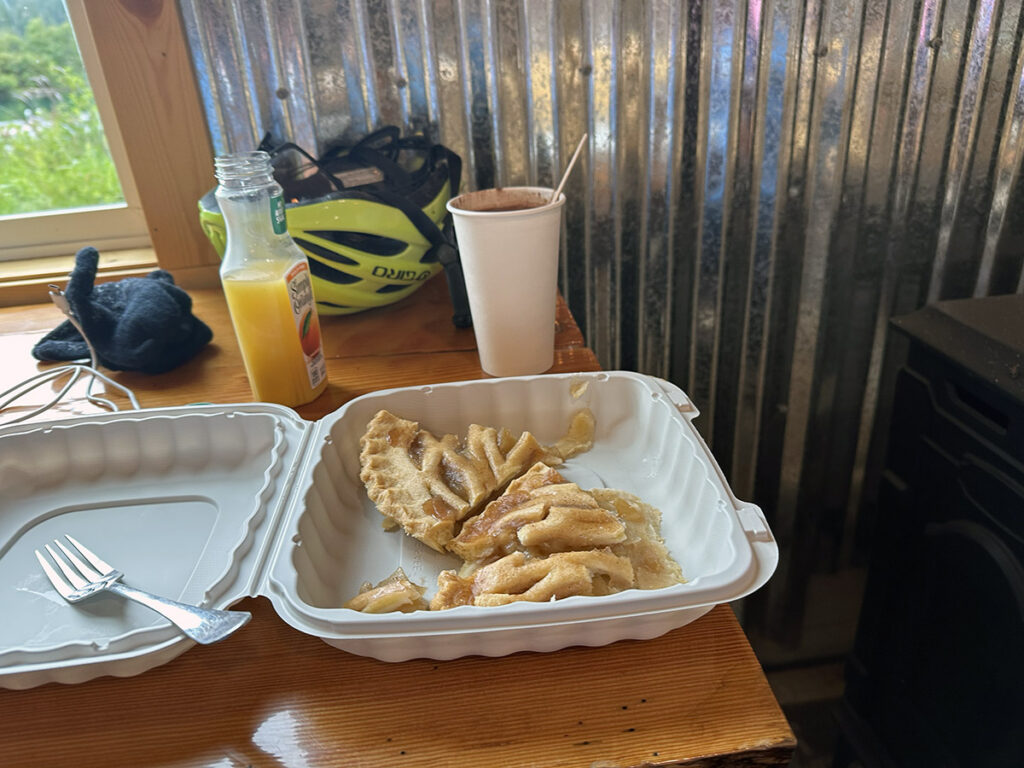
I augment the food I bring with things I buy to add variety and augment what I carry. A turkey sandwich I bought in Oakridge was a welcome change from the sweet foods. After a cold night and morning, two freshly baked, still-warm slices of apple pie at Clear Lake restored not just my body, but also my spirit. Whenever I can, I try to find foods like that.
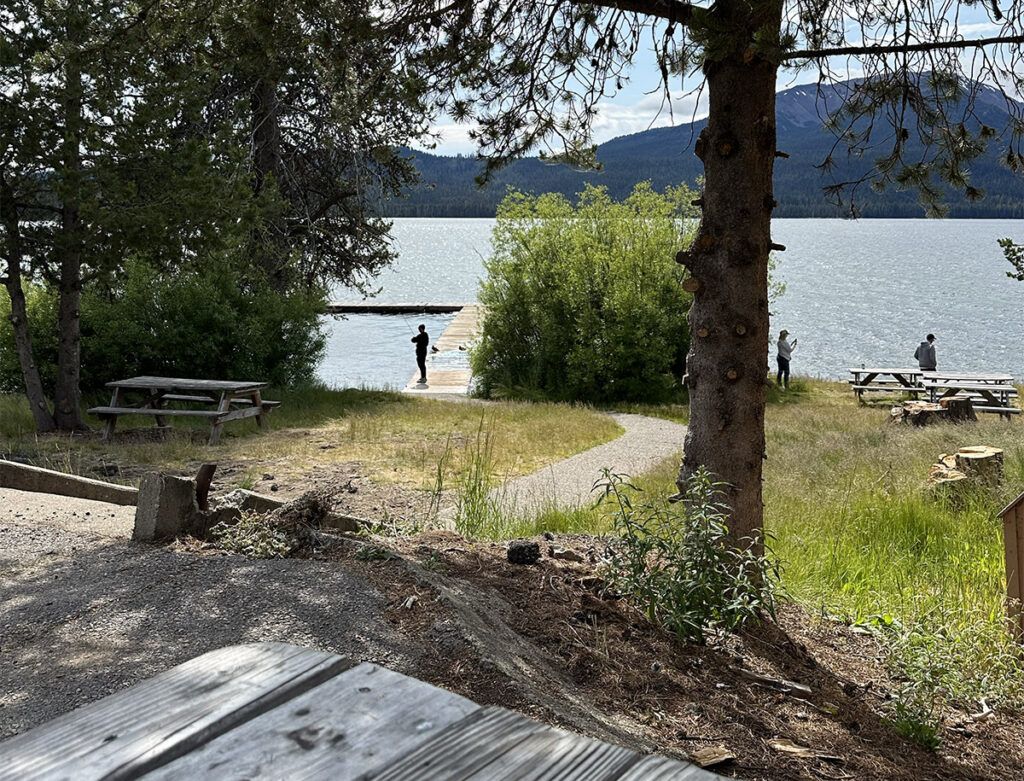
Another essential part of a fast ride over long distances is to keep stops short. I enjoy the beautiful spots—above is Diamond Lake. The endorphins of vigorous exercise make the images even more vivid in my memory. That doesn’t mean I need to linger for a long time. If my ride is going well, my body is ready to remount the bike after a short rest. My off-the-bike time during the 41-hour ride was:
- Diamond Lake (Mile 95): 10 minutes to eat bag of chips, refill water bottles
- Oakridge (Mile 161): 15 minutes to resupply at grocery store
- McKenzie Bridge (Mile 228): 5 minutes to eat sandwich and prepare for single-track
- Clear Lake (Mile 253): 15 minutes to eat pie and warm at the fire
- Detroit (Mile 297): 10 minutes to resupply and eat tamale
- Estacada (Mile 370): 5 minutes to refill water bottles
- Total: 60 minutes
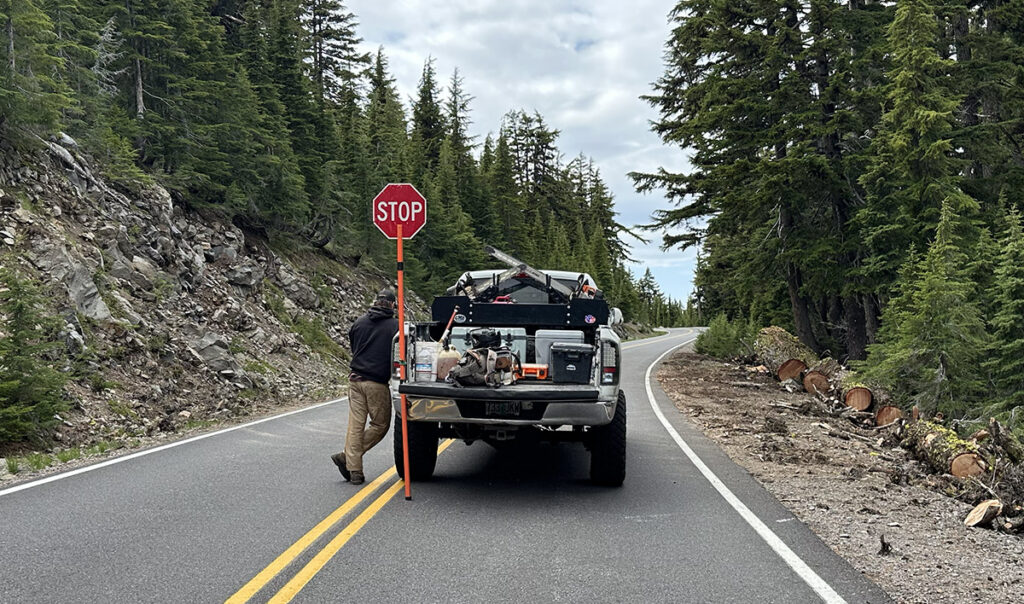
I had to stop for roughly ten more minutes when the road at Crater Lake was closed for clearing downed trees. Stops like this are an opportunity to get off the bike and rest. My motto for long-distance riding is simple: “Don’t stand if you can sit; don’t sit if you can lie down.”
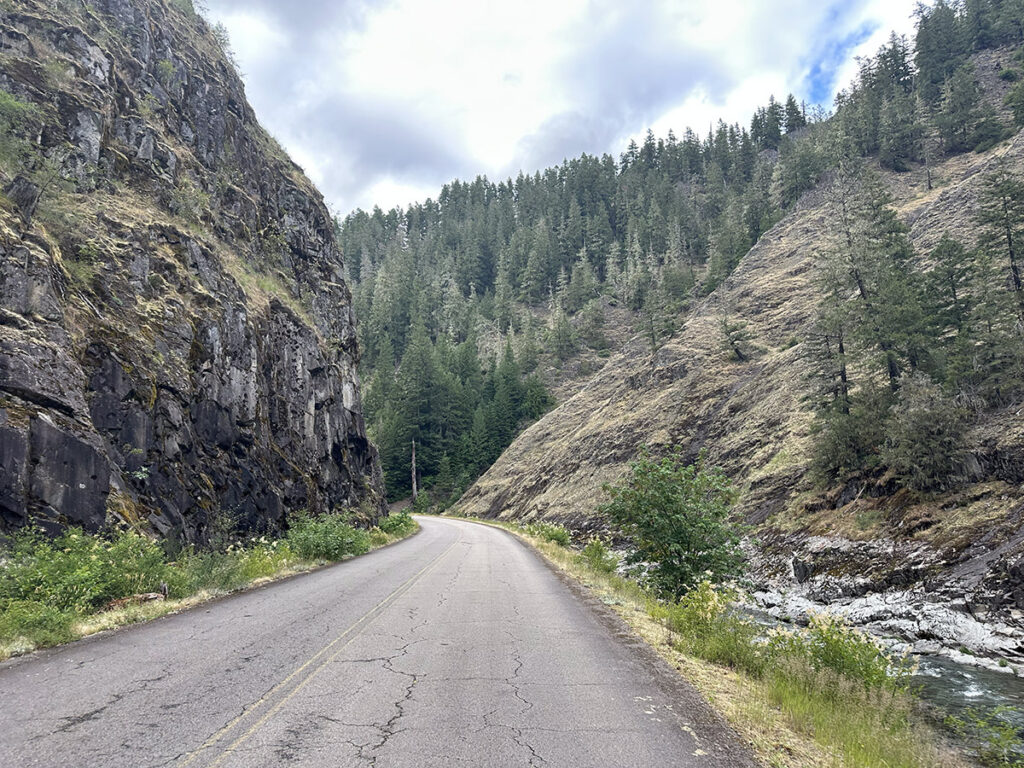
All these stats can make it seem like a fast ride over a challenging course is all suffering and drudgery, but nothing could be further from the truth. As much as I enjoy looking at the stats, what remains etched in my mind are the incredible landscapes, like the canyon as I left the Cascades Mountains on the approach to Portland…
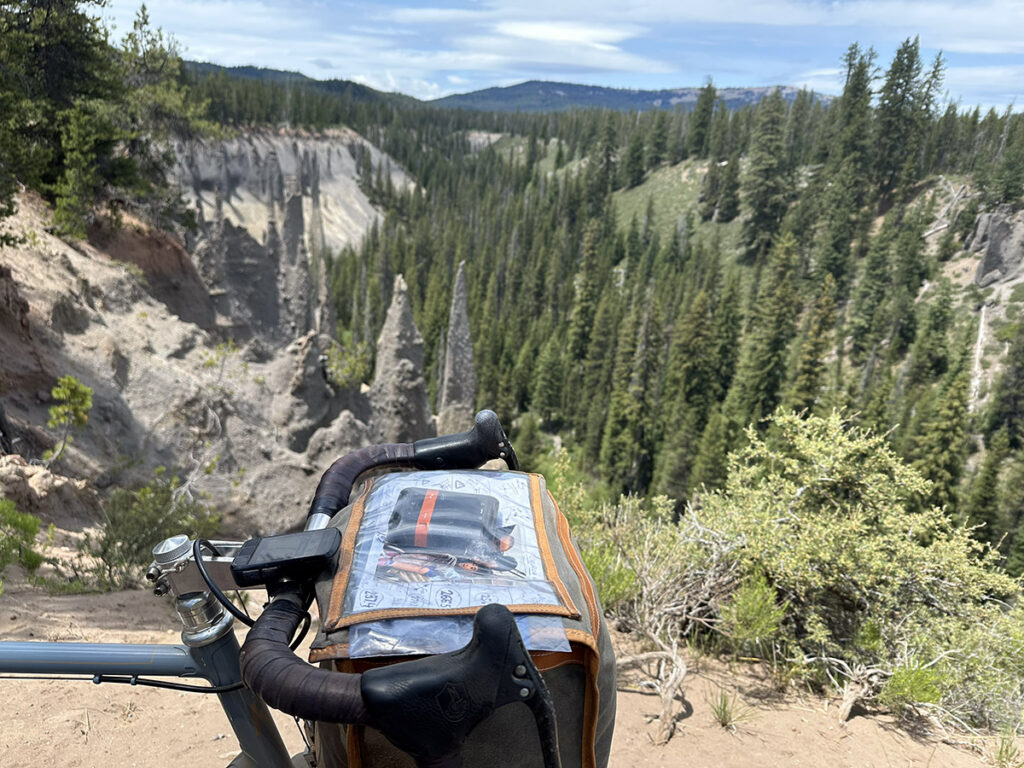
…or the amazing Pinnacles on the slopes of Crater Lake. Even at a spirited pace, cycling is slow enough that the landscape unfolds at a leisurely pace, with plenty of time to take everything in. That said, I’m also planning to return to this incredible route at a more leisurely pace, with plenty of time to stop and take in these incredible places. For me, the choice isn’t fast or slow—it’s both!
Further Reading:
- FKT on Oregon Cascades Volcanic Arc 400
- The amazingly beautiful route of the OCVA 400
- Analog Bikes for Speed? The logic behind my long-distance Rene Herse bike.