


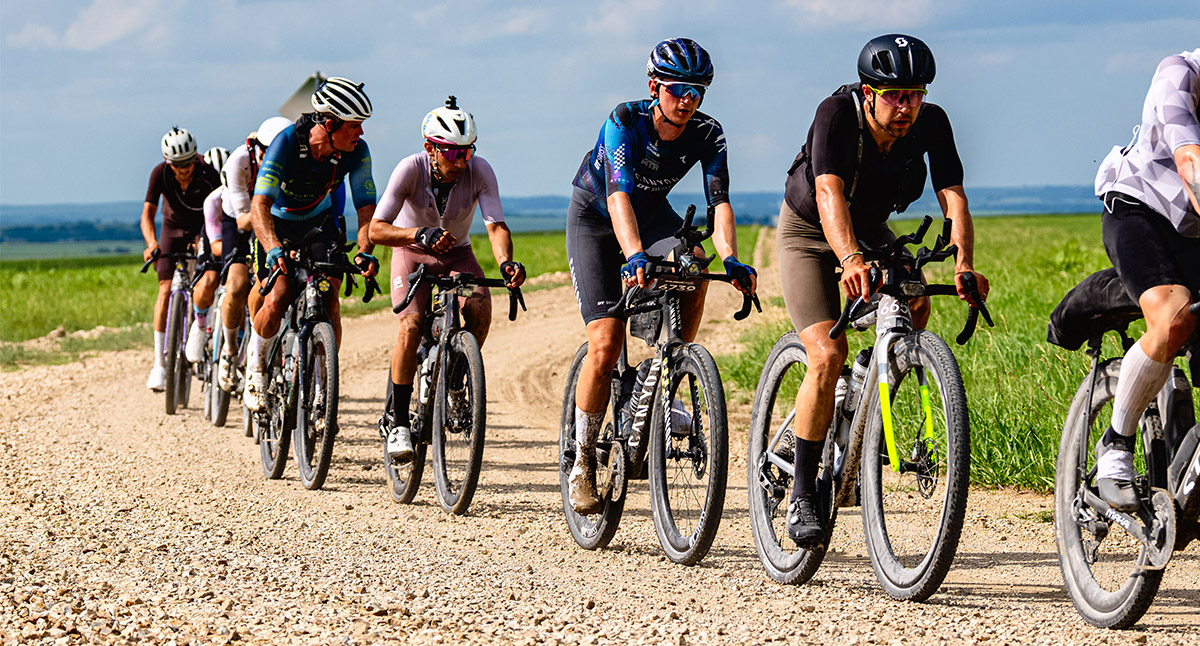
Wide Tires, 32″ Wheels, Team Tactics: Ted King’s Unbound Take-Aways
The leadup to Unbound is always busy, even when you arrive with every box checked. This year was unusual for me: the first trip to Emporia in eleven years without my family in tow. With fewer responsibilities outside the race, I had a little more opportunity to observe what was happening around me. And as always, Unbound served as a snapshot of where gravel is headed next.
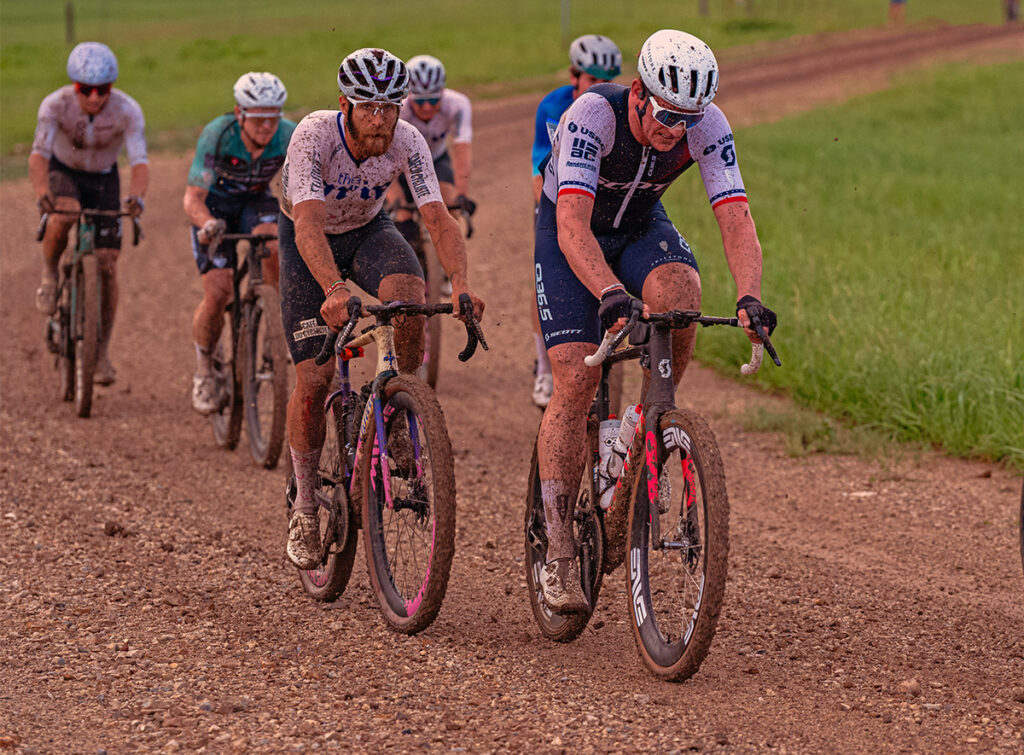
Wide tires are here to stay.
Unbound presents an interesting case study for tire choice because while the latest testing and technology continue to point toward wider tires as the faster option, Kansas still holds one trump card: peanut butter mud. If conditions deteriorate enough, all the benefits of a larger tire can be overshadowed by a bike packed solid with clay.
As race weekend approached, it became increasingly clear that this year’s edition would be wet and messy. Ten years ago, a forecast like that might have pushed riders toward narrower tires in hopes of shedding mud more effectively. Instead, the overwhelming trend remained toward larger tires. The industry’s confidence in the benefits of tire volume — comfort, traction, puncture resistance, ride quality, and even rolling speed — has become so strong that even the threat of mud wasn’t enough to reverse course.
Of course, riders and manufacturers still consider mud clearance. Countless hours have been dedicated to the balance of speed and practicality. But the broader trend is unmistakable. As bike frames continue to allow more room for rubber, tire manufacturers are eager to fill that space. Gravel’s future appears to be getting wider, not narrower.
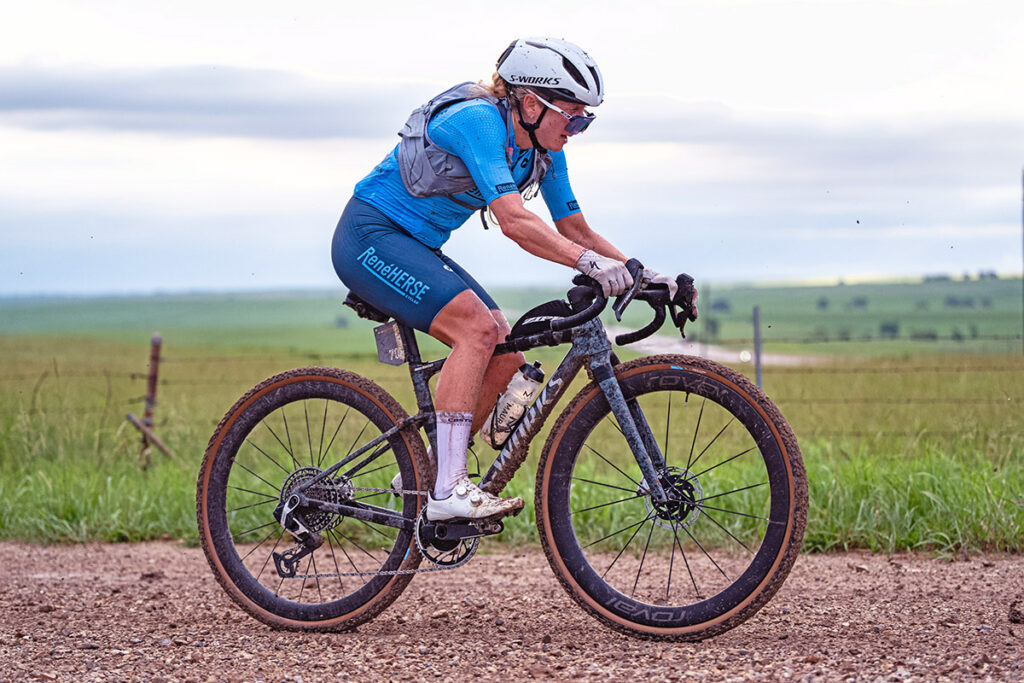
For one weekend each year, Emporia becomes the center of the cycling universe.
To state the obvious, there is no shortage of bike races these days. Across every discipline and on every continent, cyclists have plenty to choose from. Earlier this month, the Traka generated enormous attention, drawing many of the sport’s top riders and producing no shortage of headlines.
But there’s a reason the Traka is billed as ‘Europe’s Unbound’ and not the other way around. For one week, the cycling industry converges on a town of 24,000 people in eastern Kansas. Roughly 4,000 riders pin on numbers and ride across all distances, while manufacturers, media, sponsors, and fans gather to see not only who wins the race, but what comes next for the sport.
No fewer than seven new bikes made their formal debut in Emporia this year. The timing was no coincidence. If you want the attention of the gravel world, this is where you launch a product. While the Giro d’Italia was reaching its conclusion on the other side of the Atlantic, many cycling media outlets seemed to devote just as much attention to what was happening in Kansas as to what was happening in Italy.
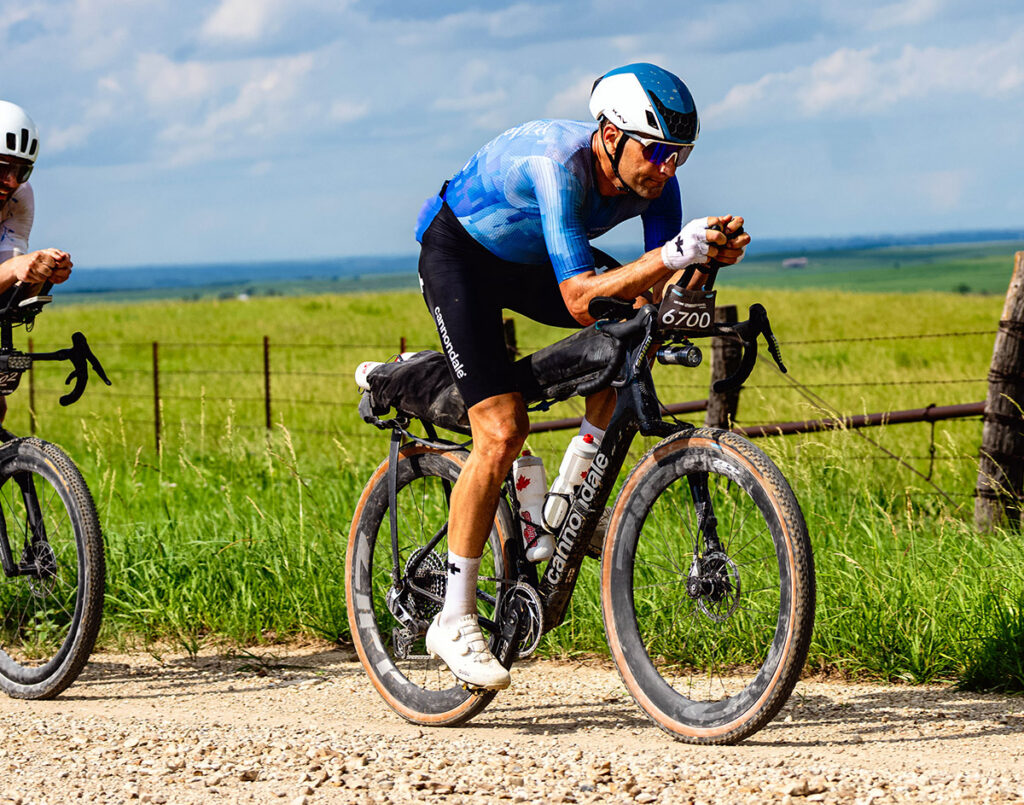
The bikes themselves told a story.
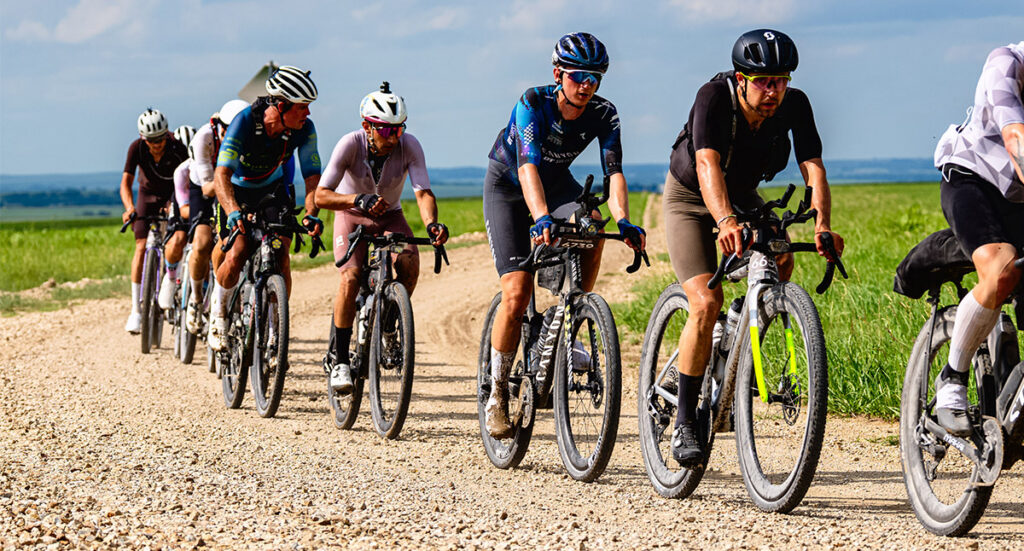
A common denominator among many of the newest machines was a relentless focus on speed. Aero tube shapes are no longer reserved for road racing. Tire clearances continue to grow. Weight remains important, but increasingly it is balanced against versatility and efficiency across a 200-mile race.
Perhaps most notable was what wasn’t universally present. Suspension has certainly gained traction in gravel racing, and several riders at the front of the race relied on it. Yet despite predictions from only a few years ago, suspension is far from standard equipment among elite racers. Many of the fastest riders in Emporia still relied on little more than large tires and careful pressure selection to smooth the roughest roads. Wider tires appear to have reduced the need for suspension in many situations, creating multiple viable paths to speed rather than a single technological solution.
What about 32-inch wheels?
There was much talk about Scott showing up with 32-inch wheels on prototype bikes for two pre-race favorites. Tour Divide record holder Robin Gemperle was among those predicted to do well in the 350-mile XL, and he won the race on the 32-inch bike. Cam Jones, last year’s winner in the 200-mile race, rode a very strong first half of the race, but seemed to fade a bit later on and finished 10th. To be honest, I don’t think the results would have been any different if these riders had been on 700C wheels. For the time being, I’d say the jury’s out on the merits of 32-inch wheels.
Team tactics
Stepping away from technology, another trend was impossible to ignore: this was the year of team tactics. For years, gravel’s mythology centered around individual riders solving individual problems. Success came down to fitness, resilience, mechanical know-how, and a willingness to endure. This year had all those things, plus something else: teams.
While roughly 4,000 riders took part across all distances, the spotlight remains pointed towards on the 200-mile races, where organized teams played an increasingly decisive role.
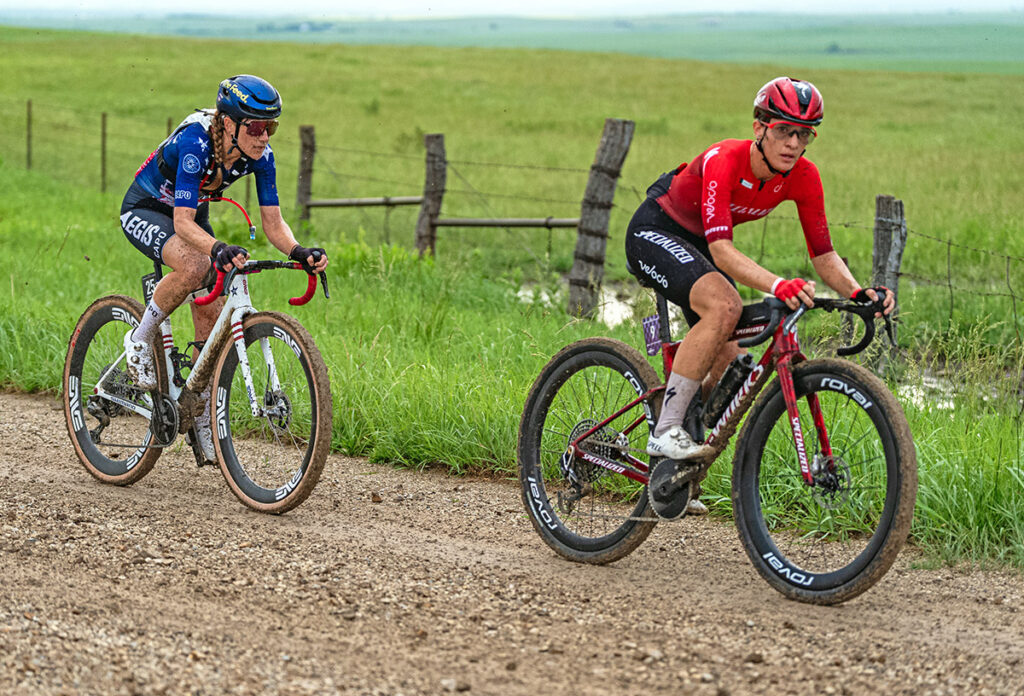
On the men’s side, it goes without saying that Mads Würtz Schmidt was the strongest rider of the day. His form leading into Unbound spoke for itself, and by the midpoint of the race he had established himself as the rider to beat. But his victory was also a reminder that even the strongest rider benefits from support. When teammate Keegan Swenson surrendered his wheel following Mads’s puncture, he helped preserve what had otherwise been a near-flawless day. Specialized ultimately occupied the top two spots on the podium and placed three riders inside the top five, a remarkable result for a first-year team.
The women’s race offered a similar lesson. Two members of the decisive five-rider group wore the distinctive Specialized red. While we didn’t see an endless barrage of one-two attacks, the dynamic was clear. Riders without teammates often found themselves responsible for closing gaps and controlling the race, while those with support could conserve valuable energy. By the time the race reached its conclusion, Sofia Gomez Villafañe had the wits and enough left in reserve to sprint to victory.
Perhaps that is the most interesting takeaway from Unbound 2026.
The bikes are getting faster. The tires are getting wider. The teams are becoming more organized. The front of the race increasingly resembles professional road racing, complete with tactics, strategy, and manufacturer-backed superteams. That’s something I’ve witnessed as a constant progression across my eleven years of coming to Unbound.
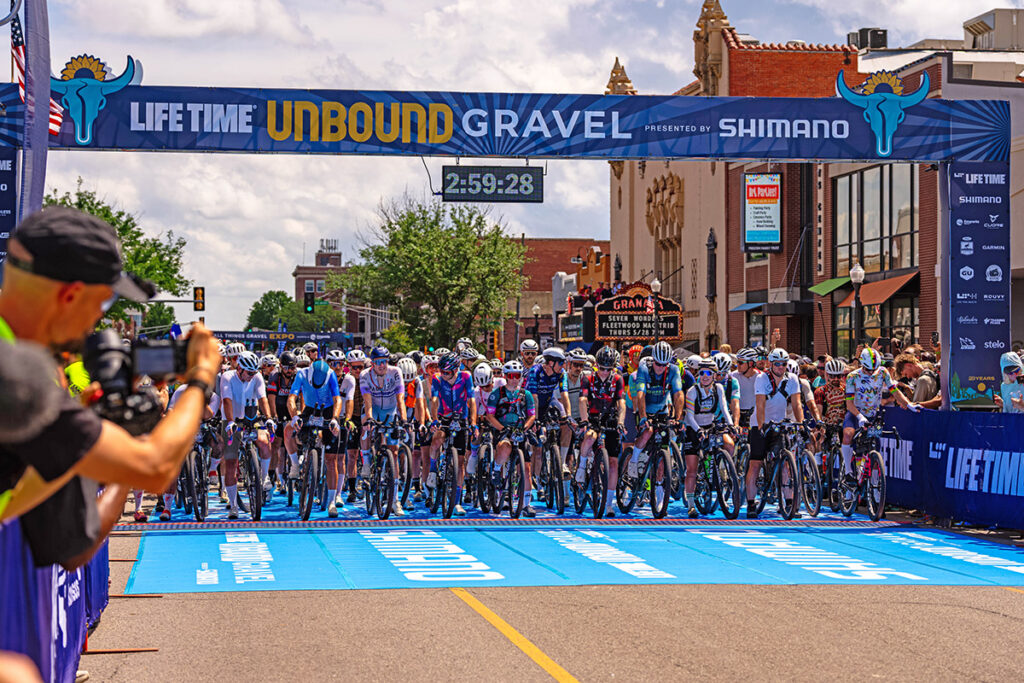
And yet, for all the evolution at the sharp end, Unbound remains uniquely grounded in participation. The same roads that host prototype bikes and professional tactics are shared by thousands of riders simply hoping to reach the finish line. Few events in cycling bring those worlds together quite like this one. Standing on the finish line at midnight last night with lightning lighting up the sky, you feel very much part of something big. Riders are still trickling in at that point, and you absorb something of the enormity of Unbound, knowing how many people rode, cheered, supported, and were part of this 20th anniversary event.
For one week each year, Emporia becomes both gravel’s proving ground and its gathering place. If you want to understand where the sport is headed, all you have to do is (succeed in the lottery and) show up.f
Further Reading:
- Scientific Guide to Choosing Gravel Tires
- Our book The All-Road Bike Revolution includes all the science about wide tires, suspension and more.
- Supple tires in the Rene Herse program
Photos by Marc Arjol Rodriguez (@velophoto.tx)