

Bicycle Quarterly: Challenging the Status Quo for 20+ Years
Wide tires on performance bikes. A new understanding of front-end geometry. A different view of frame stiffness. Of course, we didn’t do it all alone… And yet, when we started researching these topics, they weren’t on anybody’s radar.
It may comes as a surprise that we didn’t set out to challenge the status quo. We aren’t iconoclasts who relish proving the experts wrong. We just love riding long distances… Back then, we were starting to explore the forgotten roads in the Cascade Mountains. At the same time, we were discovering mid-century French constructeurs like Alex Singer and René Herse and their amazing bikes.
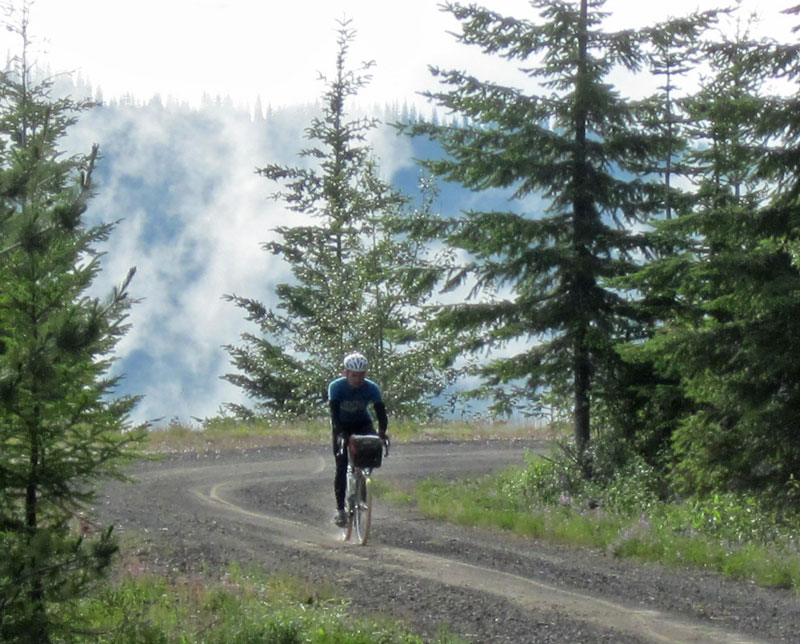
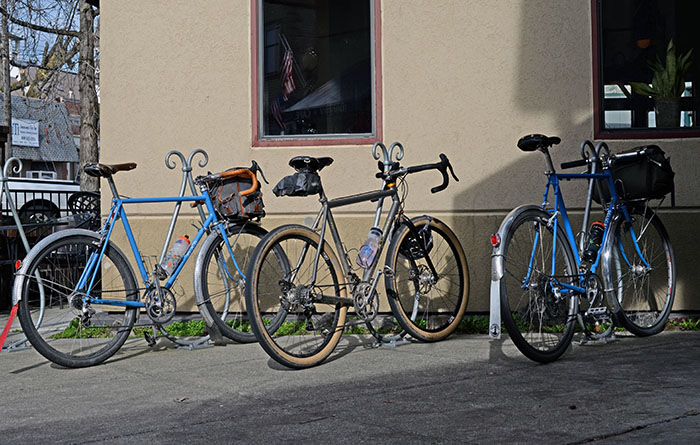
Rando bikes are not usually seen as cutting-edge technology… but as we rode these 50-year-old bikes, measured them, and talked to their riders and builders, we discovered unexpected things. Bikes with wide tires that were fast. Bikes with low-trail geometries that were stable. Bikes with not-very-stiff frames that performed extremely well. Clearly, much of what we thought we ‘knew’ needed to be revised.
We realized that previous cycling research had often looked only at individual factors, but not the entire system of bike, rider and load. Tires were tested without a cyclist on the bike. Front-end geometries were discussed in isolation, rather than as part of a system that includes the effects of tire width and load on stability. Aerodynamic research focused on the bike alone—when in reality, the rider is a much larger factor.
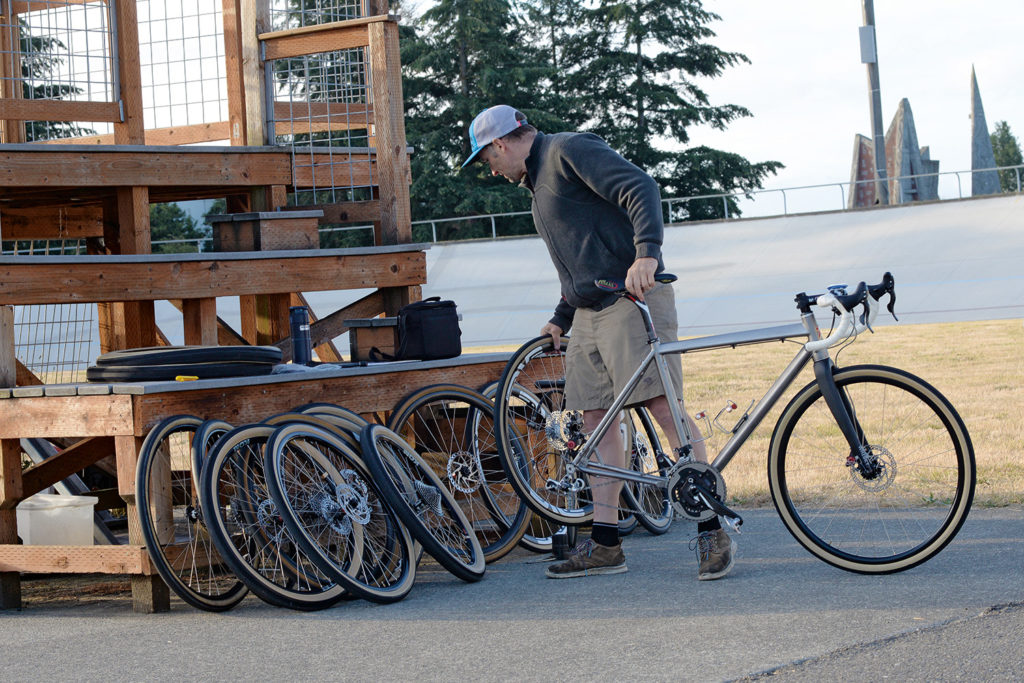
Coming from a background in science, it was natural for us to start researching. We tested tires on real roads, with a rider on the bike. To our and everybody’s surprise, the increased vibrations of high-pressure tires cancelled out any gains from less flex in the tire itself. In other words, low pressure rolled as fast as high pressure. And if you don’t need high pressure, you also don’t need narrow tires.
We rode a huge variety of bikes with different geometries and found that some work best with narrow tires, others are more suited to wide tires. Peter Weigle even built a bike with two forks, each with different offsets, so we could compare the handling, while keeping all other variables the same.
We found that a front load is easier to balance than a rear load. And that adjusting the bike’s geometry for the load optimizes the handling: A loaded bike can handle as well as a ‘naked’ road bike.
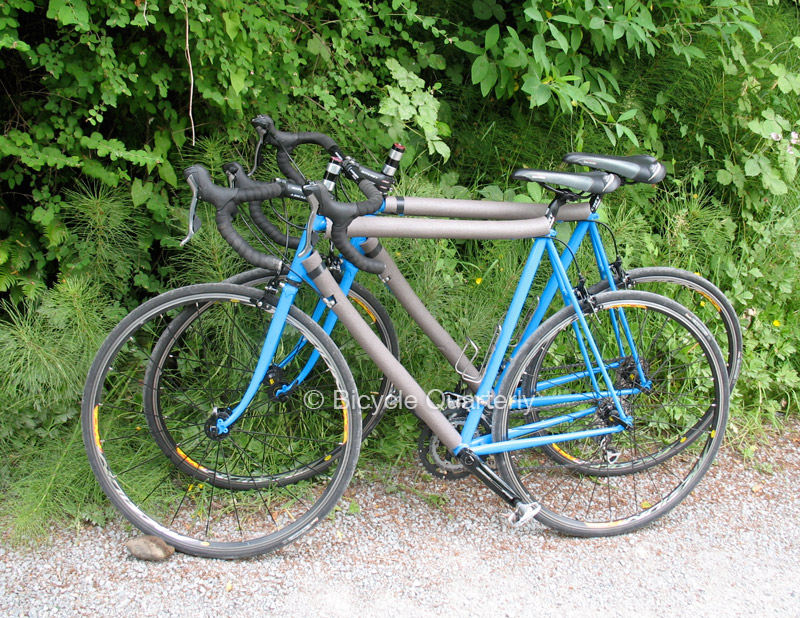
We did a scientific double-blind test of four bikes with different frame stiffness. That was a huge effort: Jeff Lyon built four frames, and Jamis sold us complete bikes at closeout prices, so the frames could be built with identical components. All the expense and effort was worth it: We found that, rather than look at frame stiffness in isolation, frames should be tuned to the rider’s power and pedaling style. We discovered that a rider’s max. power is not always the same. On frames with optimized flex characteristics, our testers generated up to 12% more power than on frames that didn’t work as well for these riders.
Our results parallel a similar change in running shoes: Traditional ‘racing flats’—with thin, stiff soles—have been replaced by ‘Super Shoes’ with carbon plates that have defined flex characteristics to enhance the runner’s stride. In both cases, the goal is to enhance the power output, rather than just transmit it without losses.
Fortunately for cyclists, light weight and stiffness are opposing goals: removing material not only makes frames lighter, but also decreases stiffness. Many top-end carbon (or steel) frames aren’t as stiff as their more budget counterparts, yet no racer opts for a lower-end model—even for flat races where weight shouldn’t matter. Despite this, the industry and media still can’t let go of the ‘stiffer is better’ mantra.
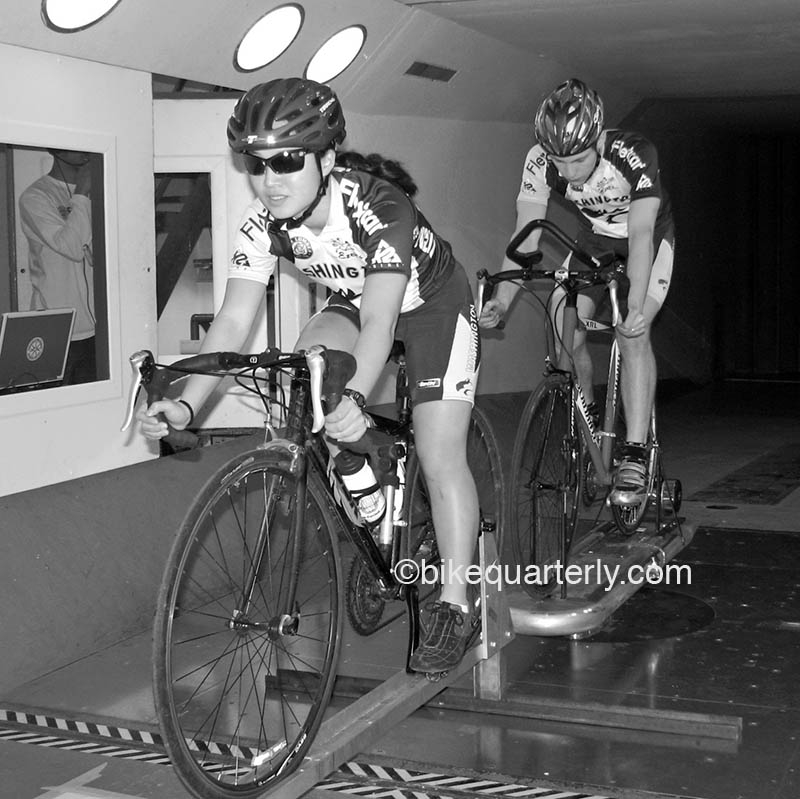
We went to the wind tunnel and found that narrow handlebars make a bigger aero difference than almost any other change to the bike—because they change the frontal area of the rider. Back then, everybody still thought that wider bars were better, as they were thought to open up the rider’s chest for better breathing…
We also discovered that narrow tires aren’t necessarily more aero than wide ones. And that drafting not only helps the rider in the back, but also give the leading rider a ‘push’ from behind (above).
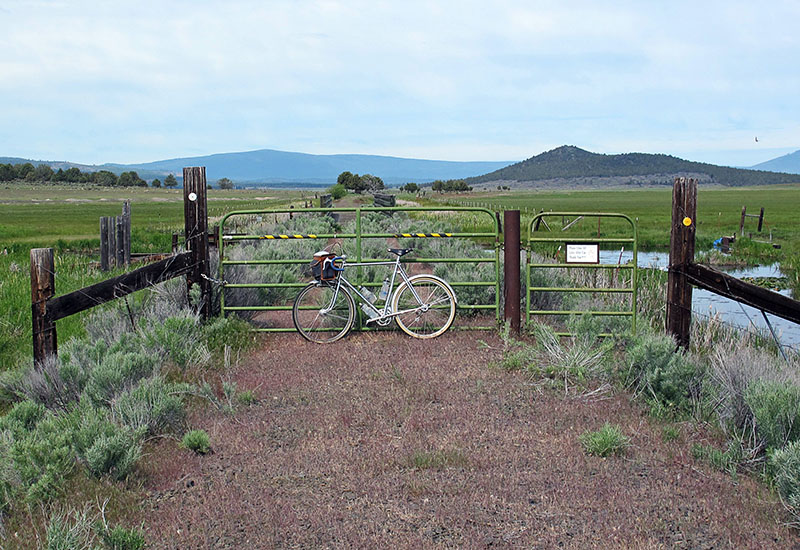
To us, it seemed natural to focus on the system of bike, rider and load, all working together. Why? I think it’s because we love big adventures. Our favorite rides cross multiple mountain ranges.
Racers often focus on power above all else. Engineers tend to look at individual factors in isolation. We love the complex nature of long-distance adventures. To set an FKT in a rando brevet or on a bikepacking route, power alone is not enough. Careful planning is just as important. Packing our luggage so everything is easy to find. Limiting resupply stops to an absolute minimum. Not over-extending ourselves early in the ride, but managing our forces well. And, just as importantly, enjoying the scenery—because otherwise those long rides become monotonous and boring. (Yes, a love of touring makes us faster, too.)
Of course, we weren’t the only ones who had doubts about the status quo. Peter Weigle suggested that a bike, which I found to perform so-so, might be too stiff for me. Bill Davidson echoed the sentiment that ultralight—and not-very-stiff—steel frames offered a ‘joyful’ ride and performance. Jim Papadopoulos, probably the greatest expert on bicycle handling, also found that trail alone did not make bikes stable. Frank Berto was excited about our research and shared his data on tire testing. All of them—and many others—became great friends.
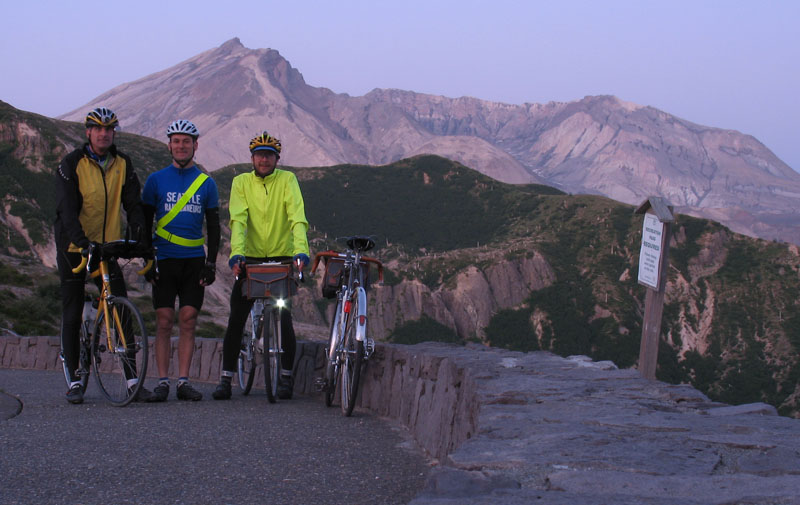
Back then, we were young, and we naively believed that our well-documented research would change cycling almost overnight. Of course, that’s not how the world works. At first, our findings were met with disbelief and even ridicule. Wide tires as fast as narrow ones? Everybody ‘knew’ that, to go fast, you pumped your tires to maximum pressure. And since narrow tires can handle higher pressure, they had to be faster. When we suggested that road bikes would be as fast with 38 mm tires as they were with 23s, it was just too far out there.
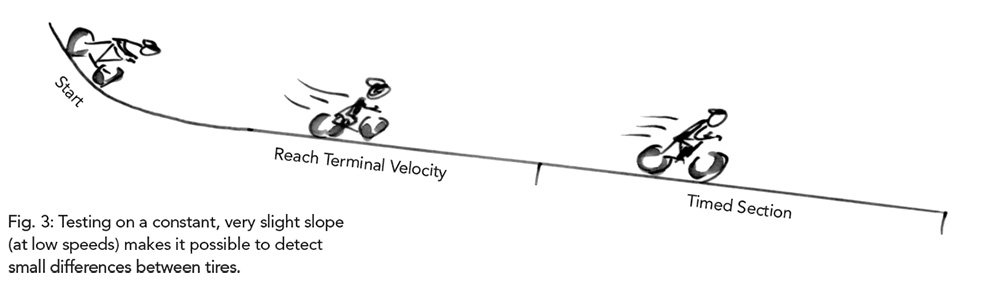
But we’d done our testing carefully. We repeated our tests multiple times. We validated our results with different methodologies—roll-down tests and tests with power meters. We did statistical analyses to make sure we weren’t just observing ‘noise’ in the data. We’re scientists, after all… Our results were rock-solid.
We came up with the name ‘all-road bike’—all the way back in 2006—to articulate our vision of a road bike that would be fun and fast not just on smooth pavement, but also on rough roads and even gravel.
Yet the cycling industry didn’t react to our findings. They had no interest in all-road bikes, wide-and-supple tires, sub-compact cranks and other parts that we suggested based on our research. “Can’t be done. And even if it was possible to make wide-and-fast tires, nobody would buy them,” was a typical answer when we suggested to turn our research into tangible products. So we decided to do it ourselves. With a few added twists and turns, that’s how Rene Herse Bicycles was reborn in the Cascade Mountains. But that’s a story for another post…
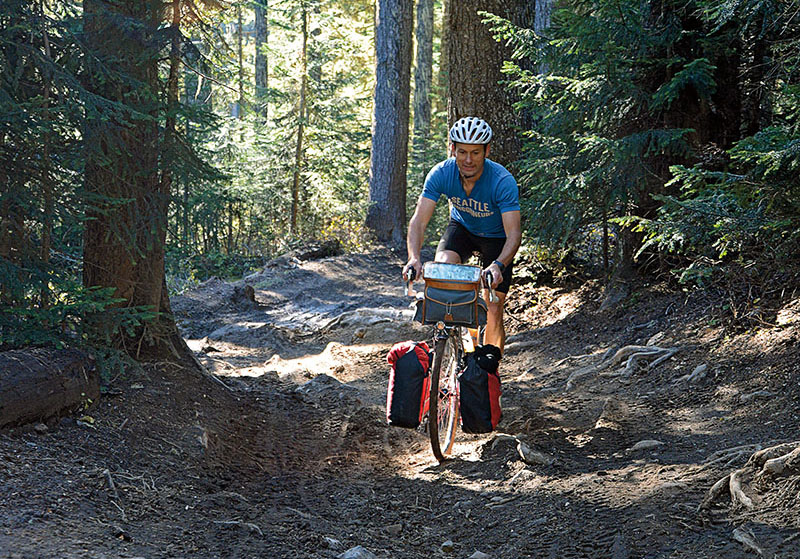
Our research was exciting, because it opened a new world of riding. A few small builders began to make custom bikes that rolled on our wide-and-supple tires. On this new breed of all-road bikes, we explored distant places that had been out of reach before. We shared these adventures with our readers. For example, during our ‘Search for the Lost Passes,’ we rolled out of Seattle shortly after midnight. By sunrise, we were deep in the mountains, on roads leading into the unknown. Nobody we knew had ever ridden over Naches Pass (above). What lay beyond was known only to a few local loggers and ranchers. Discovering new roads was as exciting as discovering new tech, and both went hand-in-hand. The rides wouldn’t have been possible without the tech, and the tech was compelling because it made the rides possible.
Over the next decade, the cycling industry slowly started to catch up. Our findings about wide tires were eventually noticed by pro teams, starting the current trend toward wider tires. That’s another story to tell in a future post… In some areas, the mainstream still hasn’t caught up—‘stiffer frames are better’ still holds sway in marketing materials and bike tests, even though there is no research data showing that frame flex wastes energy. (In fact, finite element analysis shows that the flex is returned to the drivetrain with almost zero loss.)
“Give them time…” we used to tell all those who asked why pro racers were on 23 mm tires when our research showed that 25s and 28s would be faster. And now they are on 28s or 30s, which is actually a little wider than we predicted…
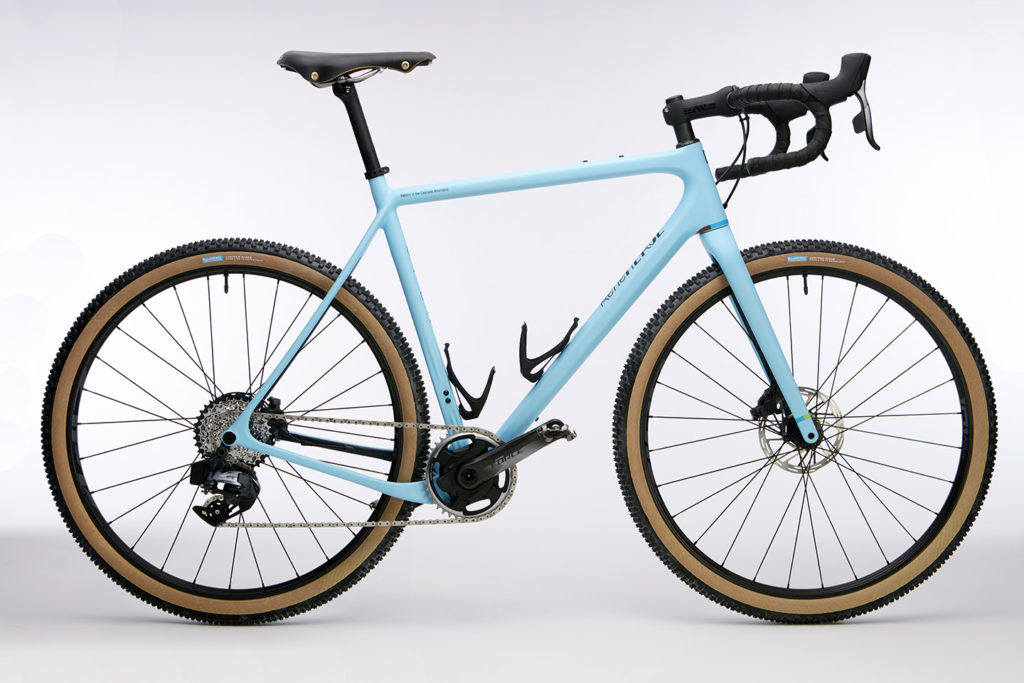
The most gratifying part of our work: Bikes today are so much more fun than they were when we started. Back then, mainstream makers made us choose between road, mountain and city bikes, plus maybe a classic touring bike with ‘wide’ 28 or 32 mm tires. Today, we can walk into almost any bike shop and choose among all-road bikes, gravel bikes, bikepacking bikes… Even road bikes have tires that are wider than those of touring bikes back then.
While the industry has been playing catch-up, we’ve continued to push ahead. There are many discoveries waiting out there. We’ve teamed up with the engineering department at Cal Poly Pomona to explore all the things we still don’t know about bikes. Earlier this year, we published a study showing how tire deflection is affected by different casings, pressures, and rider weights. That data is now being translated into a more accurate tire pressure calculator. (Stay tuned!)
Of course, we keep riding, since that’s the reason behind all the research…and we’ve been joined by many others. Climbing gravel passes at night is no longer crazy, but something bikepacking racers do all over the world.
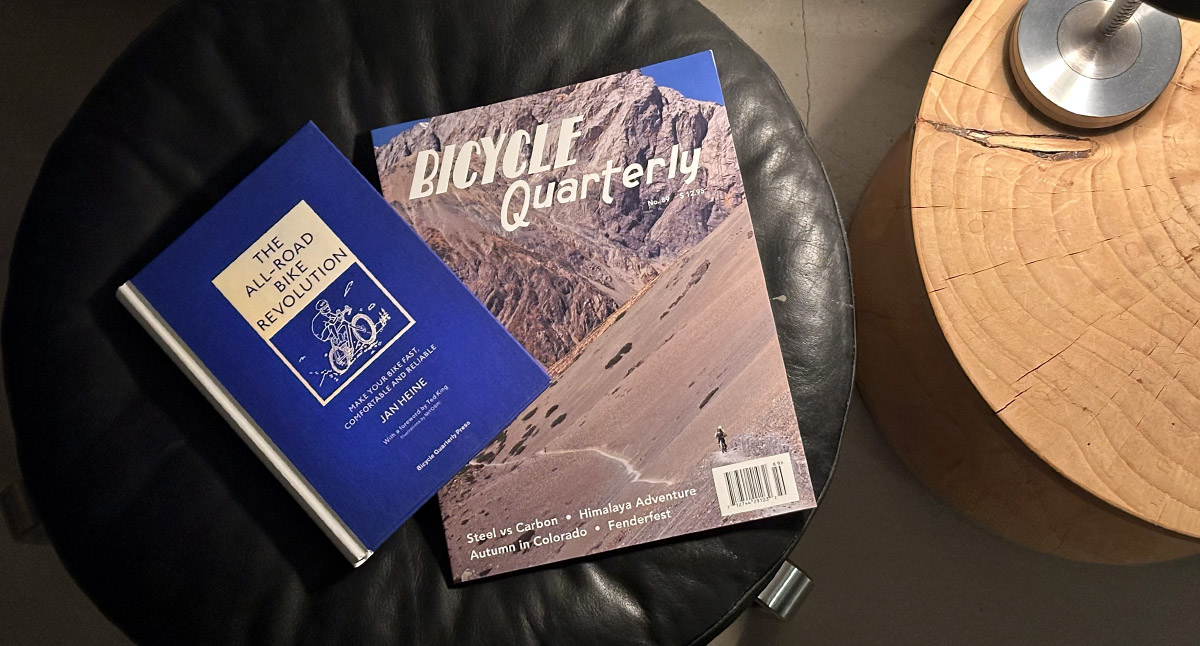
All that is reflected in the pages of Bicycle Quarterly. We publish stories that you won’t find anywhere else. Rather than relying on established authors, we work with racers and adventurers—and take you right into the action. Sofiane Sehili, Meaghan Hackinen and Marei Moldenhauer share what it’s like to win the world’s toughest bikepacking races—and what drew them to ultra-racing in the first place.
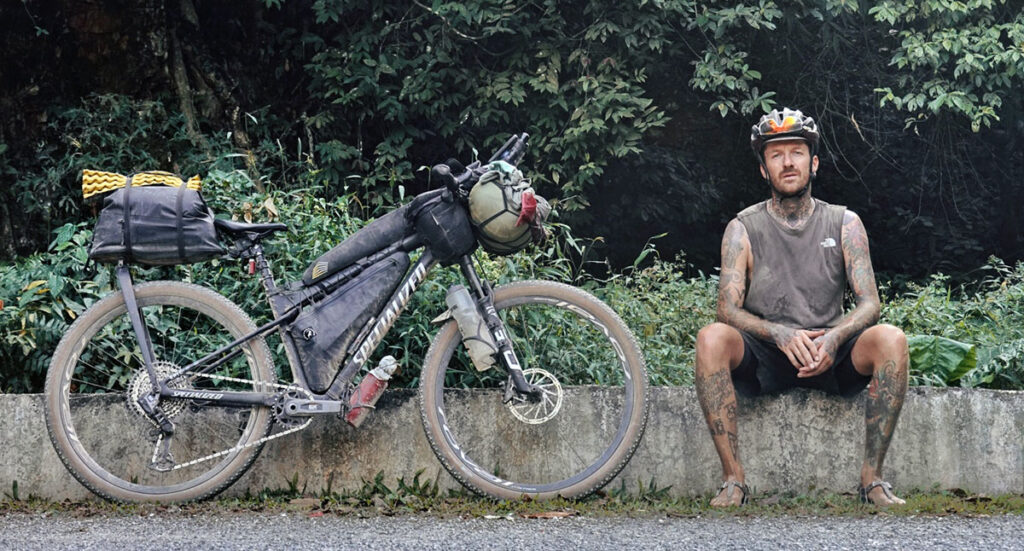
In the just-released Autumn 2025 Bicycle Quarterly, Sandro Büttel (above) takes us on a breathtaking trip into the Himalayas and beyond to Vietnam, Laos and Thailand. Leo Brasil penned a poignant story of a farewell ride into the Rocky Mountains, ablaze with autumn colors, as he prepares to leave the U.S. and return to his home country. Two friends in Switzerland show that paved rides can be adventures, too: They traverse the Alps just before winter snow closes the famous passes.
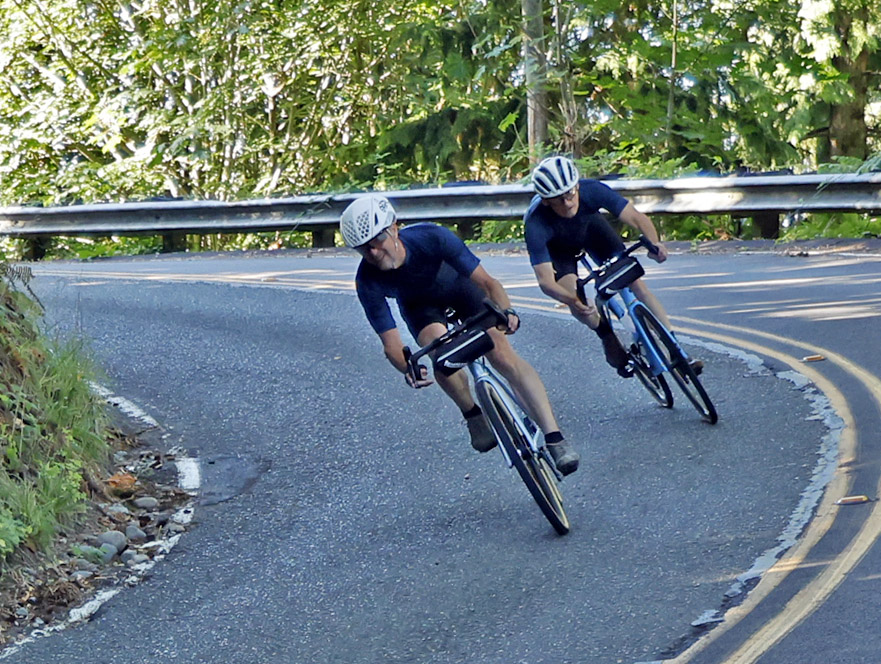
Our bike test pits a superlight steel bike against our favorite carbon racer. Because we (and our readers) want to know whether steel bikes can still offer top-tier performance—or whether they are just a nostalgic choice. (Spoiler alert: They can…)
These articles are just a sampling, and they show how Bicycle Quarterly transcends categories. Road and gravel. Racing and touring. Carbon and steel. We celebrate the passion of cycling in all its forms.
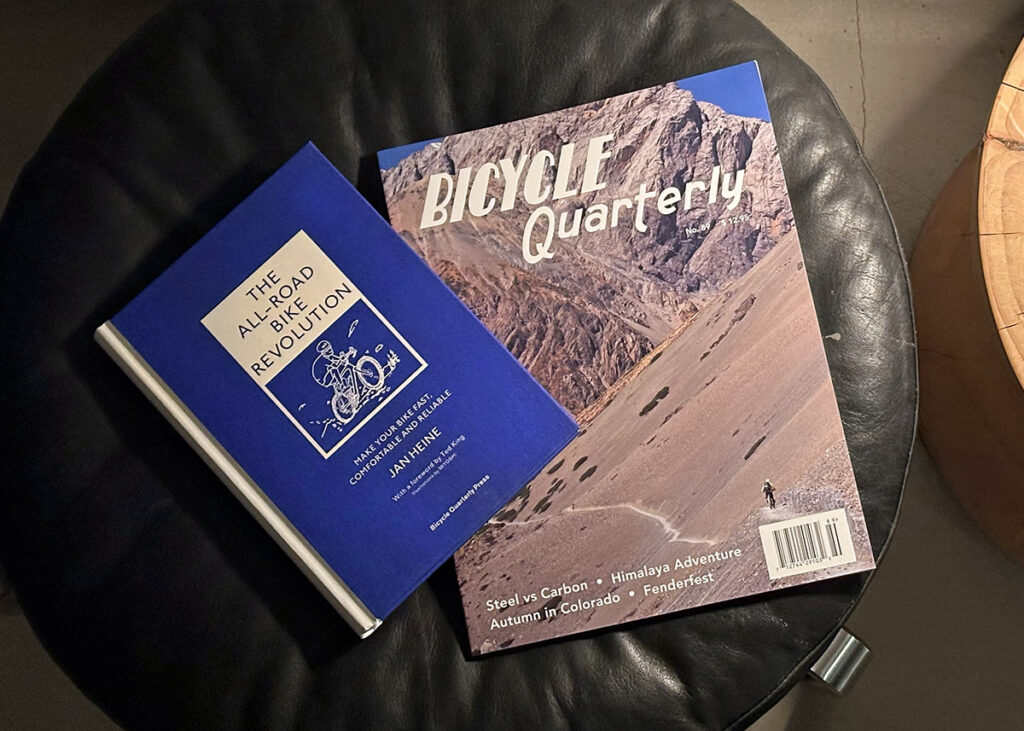
As the days get shorter, and we tend to spend more time indoors, we invite you to join us in our explorations. Each edition of Bicycle Quarterly is a 108-page book that you’ll read from cover to cover. If that sounds interesting, you can subscribe or suggest a gift subscription when someone asks what you’d enjoy.
And if you want to catch up on the ground-breaking research that has changed cycling as we know it, there’s no need to get all Bicycle Quarterly past editions: Our book The All-Road Bike Revolution distills our research into an easy-to-read and fun format. It may be science, but the goal is to have fun—whether reading about it or applying it in the real world during our rides and adventures.
More Information:
- Bicycle Quarterly subscriptions
- The All-Road Bike Revolution book
- BQ 47 with the ‘Search for the Lost Passes’ adventure, also available as part of our 4-pack of Past BQs.