

Four Bikes with Canti Brakes
The crowdfunding for the Rene Herse canti brakes has been a resounding success. Over the weekend, we blew through the 75 pre-orders that made another forging run for these brakes possible. A big ‘Thank You!’ to all of you who stepped up to the plate!
In this day and age, a lot of readers probably wonder why we (and our customers) have so much love for a rim brake. Aren’t those obsolete? Instead of a dry technical explanation, let’s look at my bikes with canti brakes.
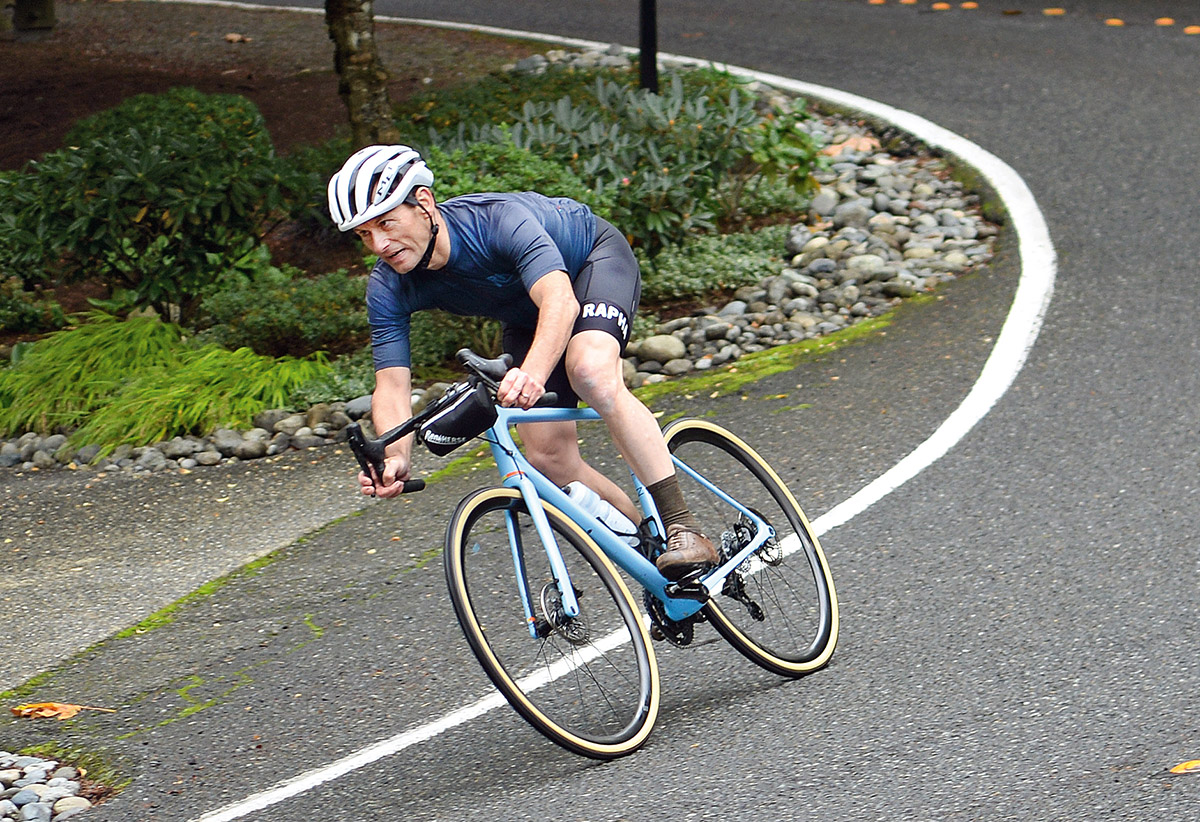
Before we start, I want to stress that I’m not a retrogrouch. I love my carbon bikes, and all those have disc brakes and electronic shifting—like the OPEN MIN.D. that’s my choice for a fast-paced Sunday morning ride (above). And yet there are four much-loved bikes in my stable with canti brakes…
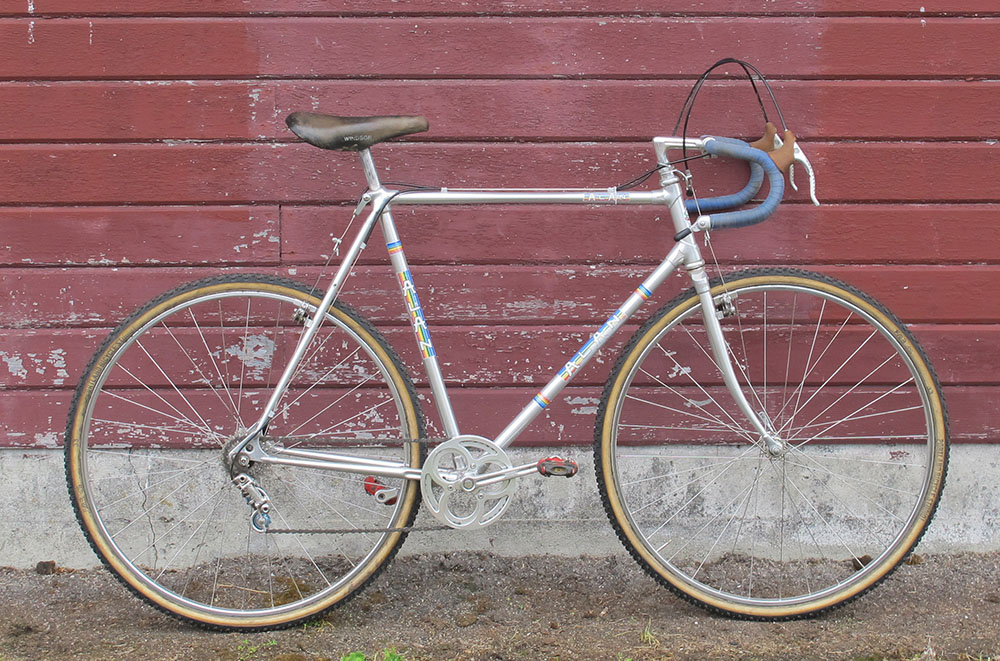
Oldest on the list is my Alan cyclocross bike. Readers in Seattle may recognize this bike—it’s been mixing up the ‘cross circuit for many years now. And that’s in fact the main reason the Alan is running cantis—it’s an old, but much-loved frame. I bought the bike when I was in college, used, for all of $ 300. Then I rebuilt it over the years with new components.
Like many older bikes it works really well. At one point a few decades ago, Alans were the bikes to have if you raced ‘cross. I don’t remember how many world championships were won on these bikes, but it was almost easier to list the ones that were not won on Alans back then.
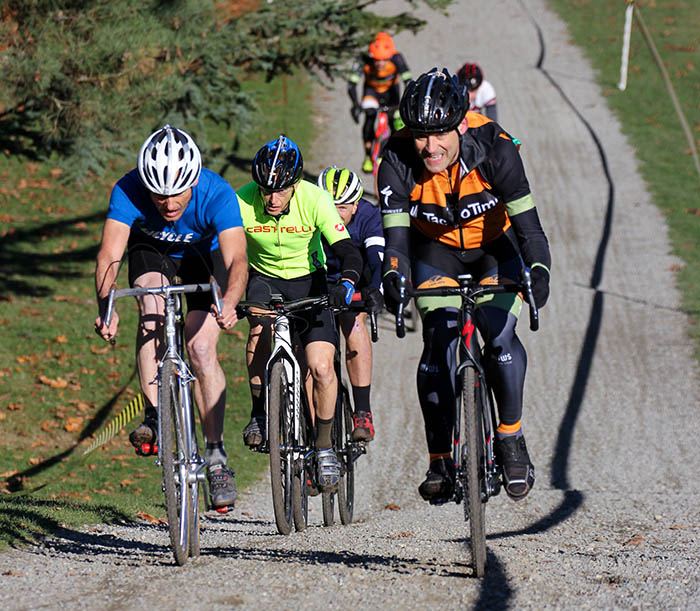
Originally the bike was running Dia-Compe cantis, and the fork juddered terribly when braking at low speeds. Fortunately, in ‘cross, you don’t brake at low speeds except at the end of the race, after crossing the finish line. During the R&D for our Rene Herse cantis, I installed prototypes of the new brakes—and the fork judder disappeared! Apparently the slightly sloppy pivots of the old brakes were the cause of the judder.
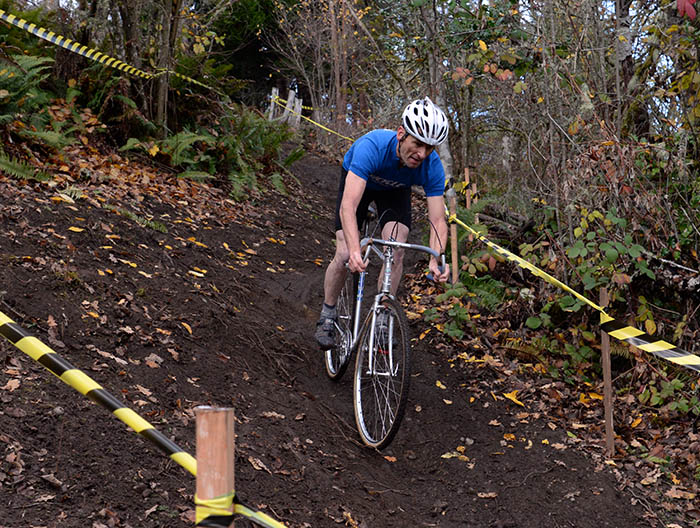
As to braking with cantis, when it’s muddy, traction limits how much (or how little) you can brake, and the theoretical advantage of discs becomes a non-issue.
On the Alan, I run old non-aero Campagnolo road levers. They pull more cable than modern levers, giving the brakes a little more heft, which matches the other controls of this bike. It’s also useful when braking at the limit of traction on rutted descents, where the ultralight action of hydraulic discs can make it hard to dosage the braking.
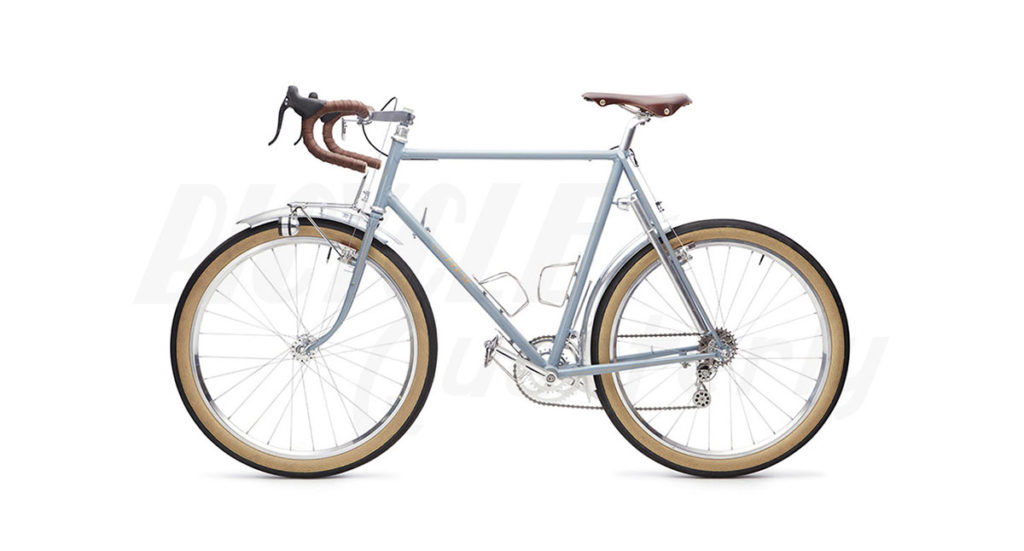
“OK, makes sense—cantis for an old bike you love,” some readers may think at this point. But why would anybody build a new custom bike around canti brakes?
Meet my bike for the Oregon Outback, the 364-mile bikepacking route that traverses Oregon from south to north. Inspired by the Porsche 911 that won the 1984 Paris-Dakar rally—a sports car with four-wheel-drive and huge tires—this bike is designed from the ground up for one purpose only: to traverse rough and loose gravel roads at maximum speed. It’s basically a road bike for gravel roads.
Light weight is essential to keep the bike floating on top of the loose gravel—one reason to choose cantis over discs. Even more important is suspension. Vibrations absorb energy, and a bike that vibrates less is faster. “What do brakes have to do with suspension?” is the obvious question. The ultra-slim steel fork blades provide a significant amount of suspension (together with the 54 mm tires)—but they wouldn’t work with disc brakes, which need stiff forks to transmit the braking forces.
Cantis are the obvious solution, and the Rene Herse cantis work great here. I had to custom-make an extra-long straddle cable to clear the monster tire and aero fairing (aka ‘shorty fender’). We now offer that straddle cable, as well as a range of other lengths from ultra-short to ultra-long.
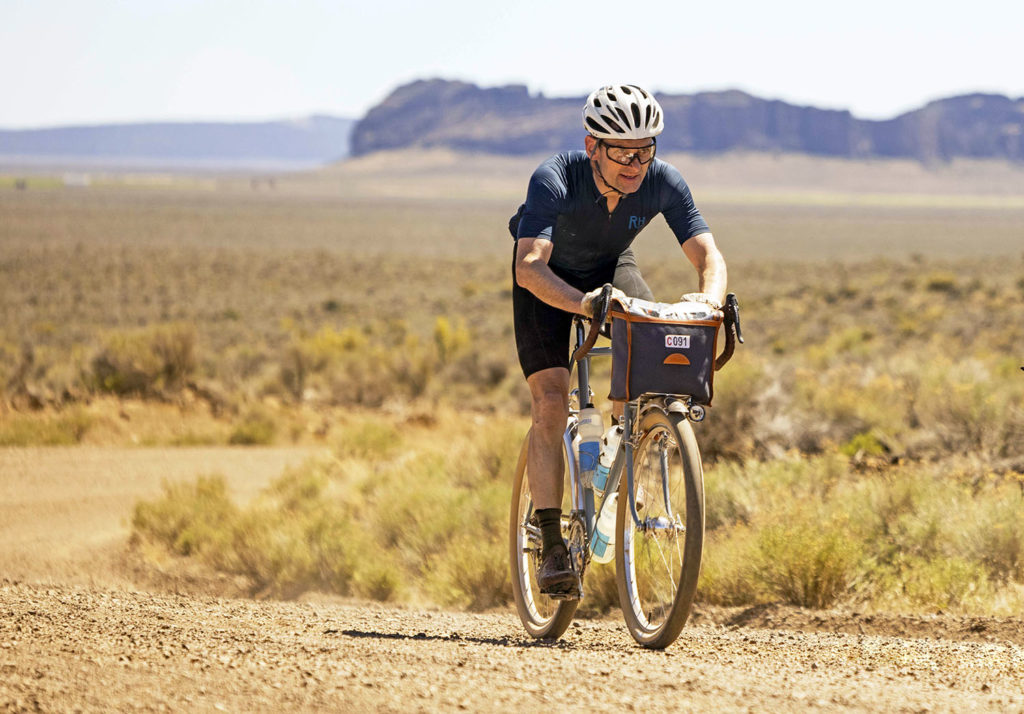
The bike succeeded beyond my wildest expectations—just like the Dakar Porsche that won the toughest desert rally against the best off-road trucks. All the other racers who had ridden the Oregon Outback in less than 30 hours were stronger and faster than me. I needed every advantage… In the end, I was amazed (and delighted) when I took more than an hour off the existing FKT (Fastest Known Time). And the beautiful landscapes of eastern Oregon remain etched deep into my memory.
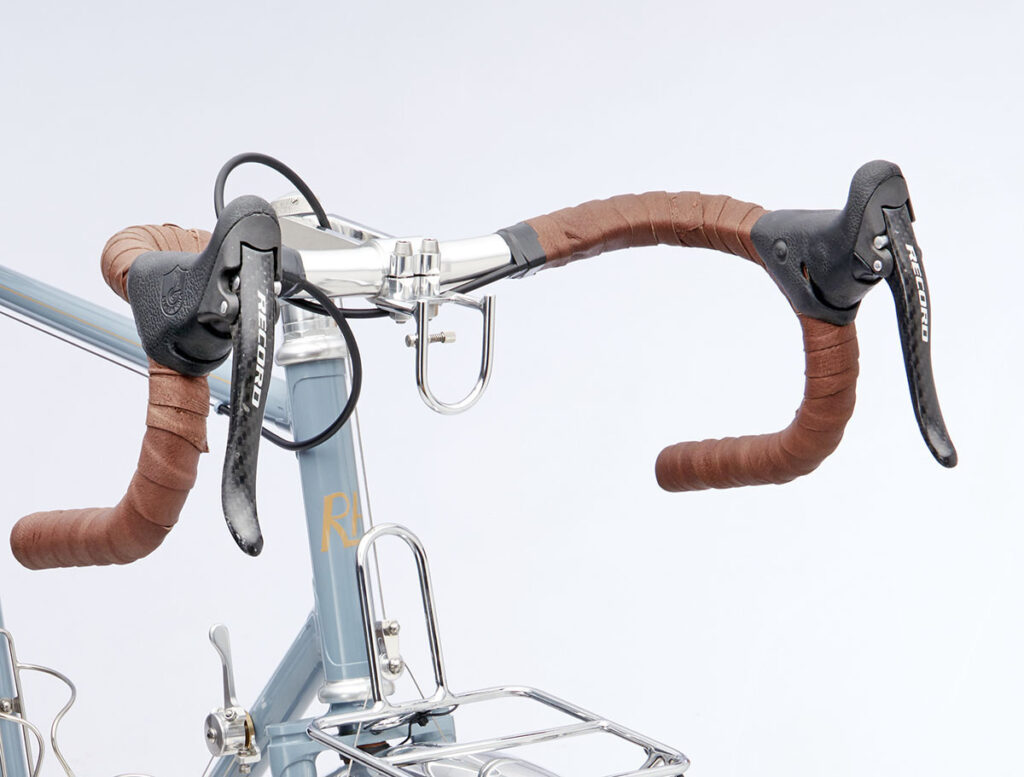
The Oregon Outback bike is equipped with Campagnolo Record brake levers—essentially 8-speed Ergopower levers with the shifting internals removed. With a little less cable pull than classic levers, they provide lighter action that is a perfect match for the low-trail geometry and Nivex derailleur. This bike has a light touch to its steering, braking and shifting.
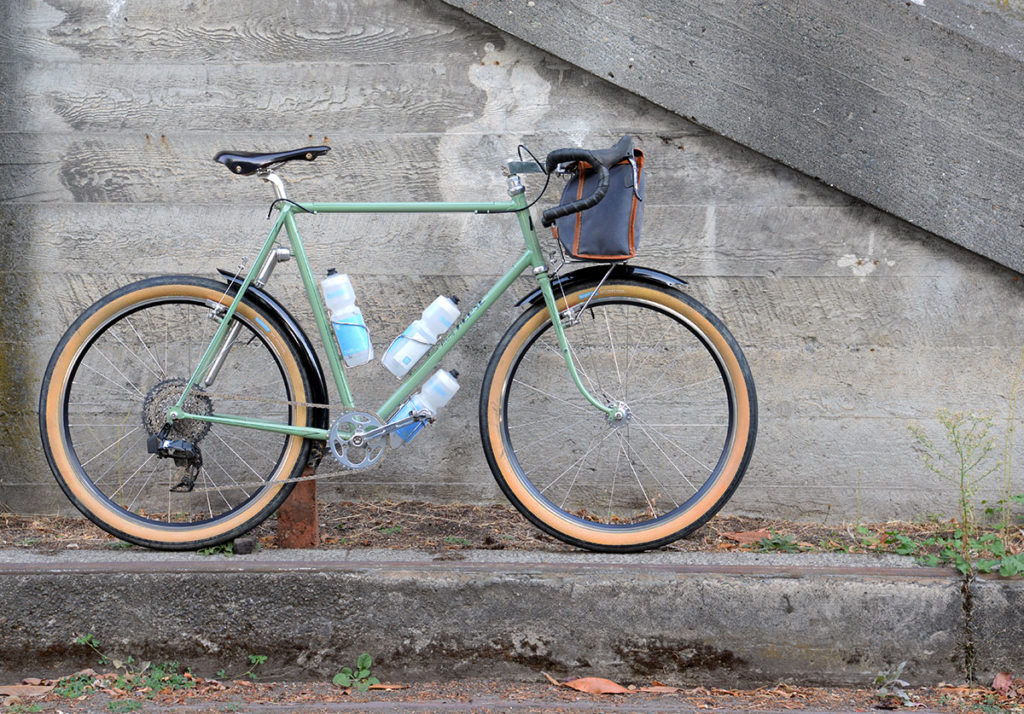
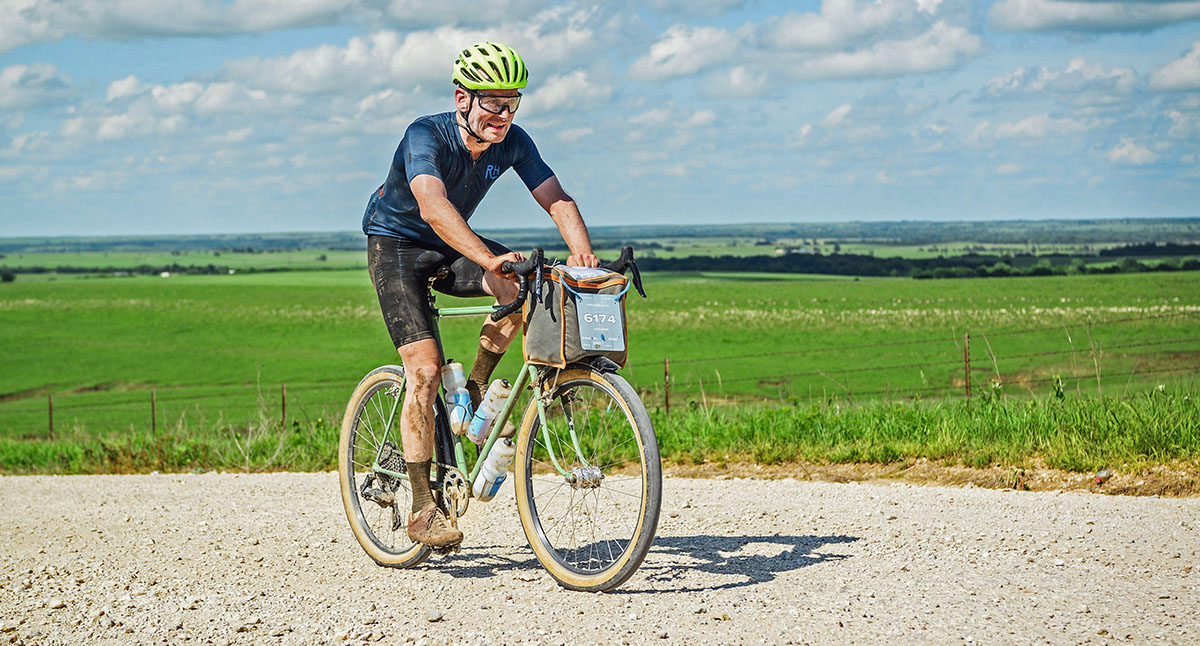
After success of the Oregon Outback bike, Mark and I hatched a plan to head to Unbound XL. This 350-mile race across the Flint Hills of Kansas serves as the unofficial world championships of gravel ultra racing. Now we needed a second bike, and so we built another—this one with a one-by and SRAM XPLR electronic shifting instead of the Nivex analog drivetrain.
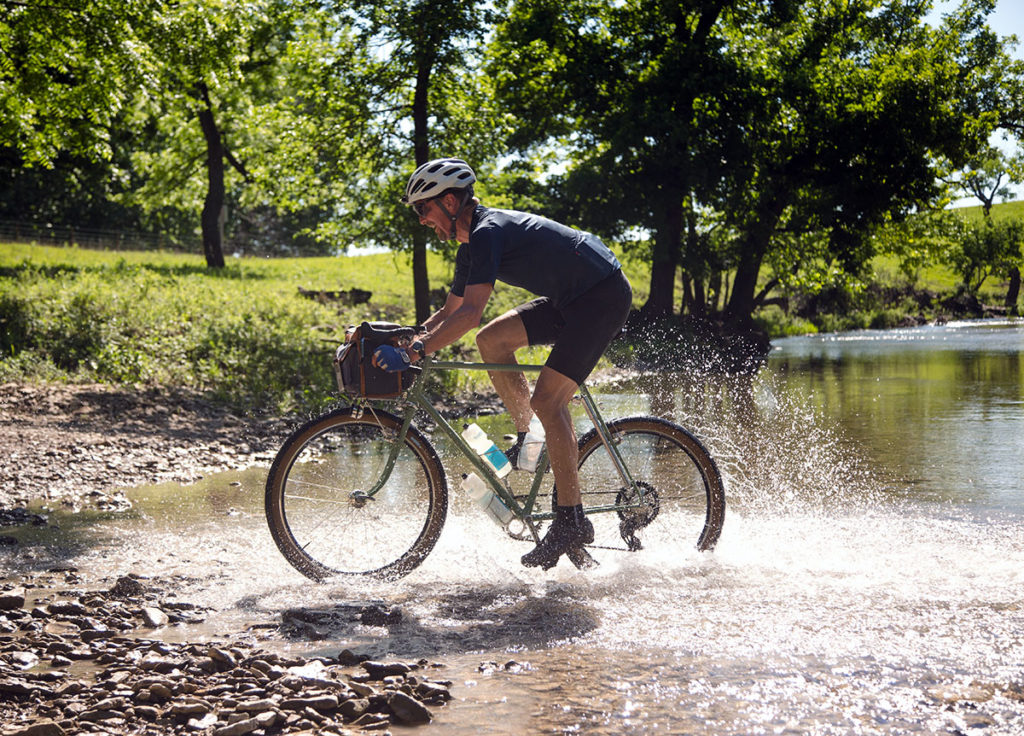
Mark rode the bike with vigor, finishing the big race in under 26 hours (above), while I rode the Oregon Outback bike in an equally memorable race. If Unbound XL was scored by age groups like the other distances, we’d have finished 2nd and 3rd in our class. As it was, we came in 28th (me) and 31st (Mark) in a field of racers from all over the world. Proof that cantis can hold their own in modern gravel racing? We think so.
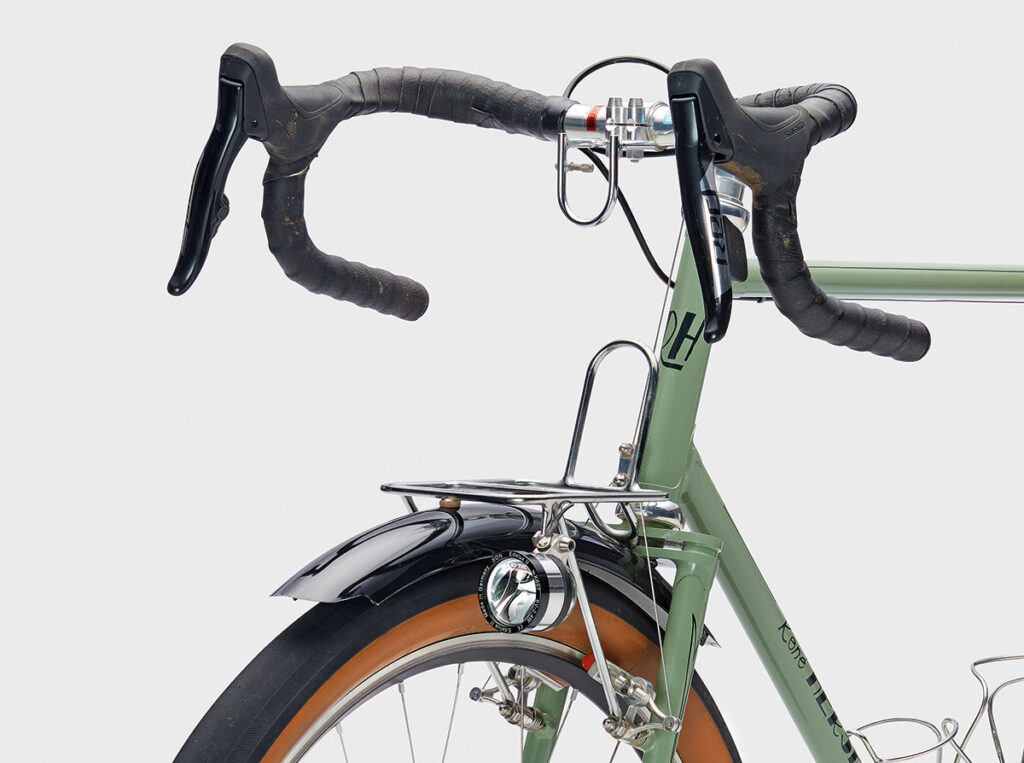
The electronic shifting and smaller gears of the Unbound XL bike are useful in very rough and steep terrain, which is why I chose this bike for the Arkansas High Country Race, where it won the South Loop and set the FKT. It went on to set the FKT on the Dark Divide 300, a course through the heart of the Cascade Mountains on some of the roughest roads I’ve ever experienced. Descending Juniper Ridge of steep mountain bike trails, I was definitely underbiking, but the cantis worked just fine. (Just like in ‘cross, there’s only so much braking you can do on loose, rocky descents.)
The SRAM eTap levers seem to pull marginally less cable than the Campy levers on the Oregon Outback bike—perfect for steep, long descents where our arms would tire if the brakes required much force.
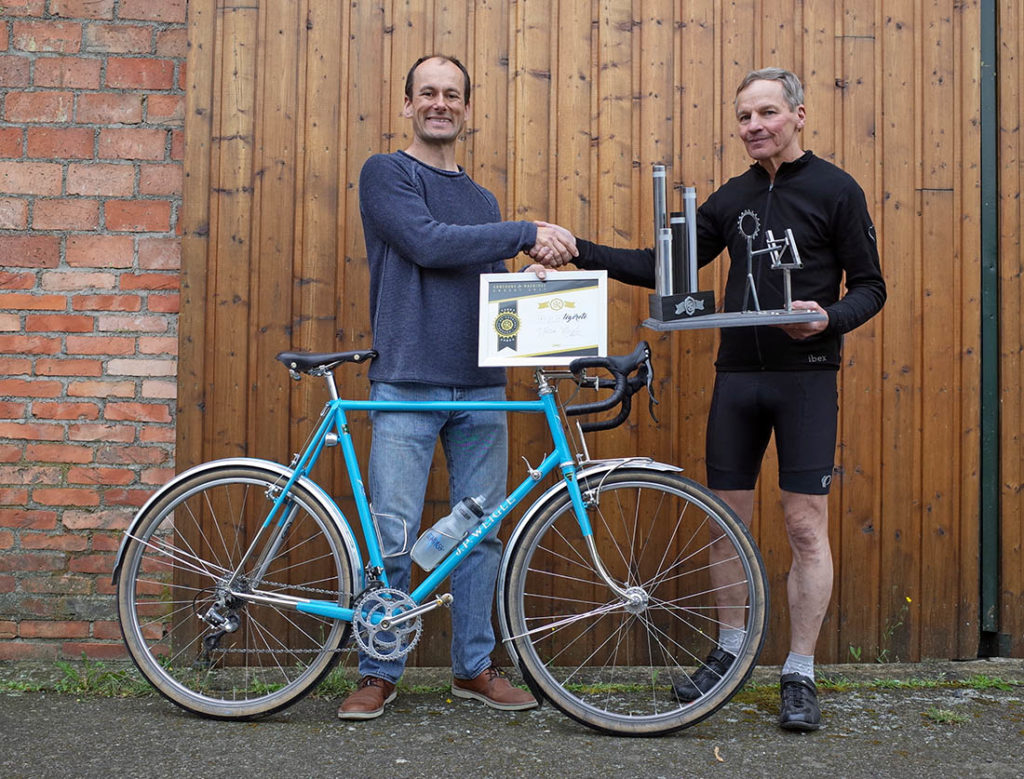
In the previous post about the crowdfunding, I already mentioned the bike J.P. Weigle built for the Concours de Machines, the competition for the best (and lightest) rando bike. The modern Concours was inspired by the mid-century technical trials, which pushed Alex Singer, René Herse and other constructeurs to refine the rando bike into the shape that we still recognize today. To compete in this event, on a bike built by one of the modern masters, was a dream come true.
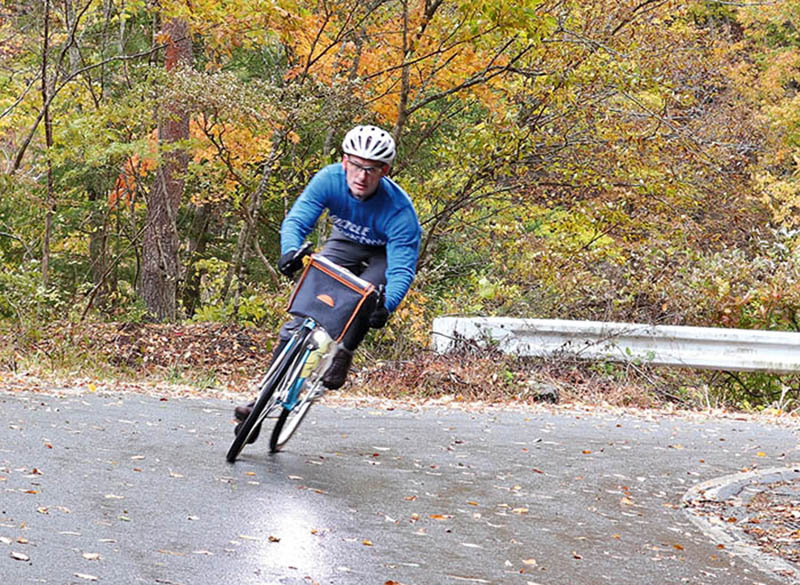
For rando bikes with tires up to 44 mm wide, I usually prefer centerpulls, while Peter Weigle is a big fan of cantis. Riding the Weigle in the mountains of Japan—where it was my only bike during a 3-month stay—I have to admit that I was (almost) won over to Peter’s side. Not once did I feel my brakes weren’t adequate on the many challenging (and fun) descents there.
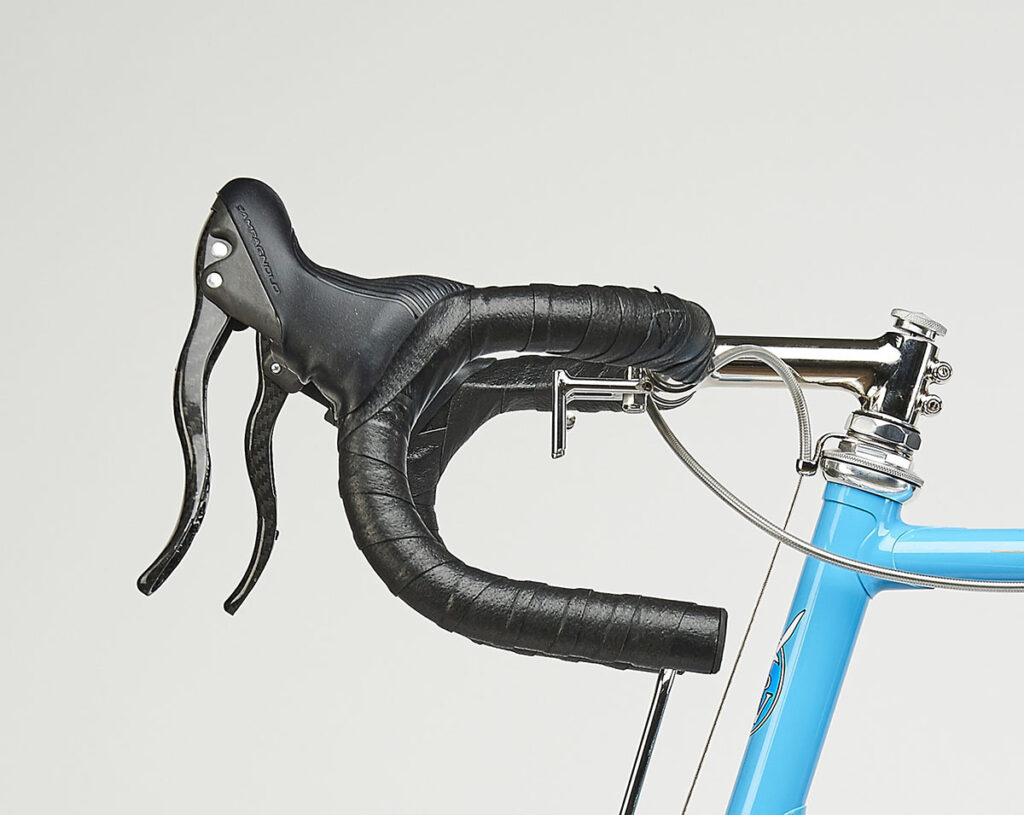
The Weigle has Campagnolo 11-speed Ergopower levers with the shifting internals removed. They work the same as the older Campy levers on my Oregon Outback bike—superb.
Four bikes with cantis that have performed beyond expectations. Three different brake levers—or four, if you count the Campy levers separately—all working equally well. That’s the beauty of the no-slack straddle cable that’s unique to our brakes—they work with modern levers that pull relatively little cable, but also with classic or canti-specific levers.
Discs are great, no question about it, but I’d argue each of these bikes works just as well (or maybe even a little better) with cantis.
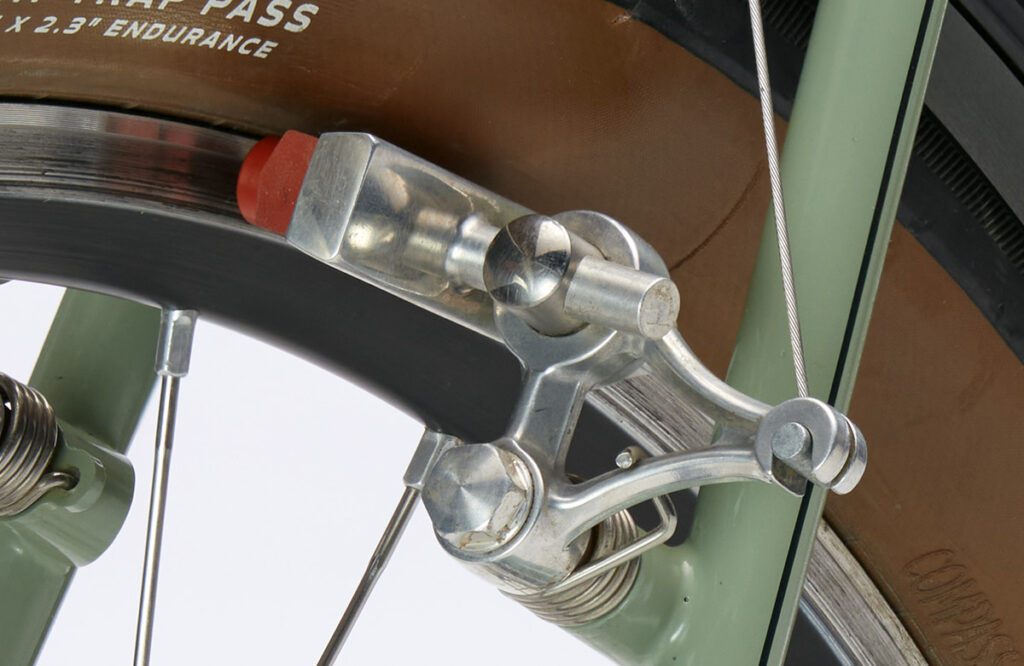
If you missed out on the crowdfunding for the new run of Rene Herse cantis, there’s still time: For one more week, until November 24, 2025, we’ll take pre-orders at the old price. Then the price will go up by approx. 10%—since the last production run, costs have increased, plus there are now tariffs for importing bike parts from Taiwan. (And it’s not like anybody can or wants to forge our brakes here in the U.S.) So if you’ve been eyeing a set of these brakes, you can still lock in the old price. The new brakes will be ready in 3-4 months.
More information:
- Method or Madness? The Rene Herse for the Oregon Outback.
- The J. P. Weigle for the Concours de Machines.
- Pre-order for Rene Herse cantis
Photo credits: Marathon Photos (Photo 1); Natsuko Hirose (Photos 2, 4, 5); Rugile Kaladyte (Photo 7); Linda Guerrette (Photo 10); Nicolas Joly (Photo 12); all used with permission.