


Game Changer Reduces Bicycle Flats
Imagine a new technology that reduces flats by up to 90%, without compromising speed, comfort or ride feel, and at no extra cost! If this sounds too good to be true, read on: There are actually not just one, but two new technologies that make this possible.
The first is simply wider tires, which roll at lower pressures. A while ago, we reported that one Tour de France team had just two flats during the entire three-week race, despite running ultra-fast ‘time trial’ tires without puncture protection. That works out to one flat per 13,000 km. The main reason for that remarkable lack of flats is the low pressure at which today’s pros run their 30 mm-wide tires. The wide-tire revolution has not just made bikes faster and more comfortable—it’s also reduced the number of flat tires almost exponentially.
There’s another reason we have fewer flats these days, and it benefits the rest of us even more than the pros. It’s a technological game changer that’s gone almost unnoticed in the cycling world, but it has the potential to change how we ride and how we set up our tires.
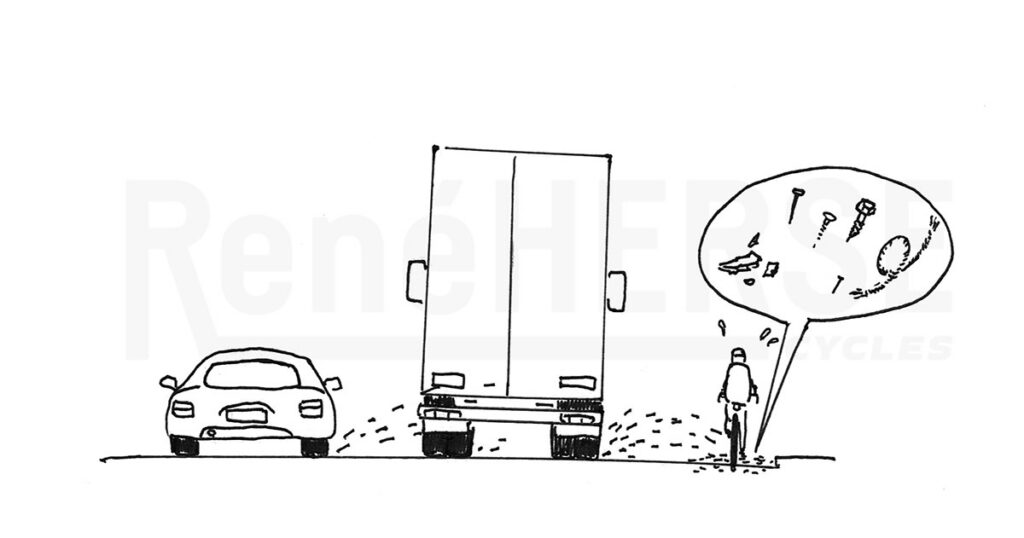
To appreciate this change, let’s look at why we get flats in the first place. On highways and city roads, debris accumulates in the places where cars usually don’t drive. It’s easy to visualize: Debris is picked up by the tires of passing cars and lands in random places. If the debris lands in the traffic lanes, it gets picked up again and again. If it lands on the shoulder or some other spot where cars don’t go, it stays there.
That’s how most debris will eventually end up on the shoulder, in the bike lane, or in those ‘dead spots’ at intersections. And since those are parts of the road where cars and trucks don’t go, us cyclists tend to ride there. While cars and trucks drive on relatively clean road surfaces, we hear and feel the debris crunch under our tires.
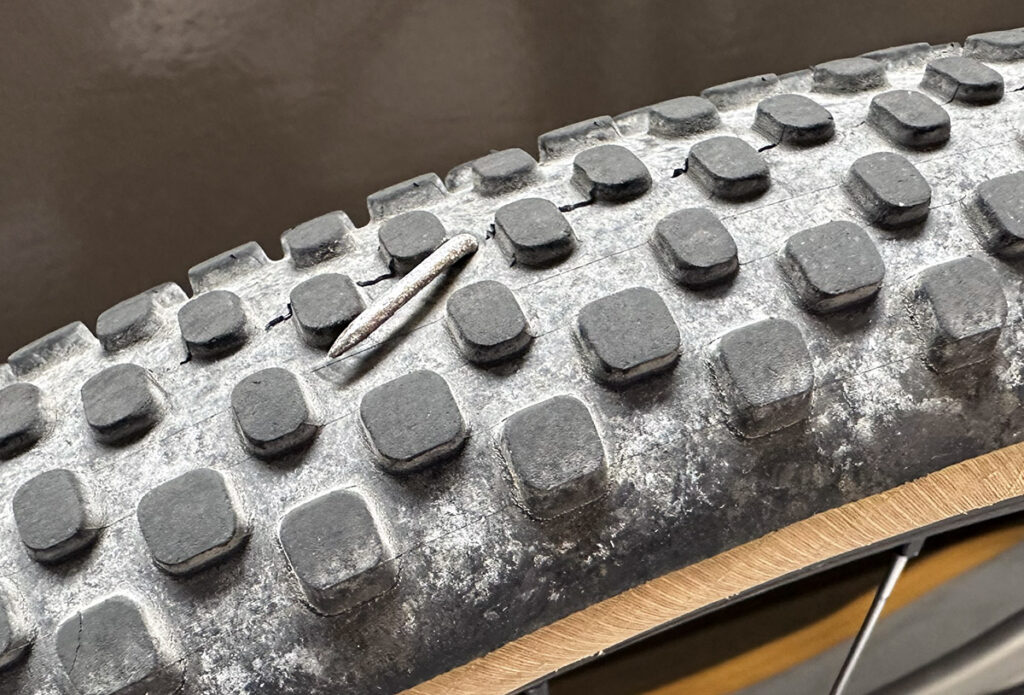
Punctures can be caused by all kinds of debris, but different kinds of debris pose different threats. Glass can puncture tires, but glass is fragile. If your tire has a puncture-resistant belt, the glass (usually) gets pulverized before it can work its way through the tire casing.
Steel wires are harder to deal with. They are so small that they are almost invisible, but they are tough as nails. Just like nails, they’ll get worked deeper and deeper into the tire with each wheel revolution. Eventually, they’ll puncture the tire. A reinforcement belt on the tire can only delay the inevitable puncture, but not avoid it.
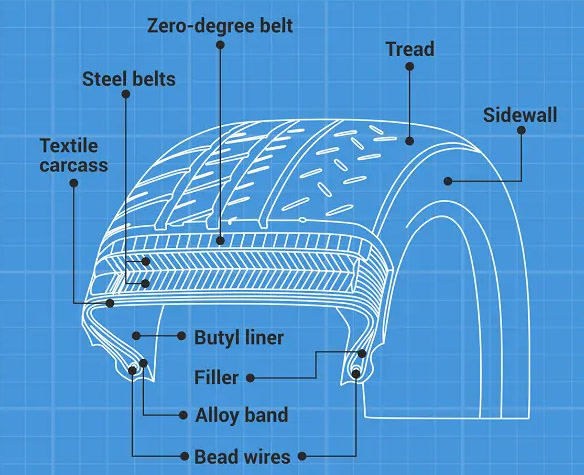
Where do those steel wires come from? They’re part of modern car and truck tires. The steel belt helps the tire keep its shape. It also adds puncture protection. (It’s ironic that what prevents punctures in the automotive world is the main source of punctures for cyclists.)
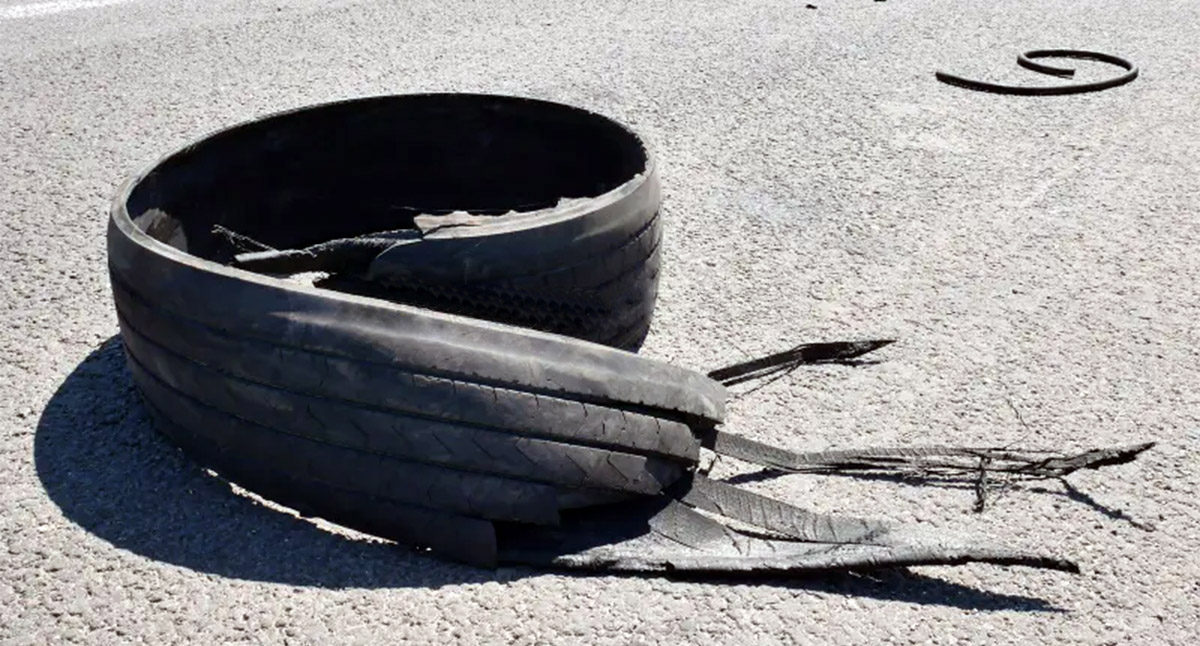
How do those wires get out of the tires and onto the road in the first place? Most come out of truck tires that have completely disintegrated. Here is how that happens: A standard semi-truck has 18 wheels. If one of those 18 tires has a puncture, the driver often does not notice, since there are 17 wheels left that carry the load. However, the flat tire no longer holds its shape. It flails onto the road, gets hot, and finally breaks apart. When that happens, it spews those tiny steel wires onto the road for half a mile or more, until the remains of the tire finally come off the rim and end up on the road. That’s what you see in the top photo.

There are two ways to prevent those punctures. The classic way is to make the tread so thick that the steel wire gets stuck before it can puncture the tube. One tire maker put a layer of foam under their tread… That’ll stop most of these punctures, but it also adds weight, increases rolling resistance, and makes the ride quality much worse. Not what we want!
The second method doesn’t worry about the puncture, as long as the air doesn’t escape from the tire. Sealant inside the tire will plug those tiny punctures with minimal air loss. That’s why tubeless tires are popular among riders who spend a lot of time on highway shoulders.
There’s actually a third way, and that’s simply not riding in those spots where cars don’t go and debris accumulates. Of course, it’s not feasible to ride in the ‘traffic lanes’ of busy highways… but often we can avoid busy highways altogether. On small backroads, we ride in the ‘traffic lane’ all the time, and since there is so little traffic, it’s totally fine to share that lane with the occasional car. Every part of the road surface gets ‘swept clean’ by cars, so the debris ends up on the side of the road, not where we cyclists ride. That’s why we have so few flats on backroads.
I’ve often fantasized about sweeping the shoulders of highways before big rides and races, to get rid of those steel wires and other debris. That would be a lot of work…
There’s a much easier way, and it’s happening right now. That’s the revolution I am talking about.
Earlier this year, I was stopped at a traffic light, and a big truck pulled up in the lane next to me. I noticed that it had tire pressure sensors on the wheels of the trailer. I’ve always hated those shredded truck tires, but I’d never thought about the fact that truckers hate them, too. Truck tires cost between $250 and $800 each—each exploded tire is a significant loss. And getting the remains of an melted tire off the rim is much harder than plugging a tire after a puncture. Back then, I thought: “This has the potential to change cycling as we know it.”
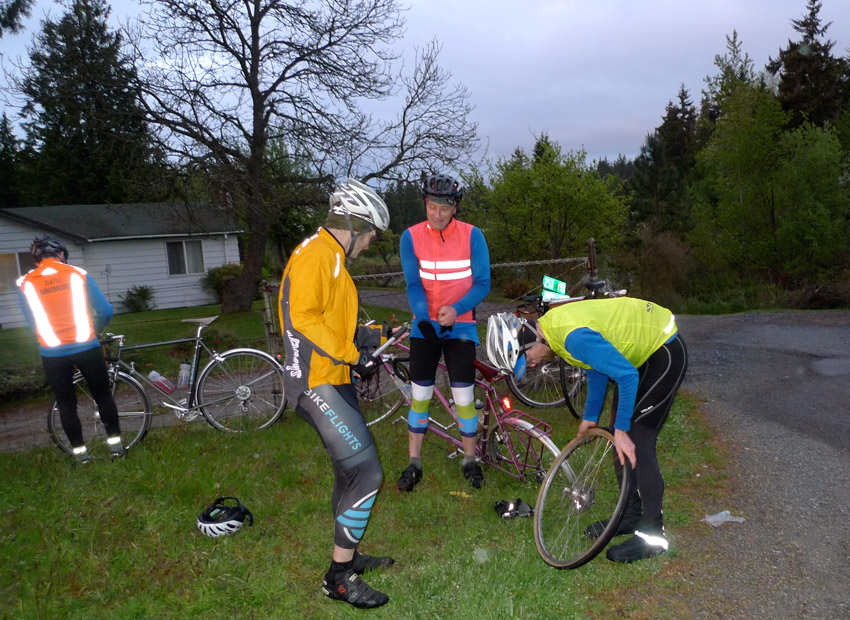
Well, this year’s 600 km brevet has shown me that this is already happening. I’ve ridden the route around the Olympic Peninsula many times. On the highway sections of the route, flat tires were pretty much guaranteed in the past. Above is the Flèche in 2014: We’re changing the tube on the rear of our tandem, after pulling a tiny steel wire out of the tire tread.
In fact, we used to ride in the ‘traffic lanes’ and only moved onto the shoulder when a car or truck approached from behind. Traffic is light out there at the edge of the American continent, so that was a viable option. But it was a little stressful to always keep an eye on traffic approaching from behind, and every time we ventured onto the shoulder, we worried about a tire going soft soon afterward. I think we had three flat tires between our team during the Flèche…
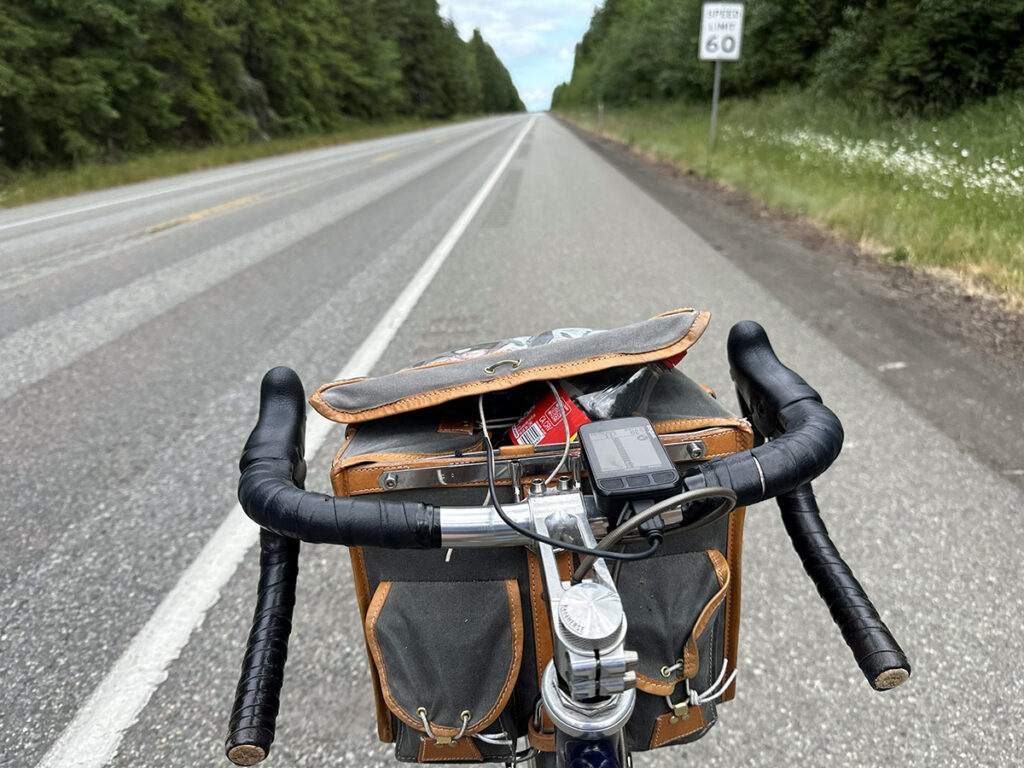
Imagine my surprise when, this year, I saw just three exploded truck tires during the entire 600 km brevet. One was so rusty that it must have been lying there for a long time. In the past, there would have been hundreds (thousands?) of broken tires littering the shoulder.
And I had no flats during the entire ride. Nor did the other riders who I saw on the road. The photo shows a typical section of the route. Remarkable is what you don’t see: debris. The shoulder is clean. At first, I thought maybe it had been swept after the winter months. But all shoulders on the route were clean, on different highways, in different counties… This is the first time I’ve seen that in many years of riding.
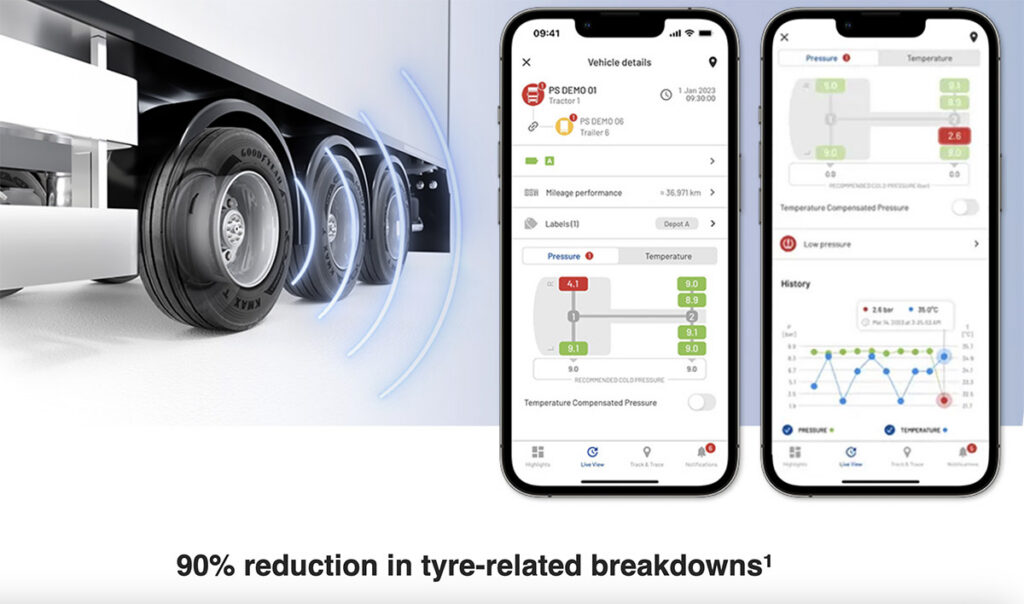
I researched a bit more, and tire pressure sensors are indeed common on trucks now. The EU mandated them in 2024 for all new commercial vehicles, and they’ve been adopted in other parts of the world, too. The cost of about $55 per tire is now so low that it’ll amortize itself as soon as it prevents a single tire from getting shredded. It’s a game changer for the trucking industry…
…and also for cyclists. We’ve spent decades trying to figure out how to deal with those steel wires. We’ve developed tougher (and slower) tires. We’ve set up our tires tubeless with sealant, but many of us didn’t like the upkeep that tubeless tires require. We’ve even avoided certain routes that were known to be especially flat-prone. And now, suddenly, the steel wires have all but disappeared, at least in this part of the world. A 90% reduction in tire-related breakdowns on trucks means at least 90% fewer steel wires waiting to puncture our tires. It’s almost too good to be true.

Between wider tires and cleaner highway shoulders, we now have more options when we choose our tires. We can ride lightweight high-performance tires, like the Rene Herse Extralight or Standard, now that we no longer fear those steel wires. Or we can opt for stronger, reinforced casings, like the Rene Herse Endurance, so we don’t have to look out for broken glass that still can be found on many highway shoulders. Fortunately, broken bottles don’t spread as far as shredded truck tires, and it’s easier to spot. This means we can choose: Endurance casings for a worry-free ride, or Extralight casings with a little extra vigilance in return for extra comfort and speed, or the more economical Standard casings.
We can set up our tires tubeless or with tubes, based on our preferences. In fact, we can even have the best of both worlds, and put sealant inside our TPU tubes, which works well for sealing small punctures like those from glass shards or a (very old and rusty) steel wire that’s still lying on the shoulder.
Now if only we could get rid goatheads for those of us who ride in Arizona, New Mexico and other semi-desert regions!
Further Reading:
- This year’s 600 km brevet around the Olympic Mountains
- Flèche in 2014: 600 km through wind and rain in 24 hours, on a similar course
- Rene Herse tires are available with and without reinforced casings
- If you’re curious about how bicycles work, you’ll like our book The All-Road Bike Revolution.