

One Bike for Everything?
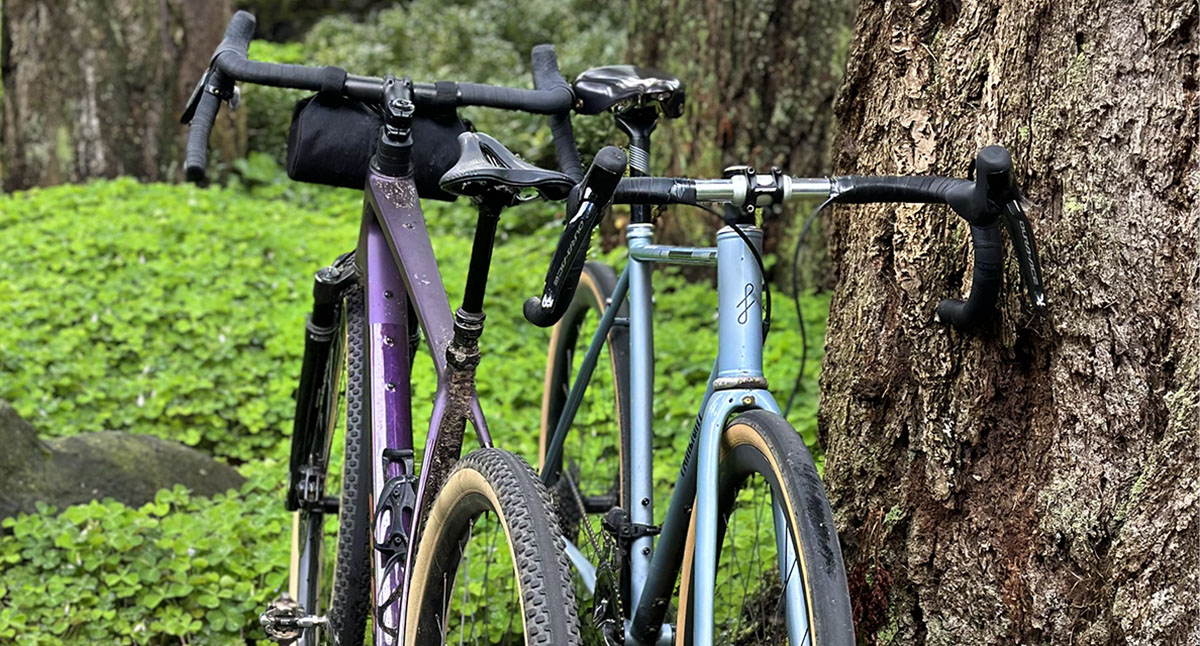
Two recent Bicycle Quarterly test bikes have made me think about the ‘One Bike’ question. Unless you are a collector, the idea of one bike for everything is appealing. For many, it’s a necessity, as budget or storage limitations don’t allow for more. For others, it’s a choice that simplifies their lives and riding. Having more bikes in the stable usually means that, if a bike needs work, we just ride a different bike, until we’re looking at a fleet of bikes in various states of disrepair. Focusing all our attention on one bike means it’ll always be in perfect condition. It makes our ‘dream build’ more affordable—and easier to justify. And since we’re riding one bike all the time, we’re able to really dial into its handling and performance characteristics. That bike becomes an extension of our body.
This brings up the question: Which bike? In the past, having only one bike meant we had to limit where we’d ride. If we loved speed on pavement, we got a road bike with narrow tires. If we enjoyed riding fire roads and gravel, we wanted a mountain bike (or maybe a cyclocross bike). If we wanted to travel, we needed a touring bike.
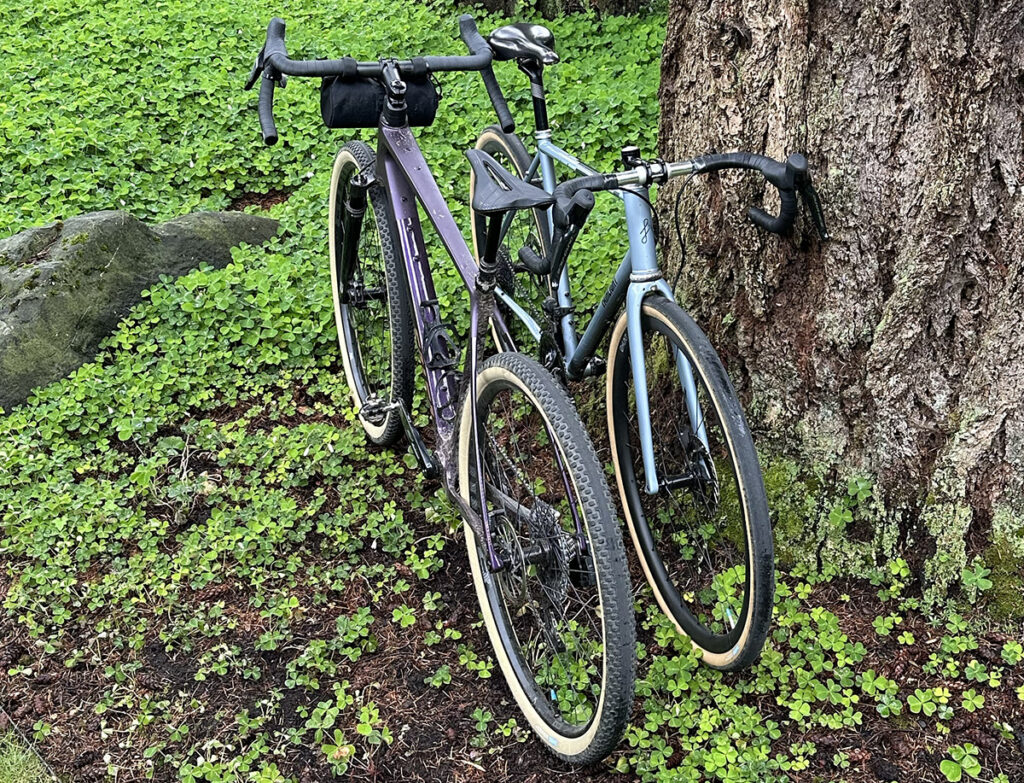
The wide-tire revolution has changed that. We now know that wide tires don’t roll any slower—even on smooth pavement—provided they have supple casings. Thanks to the bikepacking revolution, we can carry gear on any bike, by strapping bags to the frame itself. Suddenly the idea of having one bike for everything no longer feels like we’re limiting ourselves.
Having a bike that can do everything allows us to think up amazing mixed-surface routes. A recent ride took me on a challenging road course in the Issaquah Alps—with an hour-long detour on mountain bike trails. My bike felt great on every part of this ride. I had more fun than I remember having when I just rode on the road or just headed for the trails.
Since bikes can do so much more these days, their use cases overlap. Two recent Bicycle Quarterly test bikes illustrate this point. Of course, we’ll have to forget everything we’ve read about performance benefits of aero-shaped headset spacers, and remember that bike weight doesn’t matter as much as many thing. (Our bike doesn’t feel much different whether our water bottle is full or half-empty.) Instead, let’s focus on the things that really make a difference: How the bike works with our body, how its tires roll, and how it handles and feels.
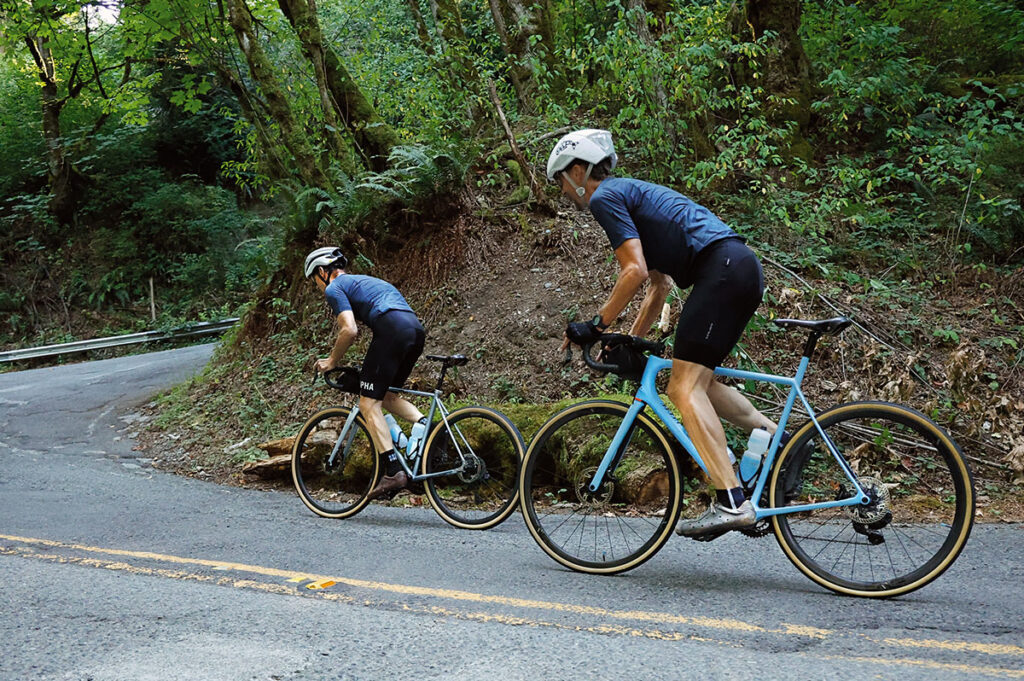
In the current Bicycle Quarterly, we test the Fairlight Strael 4.0 (on the left, in the lead). On the road, we pitted it against our favorite carbon road bike, where it had no trouble keeping up. And thanks to its 38 mm tires, the Strael felt right at home on gravel and flowy single-track. It reached its limit on very rough sections and over exposed tree roots. There it reminded me that ‘under-biking’ is a lot of fun, too.
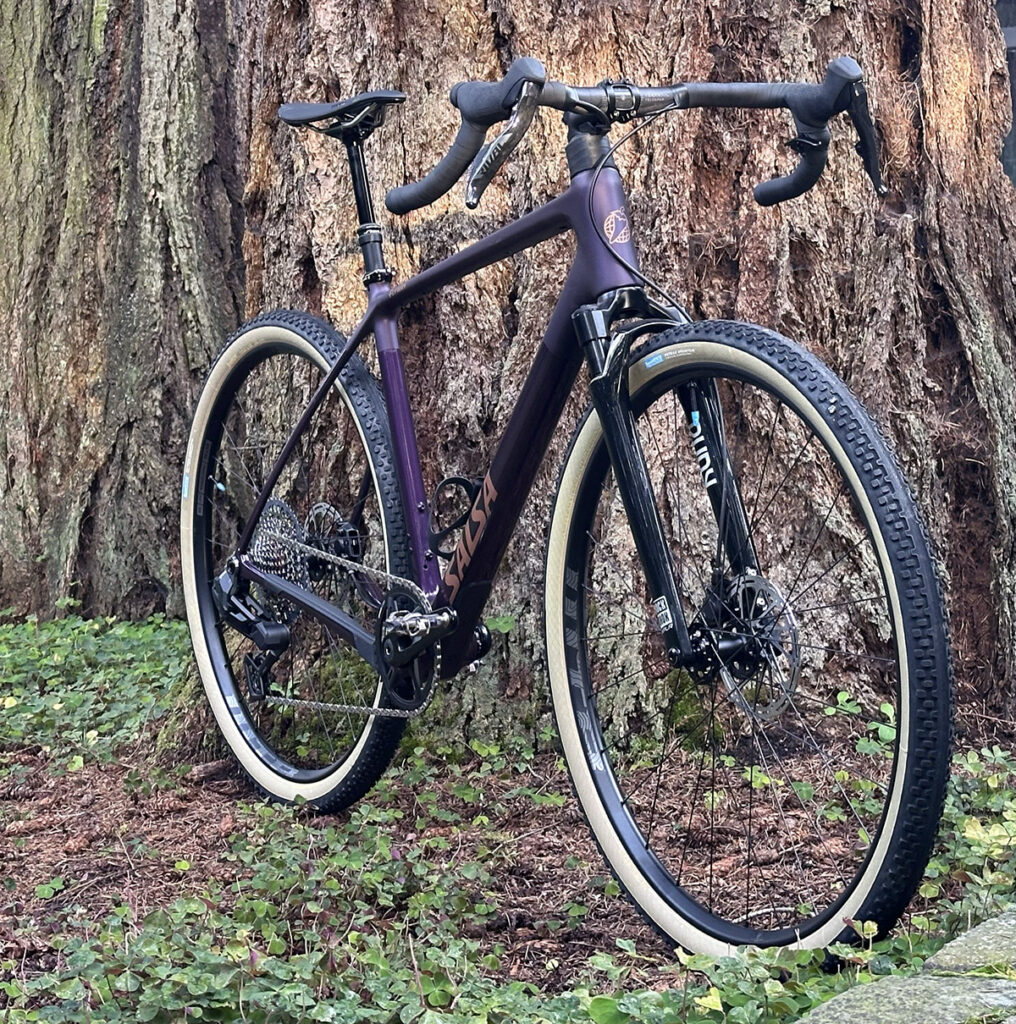
In the upcoming BQ, we’ll report on the brand-new Salsa Flyway. I don’t want to give away too much, except that the Flyway feels right at home on a spirited road ride, even though it’s running 50 mm tires, a suspension fork and a dropper seatpost. It climbs well and is a joy when carving through twisty paved descents. On single-track, its wide tires, squishy fork and dropper post really come into their own.
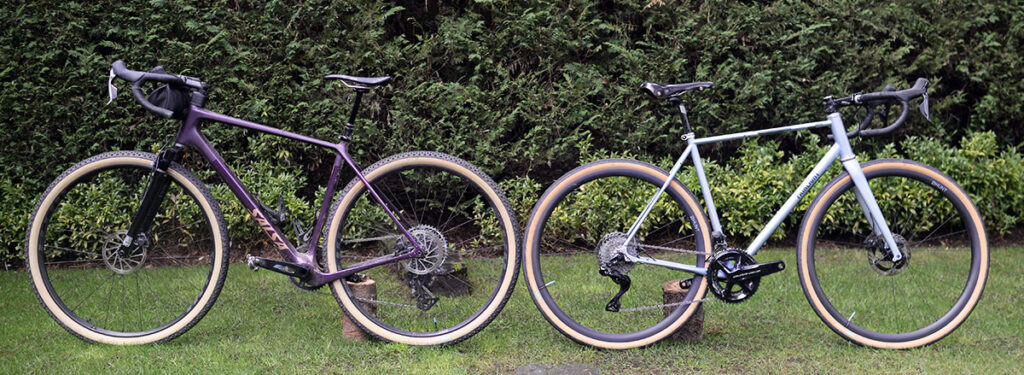
I could imagine having either as my only bike. In fact, that’s what I’ve been doing. I rode the Fairlight exclusively for a few weeks while working on that test. And lately, the Salsa has been my bike for everything from city limit sprints to those mtb trails. Each time, I was perfectly happy with the bike I was riding. Which one would you choose as an only bike and why? We’ll explore that quesion in the next BQ.
We’re preparing another mailing of the current edition this week. If you subscribe today, you’ll read about the Fairlight Strael right away, and then get to compare it to the Salsa Flyway next month, when the new BQ comes off the press.
More Information:
- Bicycle Quarterly subscriptions
- The All-Road Bike Revolution is our book about the tech that has made ‘One Bike for Everything’ possible