

BQ 89: Steel vs Carbon
When you watch a big Tour or head to a local gravel race, you’re likely to see only carbon bikes. If you’re lucky, there may a titanium frame or two at the local race. On mainstream cycling websites, it’s the same: carbon everywhere, at least as far as performance bikes are concerned. If steel bikes are mentioned at all, they are presented as an oddball choice for the ‘proud to go slow’ crowd: a novelty intended to amuse us, but not a bike for ‘serious’ riders. (We think that there’s merit in riding slow or fast or anywhere in between, and we also think that all riders should be taken seriously.)
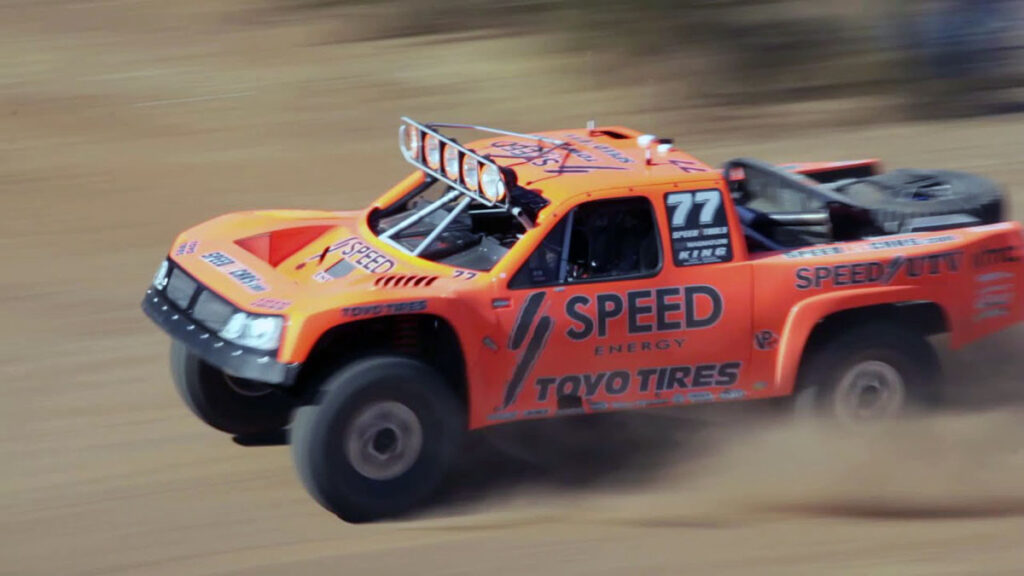
Car racing is different in that respect. Yes, Formula 1 race cars are all carbon. But what about the amazing Trophy Trucks (above) that tackle the rough terrain of the Baja 1000 at incredible speeds? They are made from steel tubes underneath the plastic bodies. If steel is still a viable choice for the toughest car races, can it also hold its own in the cycling world?
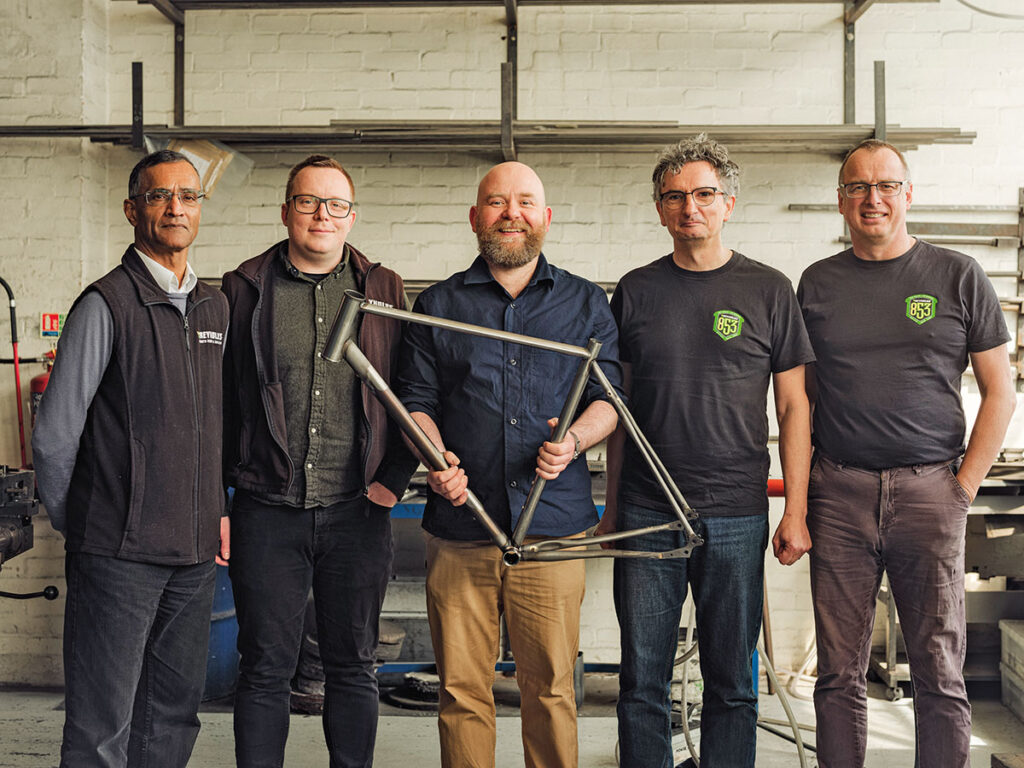
Dominic (Dom) Thomas (center) certainly thinks so. He’s the co-founder and head designer at Fairlight. To prove the point, he has updated their all-road bike, the Strael 4.0. The frame is ultralight, made from custom-drawn steel tubing. Modular dropouts and cable guides adapt the bike to different shifters and brakes without leaving unsightly ’empty’ guides. There are braze-ons for racks and fenders, even guides and tunnels for generator lighting wires. A lot of thought has gone into making this bike work in the real world. In fact, this bike’s predecessor has won the Transcontinental Race—twice. The specs look promising, and so we asked Dom for a test bike.
Companies are often reluctant to send a bike to Bicycle Quarterly. That’s understandable: Not only do we push test bikes to their limits—our reports could be called ‘honest’ rather than ‘diplomatic.’ When a bike doesn’t meet the marketing claims, we owe it to you, our readers, to say so. Otherwise, you might spend thousands of your hard-earned on a bike that’ll disappoint. We appreciate that there are different bikes for different customers and riding styles: Our goal is to provide all the information you need to make your own decision on whether a bike will be right for you.
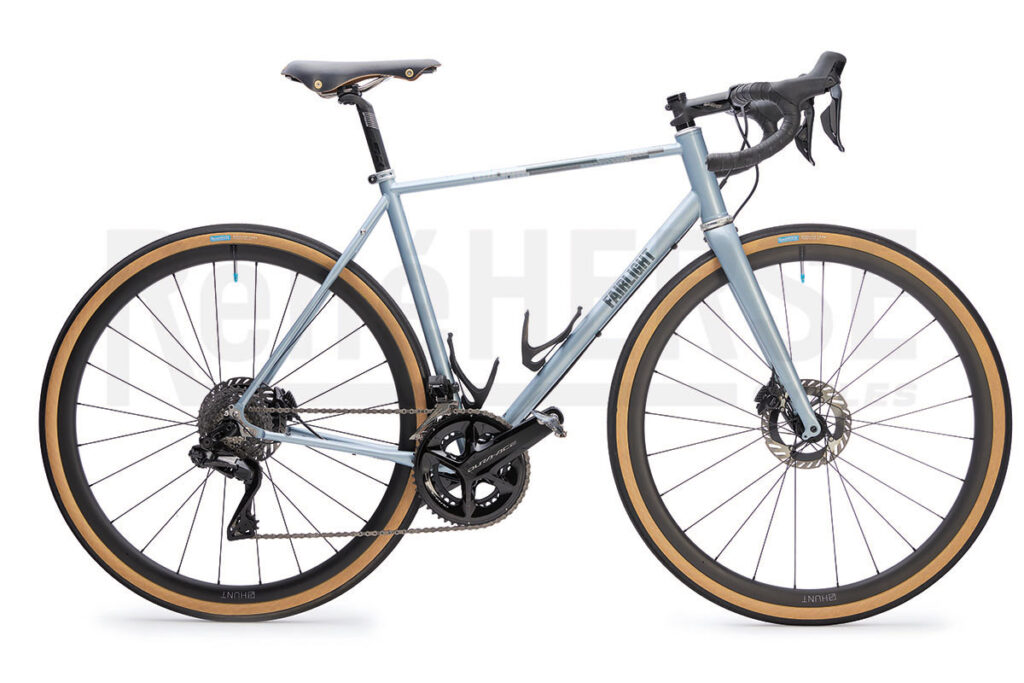
Dom clearly has a lot of confidence in his bikes: He sent us their top-spec bike, equipped with the latest Dura-Ace! In the metal—it’s steel, so we can actually use that term—the Strael 4.0 is even more impressive than in the photos. We start with the ritual of picking up the bike: Our test bike weighs just 9.1 kg (20.0 lb) as you see it above, with pedals and bottle cages. For a steel bike, that’s seriously light, especially for a true all-road bike with 38 mm tires (and a comfortable leather saddle).
The frame is beautifully made, with smooth welds and shaped tubing that helps achieve the light weight and pass EN impact tests. Those tests stress bikes in ways that aren’t always realistic, but production bikes sold in Europe have to pass them. The shaped tubes give the Strael 4.0 a modern appearance. If you squint, this steel bike looks a lot like a modern carbon frame: blade-like top tube, beefy down tube and massive chainstays.
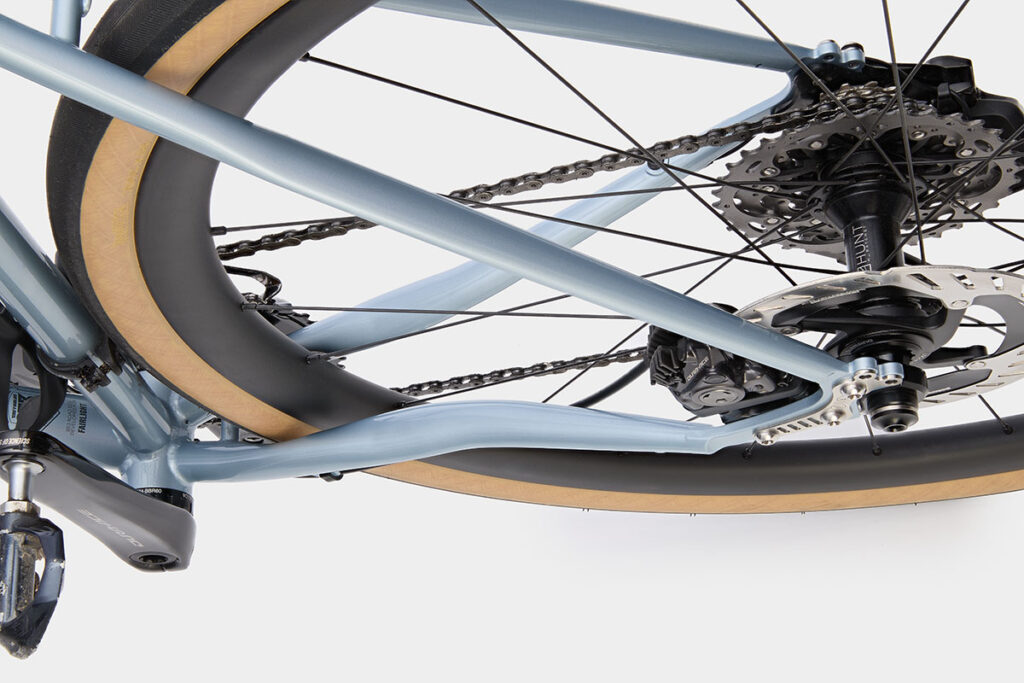
So it’s an impressive bike, and just as impressive is the price—just £1,250 for frame and fork. In U.S. dollars, that’s about $1,675 (before tariffs). In fact, the weight of the Strael 4.0 is competitive with carbon bikes in the same price range: You can move up one grade on the components with the money you’ve saved on the frame.
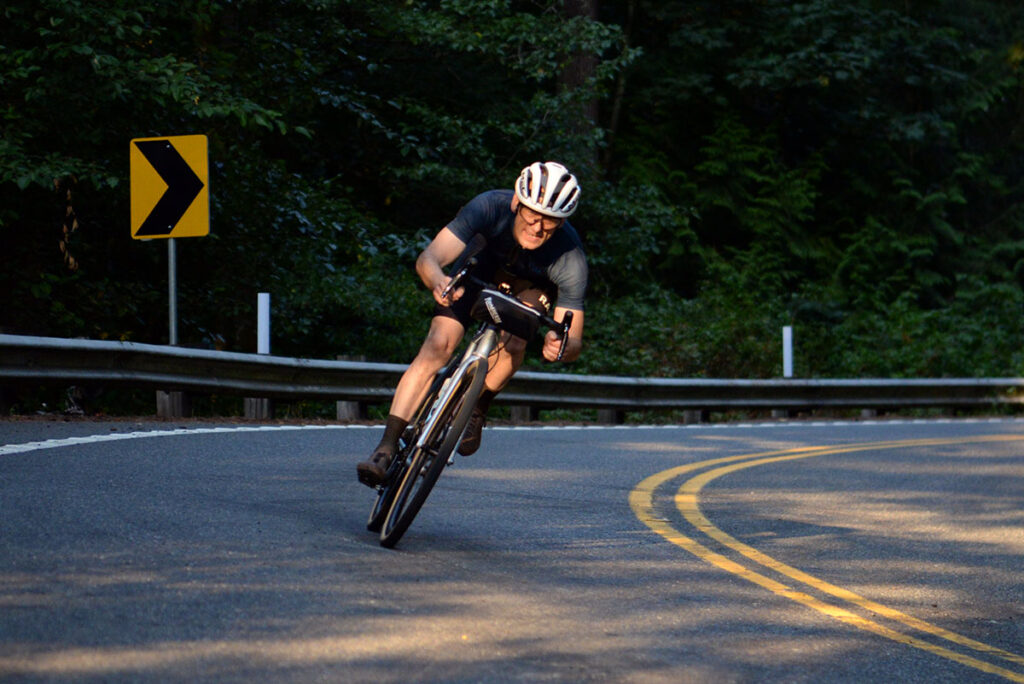
Specs and looks are one thing—what matters is how a bike rides. And that’s just as impressive: During our test rides, the Strael 4.0 just disappeared—in a good way. It handled with confidence and precision. It came out ahead in numerous city limit sprints. It kept up with fast-paced groups on long and steep climbs. In fact, it felt so good that we wondered: What if we compared it directly with our favorite carbon road bike, the OPEN MIN.D.?
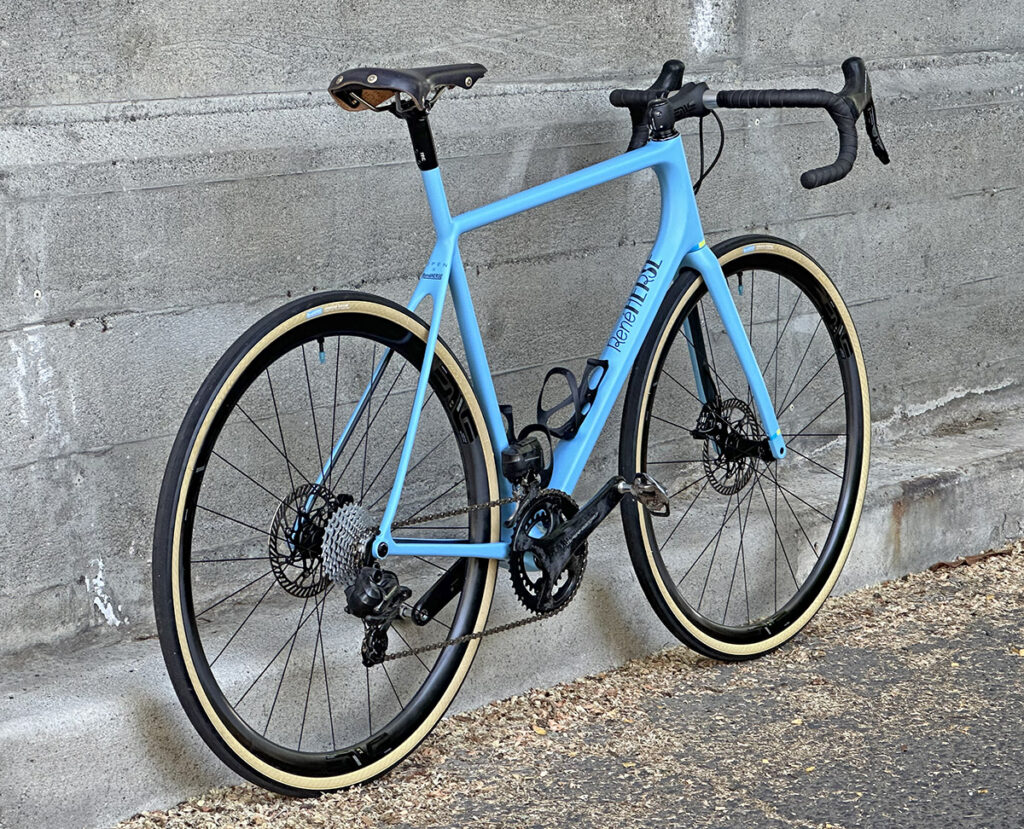
Of course, physics tells us that the carbon bike—equipped with Campagnolo Super Record and ultralight wheels—will have an edge on hills and in sprints. After all, it weighs 1.6 kg (3.7 lb) less than the already lightweight Fairlight. (It also costs more than twice as much.) The OPEN is a beautiful piece of sculpture. Sprinting out of the saddle, it rockets forward thanks to its ultralight frame and wheels.
All that’s undisputed, but we also know that weight alone doesn’t determine a bike’s performance. After all, two full water bottles only marginally slow down a bike that’s an excellent performer.
Here’s what we wanted to know: If you showed up on the Fairlight for a spirited ride, a randonneur brevet, or even an amateur race, would you give up anything to your buddies on their ultralight carbon bikes?
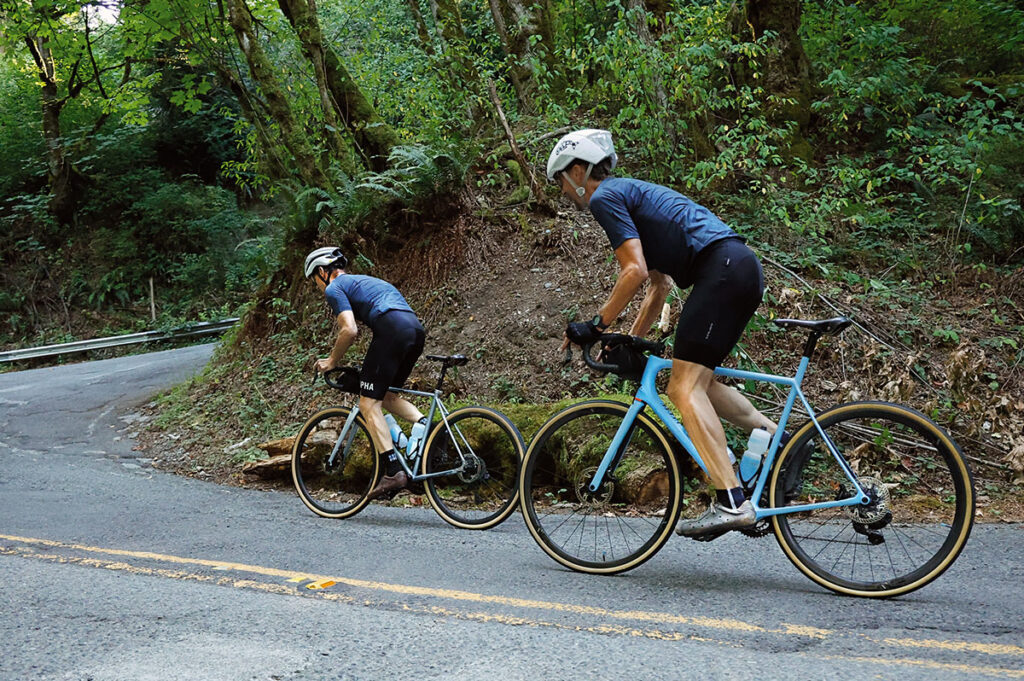
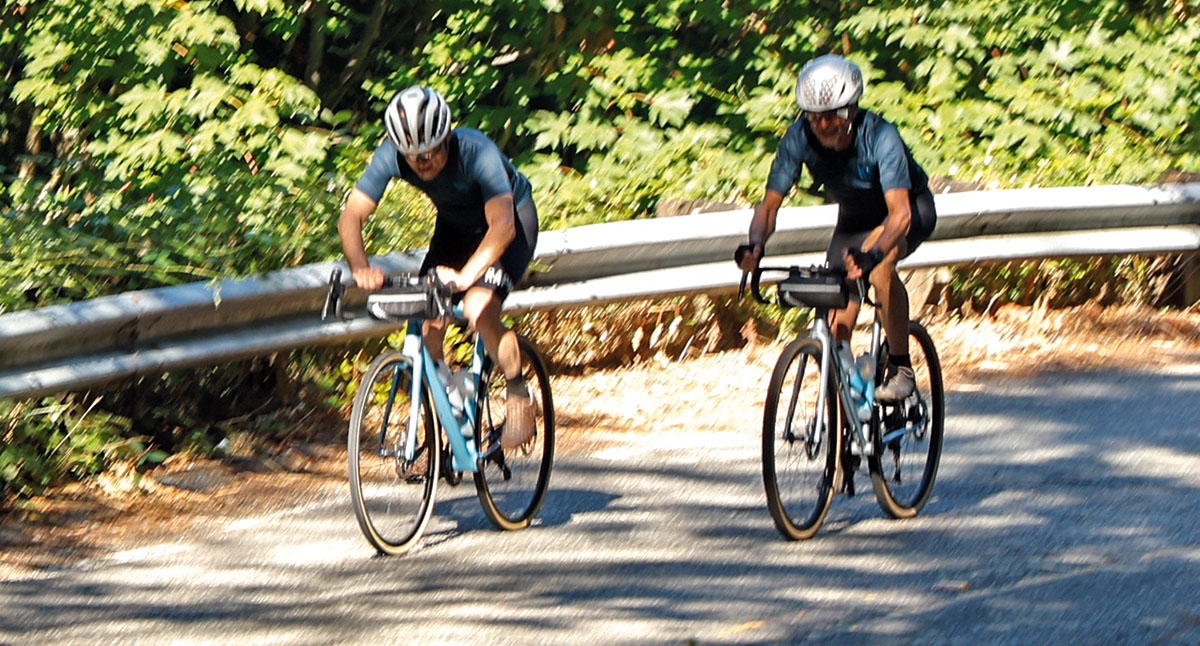
Enter Bicycle Quarterly’s second tester Mark VdK. By a fluke of nature, our bodies could be those of identical twins: same height, same build, same weight, same power (give or take a few percent depending on our current form). We’ll switch bikes multiple times during our test ride—and quickly determine how they are different and which performs better for us. If one bike is always ahead, no matter who rides it, then it’s faster. If the same rider is always a bit faster, then he’s just having a good day. Even then, we’ll see whether the gap is the same on both bikes—or whether one bike keeps up better, while the other falls behind further.
To test the bikes to the max, we head to the toughest road climb in the Seattle area: Zoo Hill. This steep road up Cougar Mountain climbs 300 m (1,000 ft) over its 3.6-km (2.2-mile) ascent. The road twists and turns, with constantly changing gradients that often exceed 16%. It’s a miniature mountain pass—a true test of bikes and riders alike. It’s also one of our favorite training routes, so we’re intimately familiar with this climb—and how a good bike feels here.
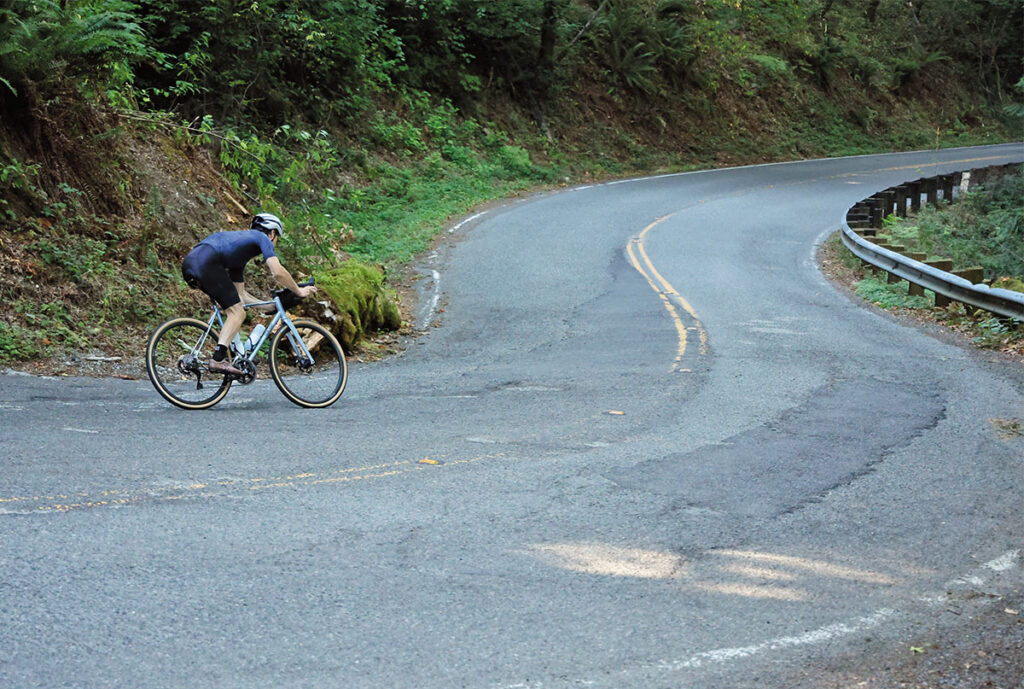
Of course, climbing is only one element of a great bike’s performance. Road bikes also need to be excellent descenders. And Zoo Hill is even more challenging going down than up.
We’re in for a treat, not just because we’ll find out how good the Fairlight Strael 4.0 really is, but also because we’ll have a lot of fun!
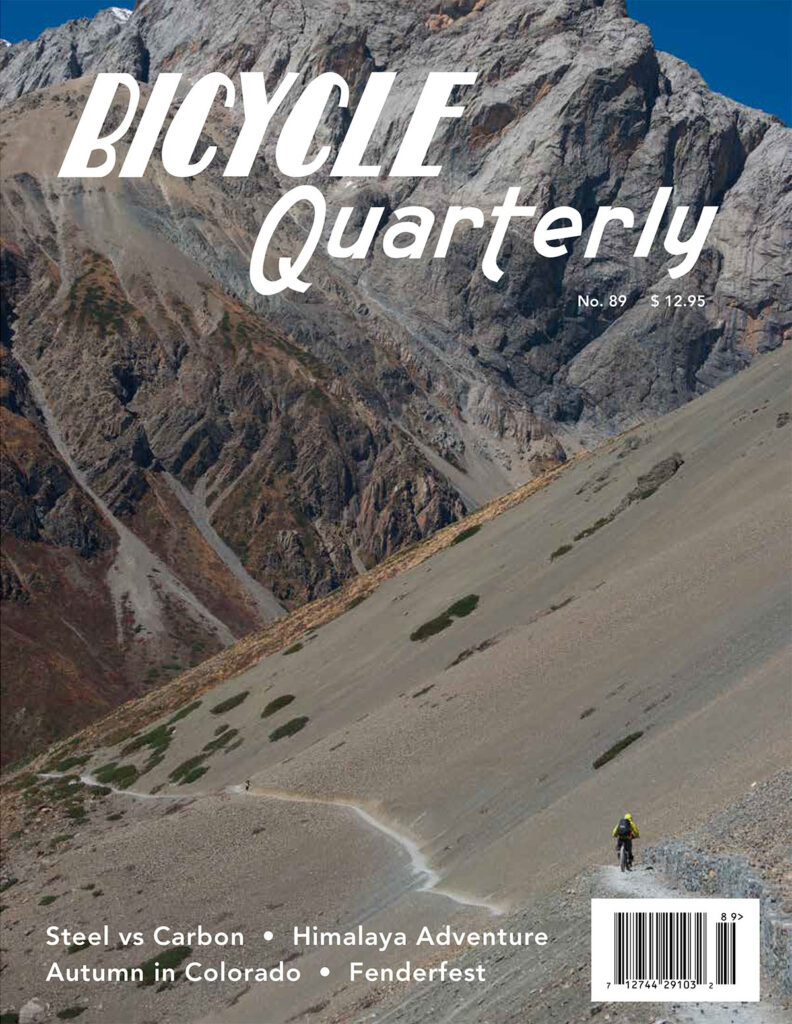
The full test is in the current Bicycle Quarterly. The article extends over 18 pages: There’s all the detail you’ll want to know. With every bike test, we also include two pages with comments from the bike’s builder or designer, so you can read their perspective. I find it fascinating to read the behind-the-scenes story, and Dom’s story doesn’t disappoint. This also gives the maker an opportunity to disagree with what we’ve found—fortunately not necessary in this case. Our goal is simple: to give you the complete story.
Our award-winning photography contributes to making the reviews a fun read—even if you’re not in the market for a new bike. (Why do most bike reviews show static photos or models riding the bikes who are clearly not the testers?) It may sound crazy to pit a steel bike against a carbon racer, but that’s what we do: finding answers to questions nobody else is asking yet.
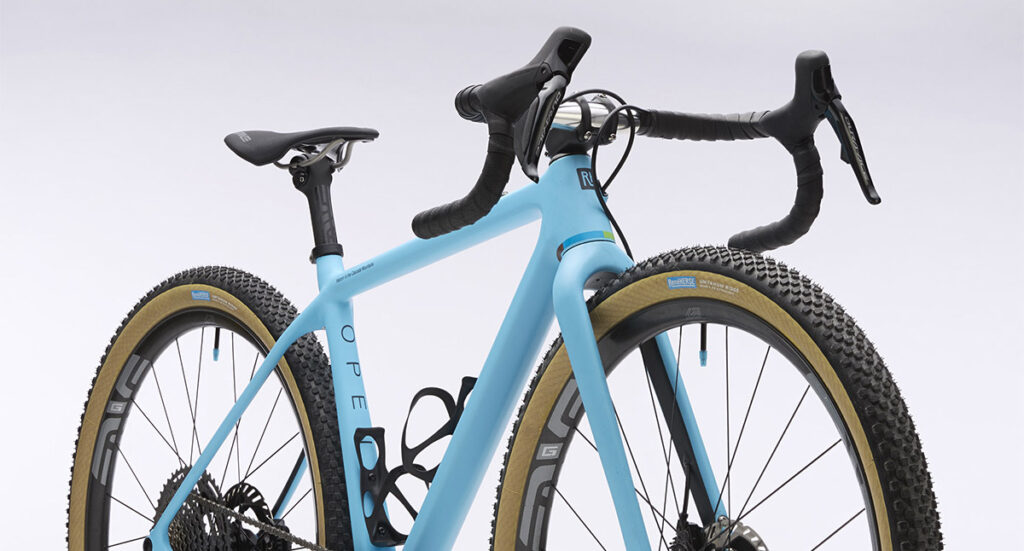
Now we’re already working on the next edition of Bicycle Quarterly, with Natsuko’s story of her new gravel bike. Why is it so hard to build a bike for a not-so-tall rider? How did she solve those issues? And how does a modern gravel race bike feel to a rider who doesn’t care about speed, but who enjoys “the feeling of the bike helping me a little”?
To read both tests—and all the other articles in the current and future editions of Bicycle Quarterly—please subscribe today. We’re preparing another mailing next week, and we’d love to include your copy. We think you’ll enjoy reading about real people riding real bikes on real courses, rather than about marginal gains of aero-shaped headset spacers and other things that are easy to write about, but matter little in the real world where we actually ride our bikes.
More Information:
- Table of contents of the current and previous Bicycle Quarterlies
- Subscribe to Bicycle Quarterly